Buy the Dip Bitcoin: Does It Actually Work?
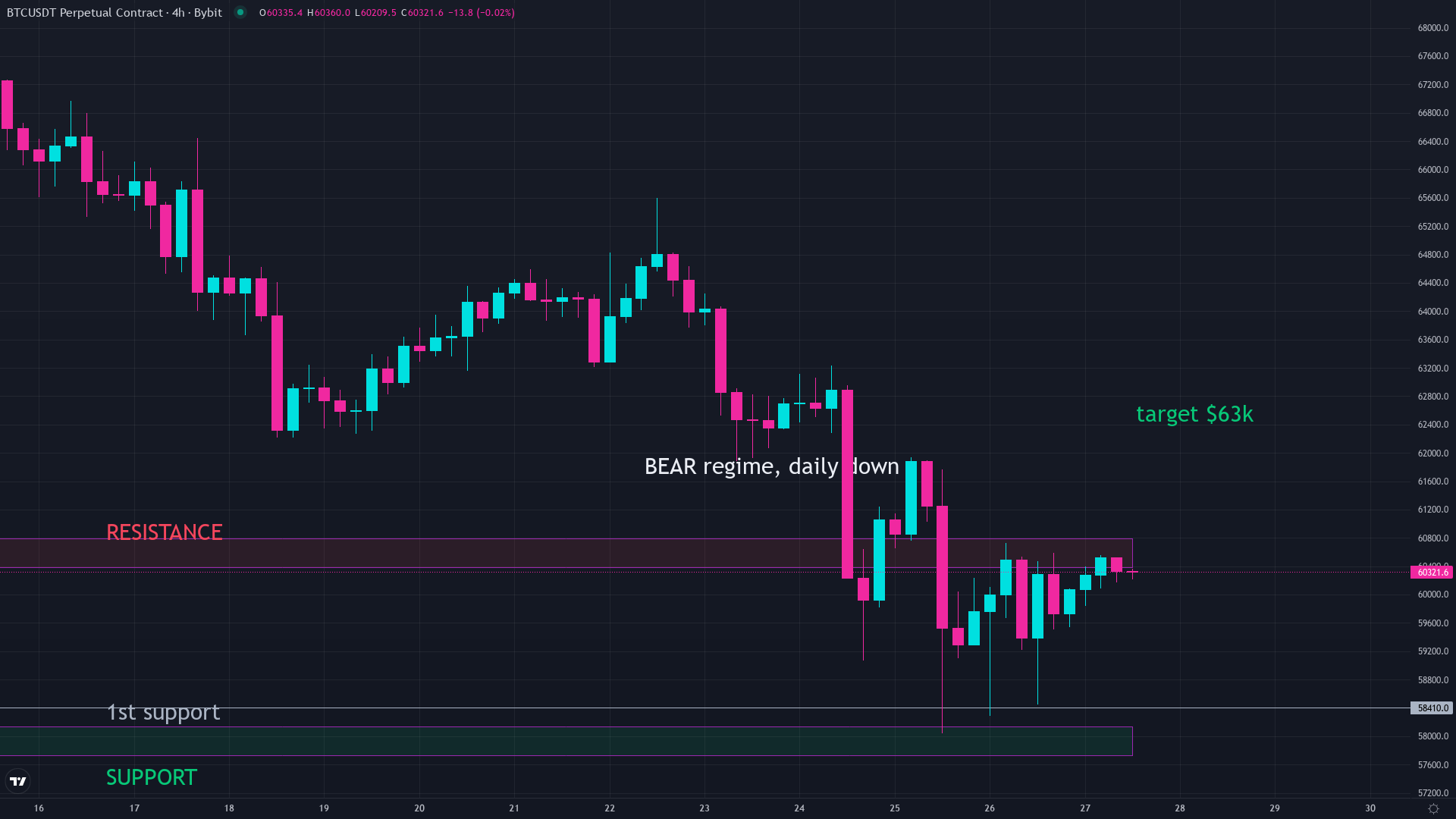
Bitcoin is down 52% from its all-time high. The Fear and Greed Index reads 15, which is Extreme Fear. And right on schedule, the internet is full of people screaming buy the dip. Some of them are right. Most of them are going to lose money anyway. Not because the idea is wrong, but because they skip the part that actually matters.
So let us do what most people won't: look at every major Bitcoin crash, check the data, and figure out whether buying the dip in Bitcoin actually works, or whether it just sounds good on a meme.
Every major Bitcoin crash, and what happened next
Bitcoin has crashed more than 50% at least six times since 2011. Here is the short version of each one:
- 2011: Bitcoin fell 94%, from about $32 to $2. It took 20 months to recover.
- 2013-2014: Down 84% after China banned crypto exchanges. Recovery took roughly two years.
- 2018: The ICO bubble popped. Bitcoin went from nearly $20,000 to $3,100, an 84% crash. It took three years to get back.
- 2020: COVID crashed Bitcoin 50% in a single day. It recovered in under nine months and hit a new high by December.
- 2022: Bitcoin dropped 77%, from $69,000 to $15,500. It came back to set a new all-time high by early 2025.
- 2025-2026: After peaking near $126,000 in October 2025, Bitcoin has fallen over 52% to around $60,000 today.
The pattern is simple: every single time, the price eventually came back and made a new high. If you bought the dip and held, you made money. Every time. No exceptions so far.
So the strategy works, right? Yes. But there is a catch, and it is a big one.
Why most people lose money buying the dip
The problem is not the buying part. The problem is the holding part.
Imagine you bought Bitcoin at $40,000 in early 2022, thinking that was the dip. The price then fell to $15,500. That is another 61% loss after you bought. For almost two years, your screen was red every single day. Most people sell somewhere in that window. They buy the dip, watch it keep dipping, panic, sell at a loss, and then watch it recover without them.
The data backs this up. On-chain research consistently shows that short-term holders, people who bought within the last few months, sell at the worst possible time. They buy when it feels safe (which is too late) and sell when it feels scary (which is too early).
Buying the dip works in the history books because the history books don't include the sleepless nights, the doubt, or the moment you convince yourself that this time is different.
The real question: dip-buying vs dollar cost averaging
Here is where the data gets interesting. If you compare two strategies over Bitcoin's entire history, dollar cost averaging (putting in the same amount every month, no matter the price) actually beats trying to time the dips. Not by a little. By a lot.
Why? Because waiting for a dip means sitting in cash while the price runs up. You save money on the drops, but you miss the rallies. And Bitcoin's rallies are violent. Some of the biggest single-day gains in Bitcoin's history came right after the deepest fear. If you were sitting on the sidelines waiting for a bigger dip, you missed them.
Dollar cost averaging removes the decision entirely. You buy every month. Some months you buy high, some months you buy low, and over time the math works in your favor without requiring you to predict anything.
So should you buy this dip?
Here is the honest answer, and it has two parts.
Part one: Every prior Bitcoin crash of 50% or more has been followed by a new all-time high. That is six for six over 15 years. If history holds, buying at $60,000 when the all-time high was $126,000 is the kind of trade that looks obvious in hindsight. Bears will say this time is different. They have said that every time. They have been wrong every time so far.
Part two: The honest part nobody puts on a meme. Nobody knows exactly where the bottom is. The price could fall another 20% from here before it turns. If you put everything in today and it drops to $45,000, can you hold through that without selling? If the answer is no, you are not ready to buy the dip. You are ready to become the exit liquidity for someone who can.
The edge is not in the entry. The edge is in what you do after you buy. If you cannot handle seeing your investment cut in half and still not sell, dollar cost averaging is the better play. It gives you the upside without the gut check.
The takeaway
- Buying the dip in Bitcoin has worked every single time in 15 years of history, but only if you held long enough.
- Most people who buy the dip sell too early because the dip keeps dipping and fear takes over.
- Dollar cost averaging historically outperforms dip-buying because it removes the need to time anything.
- The real question is not whether to buy. It is whether you can hold.
Common questions
Does buying the dip work in Bitcoin?
Historically, yes. Every Bitcoin crash of 50% or more has been followed by a new all-time high. But the strategy only works if you hold long enough, which most people fail to do.
Is it better to buy the dip or dollar cost average Bitcoin?
Dollar cost averaging has historically outperformed dip-buying over Bitcoin's full history because it removes the need to time the market and ensures you do not miss the biggest rallies.
How many times has Bitcoin crashed and recovered?
Bitcoin has crashed more than 50% at least six times since 2011. Every single time, it recovered and set a new all-time high, though recovery took anywhere from nine months to three years.
Should I buy Bitcoin at $60,000?
Bitcoin is down over 52% from its $126,000 all-time high. History favors buyers at these levels, but only if they can hold through further drops without panic selling. Dollar cost averaging reduces the timing risk.
Keep reading
- Dollar Cost Averaging Bitcoin: Does DCA Actually Work?
- How Low Will Bitcoin Go? What Every Crash Says
We break down the market like this every day, free on Instagram and YouTube, and in depth inside the community.
Education, not financial advice. Trading involves real risk.