Can Bitcoin Go to Zero? What the Math Actually Says
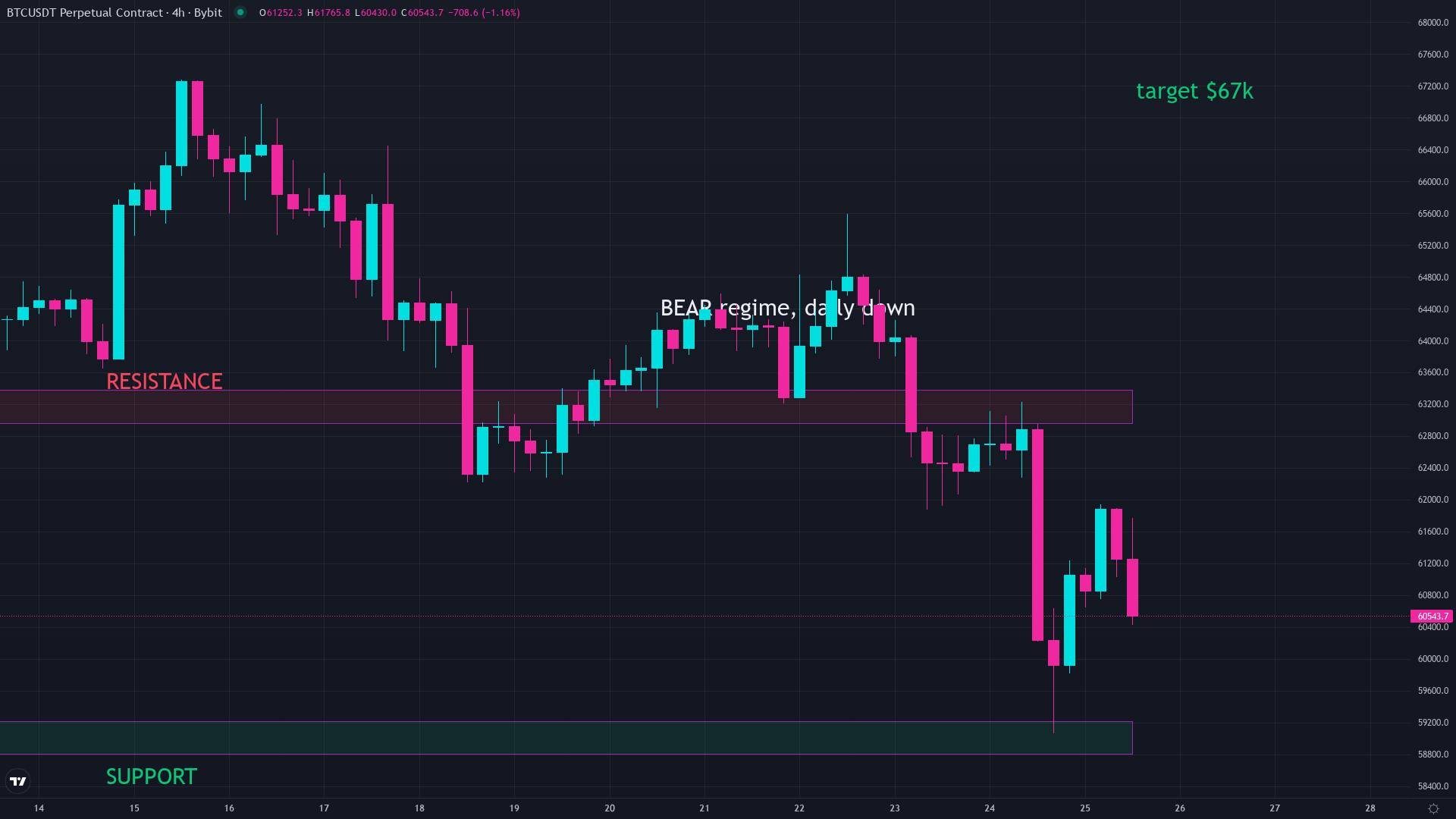
Bitcoin is trading around $60,000 right now, down roughly 49% from its all-time high. The Fear and Greed Index just printed 12, which is about as scared as the market gets. And right on cue, Google searches for “can Bitcoin go to zero” hit a record high earlier this year.
It is a fair question. If you bought near the top and you are watching half your money evaporate, you are not being irrational for asking it. So let us actually answer it, with numbers, not feelings.
Can Bitcoin go to zero? The short answer
For Bitcoin to reach $0, every single person and institution holding it would need to sell, and not a single buyer on Earth would need to step in at any price. Every miner would need to shut off. Every wallet would need to empty. Every exchange would need to delist it. Every ETF would need to liquidate.
As of today, roughly 58 million wallets hold Bitcoin. Over 450 million people worldwide own some. U.S. spot Bitcoin ETFs alone hold over 1.2 million BTC. The network is secured by nearly 1,000 exahashes per second of computing power, an all-time high, even while the price is down 49%.
Every single one of those numbers would need to go to zero. Simultaneously.
What would actually have to happen
People throw around “Bitcoin could go to zero” like it is a weather forecast. But if you list out the things that would need to happen, the scenario stops sounding like a risk and starts sounding like science fiction.
- A fatal code bug. Someone would need to find a flaw in Bitcoin’s code that breaks the network beyond repair. Bitcoin has been running for over 17 years. Thousands of developers have reviewed and stress-tested it. Could a bug exist? In theory. Has one survived 17 years of hostile scrutiny? No.
- A global government ban, enforced everywhere. Not one country banning it. Every country, simultaneously, with enforcement that actually works. China banned Bitcoin mining in 2021. Miners moved. The network didn’t flinch.
- A quantum computer that breaks the cryptography. This is the one that sounds scary until you realize it would also break every bank, every military system, and every encrypted communication on the planet. If quantum computing breaks Bitcoin, Bitcoin is not the first problem anyone solves.
- Everyone, everywhere, deciding it is worthless at the same time. Including the funds, the ETFs, the sovereign wealth funds, the people in countries with failing currencies who use it as a lifeline. All of them. At once.
Each of those scenarios is individually unlikely. All of them happening together is effectively impossible.
The crash history most people forget
Bitcoin has “died” over 470 times according to the media. Here is what actually happened after every major crash.
- 2011: fell 93%. Came back and made a new high.
- 2014-2015: fell 85%. Came back and made a new high.
- 2018: fell 84%. Came back and made a new high.
- 2022: fell 77%. Came back and made a new high.
The current crash from the October 2025 peak is roughly 49%. By historical standards, this is a normal bear market, not a death spiral. The worst-timed buyer at the absolute 2017 peak, who held through an 84% crash, is up over 200% today.
Zero would be the first time the pattern breaks in 17 years. Not impossible. But betting on it means betting against a track record that has survived every crisis thrown at it.
Why fear spikes are usually backwards
Here is the part that might surprise you. Every time “Bitcoin to zero” searches spike on Google, it has historically marked the area near a bottom, not the start of more pain.
The logic is simple. By the time the average person is searching “can Bitcoin go to zero,” the crash has mostly already happened. The big sellers have already sold. The leveraged longs have already been liquidated. What is left is fear without much remaining selling pressure.
That does not mean the exact bottom is in. Bear markets grind. But the people Googling “Bitcoin zero” after a 49% crash are usually late to the fear, not early.
The honest risks that are not zero
Saying Bitcoin probably will not go to zero is not the same as saying it is safe. There are real risks right now, and pretending they do not exist would be dishonest.
- It could fall further from here. Previous bear markets have dropped 77% to 93%. A 49% decline does not guarantee the bottom is in. If this cycle follows history, there could be more pain ahead before a recovery.
- Regulation could get harsher. While a global ban is unlikely, individual countries can make it harder to buy, hold, or trade Bitcoin. That slows adoption and puts pressure on price.
- The bear could last longer than you think. Past bear markets lasted 12 to 18 months from peak to bottom. Patience is not optional.
The difference between “could go lower” and “could go to zero” is enormous. The first is a real risk you should plan for. The second is a headline designed to scare you into clicking.
What to actually do with this fear
If you are reading this because you are scared, good. Fear means you care about the outcome. But the question is not whether Bitcoin can go to zero. The question is whether you have a plan for what happens next, in either direction.
If it falls further, do you have a rule for when you buy more, or when you cut? If it recovers, do you have a target, or will you ride the same emotional wave back up and miss the exit again?
The math says Bitcoin going to zero is about as likely as the internet shutting down permanently. But Bitcoin going lower from here? That is a normal Tuesday in a bear market. Plan for the likely scenario. Stop losing sleep over the impossible one.
Common questions
Can Bitcoin actually go to zero?
For Bitcoin to reach zero, every holder, miner, exchange, and ETF would need to exit simultaneously with zero buyers stepping in. With 58 million wallets, over 450 million owners, and record-high network security, the probability is effectively zero.
Has Bitcoin ever crashed to zero?
No. Bitcoin has crashed 77% to 93% four times in its history and recovered to new all-time highs every time. The current 49% decline is well within the range of a normal bear market by historical standards.
What would make Bitcoin go to zero?
It would require a combination of a fatal, unfixable code bug, a coordinated global government ban with perfect enforcement, and every single holder deciding to sell at the same time. Each scenario is individually unlikely. Together, they are effectively impossible.
Is Bitcoin safe to hold during a bear market?
Bitcoin will not go to zero, but it can fall significantly further in a bear market. Previous cycles dropped 77% to 93%. The key is having a plan: rules for buying, selling, or holding, not reacting to fear.
Are Bitcoin to zero Google searches a buy signal?
Historically, spikes in these searches have coincided with the area near bear market bottoms, not the start of new crashes. The logic is straightforward: by the time most people are searching this, the bulk of the selling is already done.
Keep reading
- How Long Do Bitcoin Bear Markets Last?
- Will Bitcoin Recover? Every Crash Since 2011, and How Long It Took to Come Back
We break down the market like this every day, free on Instagram and YouTube, and in depth inside the community.
Education, not financial advice. Trading involves real risk.
See it live on the charts