What Is Bitcoin Mining? How It Works
You have probably heard the phrase Bitcoin mining a hundred times. Maybe someone told you it uses more electricity than a small country. Maybe someone said miners are “solving math problems.” Both of those are sort of true, but neither one actually explains what is happening or why it matters.
Here is the version that makes sense on the first read.
What is Bitcoin mining, in plain English?
Bitcoin mining is a competition. Thousands of specialized computers around the world race to do one thing: guess a number. The first machine that guesses the right number gets to add the next page of transactions to Bitcoin’s permanent record, called the blockchain. As a reward, that machine’s owner receives brand-new Bitcoin that did not exist before.
That is it. The entire system boils down to: guess the number, write the page, get paid.
The guessing is not about intelligence. It is brute force. These machines try billions of guesses every second until one of them stumbles onto the answer. The competition resets roughly every 10 minutes, because that is how often Bitcoin produces a new block.
Why does Bitcoin need miners?
Normal money has a bank sitting in the middle. If you send $50 to a friend, the bank checks your balance, subtracts $50 from your account, and adds it to theirs. The bank is the referee.
Bitcoin does not have a bank. Instead, it has miners. Miners are the referees. Every time someone sends Bitcoin, miners check that the sender actually owns the coins and is not trying to spend the same coins twice. When a miner wins the guessing race and writes a new block, all those verified transactions become permanent. No single company or government controls the ledger. Thousands of independent miners keep each other honest by competing.
Think of it like this: instead of one referee who could be bribed, Bitcoin has thousands of referees all watching each other. Cheating would require fooling more than half of them at the same time, which, at the current size of the network, is practically impossible.
What miners actually earn
Every time a miner wins a block, they receive two things: a block reward (brand-new coins the network creates) and transaction fees (small amounts paid by the people sending Bitcoin).
Right now, the block reward is 3.125 BTC. At today’s price of around $58,600, that is roughly $183,000 per block. A new block lands approximately every 10 minutes, which means the network pays out around $26 million a day to miners worldwide.
But here is the catch: the block reward gets cut in half roughly every four years, an event called the halving. The last one happened in April 2024, dropping the reward from 6.25 to 3.125 BTC. The next one is expected around April 2028, when it drops to about 1.56 BTC. This built-in schedule means the rate of new Bitcoin entering the market slows down over time, and eventually stops entirely. The maximum supply is capped at 21 million coins, and the last fraction of a Bitcoin will be mined around the year 2140.
Why mining is so expensive
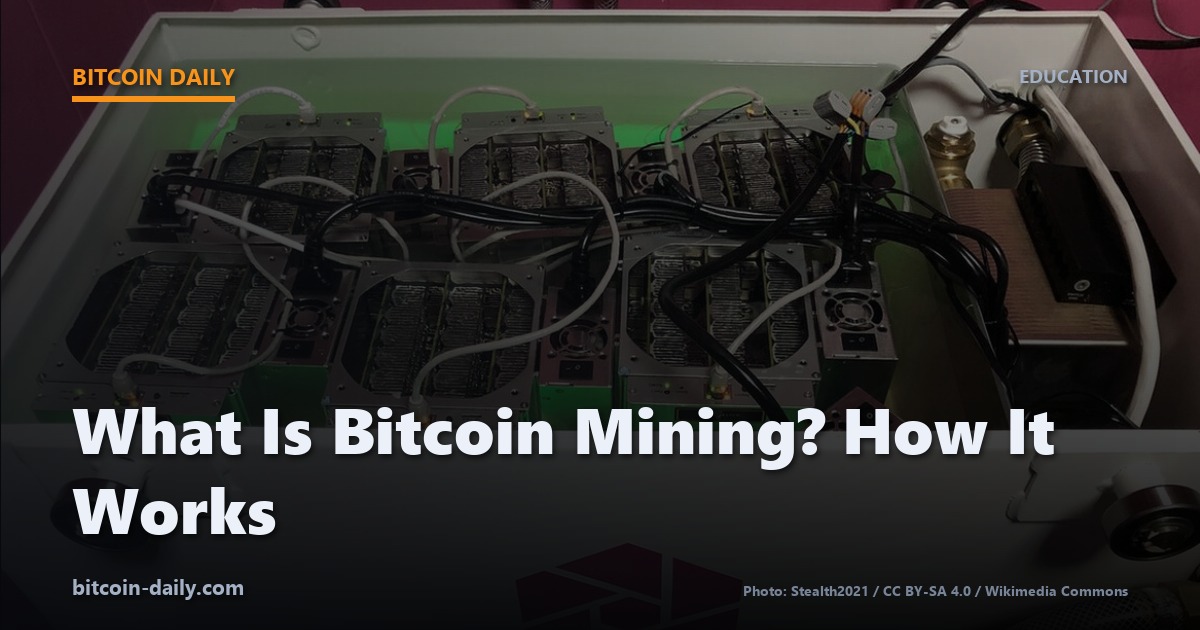
In the early days, you could mine Bitcoin on a regular laptop. Those days are long gone. Today’s miners use purpose-built machines called ASICs, which do nothing except guess numbers as fast as possible. A single modern ASIC costs several thousand dollars and eats electricity around the clock.
The total computing power pointed at the Bitcoin network right now is staggering. In early 2026, the network crossed one zettahash per second for the first time. That means all the miners on Earth, combined, are making more than one sextillion guesses every second. One sextillion is a one followed by 21 zeros.
All that computing power runs on electricity, and electricity is the single biggest cost for any mining operation. Public mining companies spent an average of $80,000 to $90,000 to produce one Bitcoin in the first quarter of 2026. With the price sitting around $58,600 today, many miners are operating at a loss. That is not unusual during bear markets. Bear markets squeeze miners the same way they squeeze everyone else.
Does mining affect the price?
Yes, in two ways.
First, miners create the new supply. Every day, roughly 450 new Bitcoin enter circulation through mining rewards. That is sell pressure, because miners have electricity bills to pay and most of them sell at least some of their coins to cover costs. When the price drops below their cost to produce, weaker miners shut down or sell their reserves, which can push the price lower in the short term.
Second, the halving schedule is a built-in supply squeeze. Every four years, the number of new coins per day gets cut in half. Historically, each halving has been followed by a significant price increase, though the timing has varied. The pattern is simple: if demand stays the same but new supply drops by half, the price has to adjust.
Can you mine Bitcoin at home?
Technically, yes. Practically, almost certainly not at a profit. Home electricity rates in most countries are far too high to compete with industrial operations that negotiate bulk power deals. A single home ASIC might earn a few dollars a day in Bitcoin while costing more than that in electricity. The numbers only work if you have access to extremely cheap power, well under five cents per kilowatt-hour, and even then the margins are thin.
Most individual investors are better off simply buying Bitcoin on an exchange than trying to mine it. Mining is a hardware and energy business. Investing is a different game entirely.
The bottom line
Bitcoin mining is the engine that keeps the network running without any company or government in charge. Miners verify transactions, secure the network, and earn new Bitcoin for doing it. The competition is enormous, the costs are real, and the reward gets smaller every four years by design.
You do not need to mine Bitcoin to own it or benefit from it. But understanding how mining works tells you something important about why Bitcoin behaves the way it does: the supply is fixed, the cost to produce is rising, and the new coins entering the market shrink on a schedule that nobody can change.
Common questions
What is Bitcoin mining?
Bitcoin mining is a competition where specialized computers race to guess a number. The winner gets to add the next block of transactions to Bitcoin's permanent record and earns new Bitcoin as a reward.
How does Bitcoin mining work?
Miners use powerful machines to try billions of guesses per second. The first one to find the right number writes a new block of verified transactions to the blockchain and collects the block reward, currently 3.125 BTC.
Is Bitcoin mining profitable in 2026?
For large operations with cheap electricity, yes. Public mining companies spent $80,000 to $90,000 to produce one Bitcoin in early 2026. With the price near $58,600, many miners are operating at a loss in the current bear market.
How many bitcoins are left to mine?
About 19.9 million of the 21 million total have already been mined. The remaining coins will be released through mining rewards that halve every four years, with the last fraction expected around the year 2140.
Can I mine Bitcoin at home?
Technically yes, but almost certainly not at a profit. Home electricity rates are usually too high to compete with industrial mining operations that negotiate bulk power deals.
Keep reading
We break down the market like this every day, free on Instagram and YouTube, and in depth inside the community.
Education, not financial advice. Trading involves real risk.