Best Timeframe for Bitcoin Trading: What Actually Works
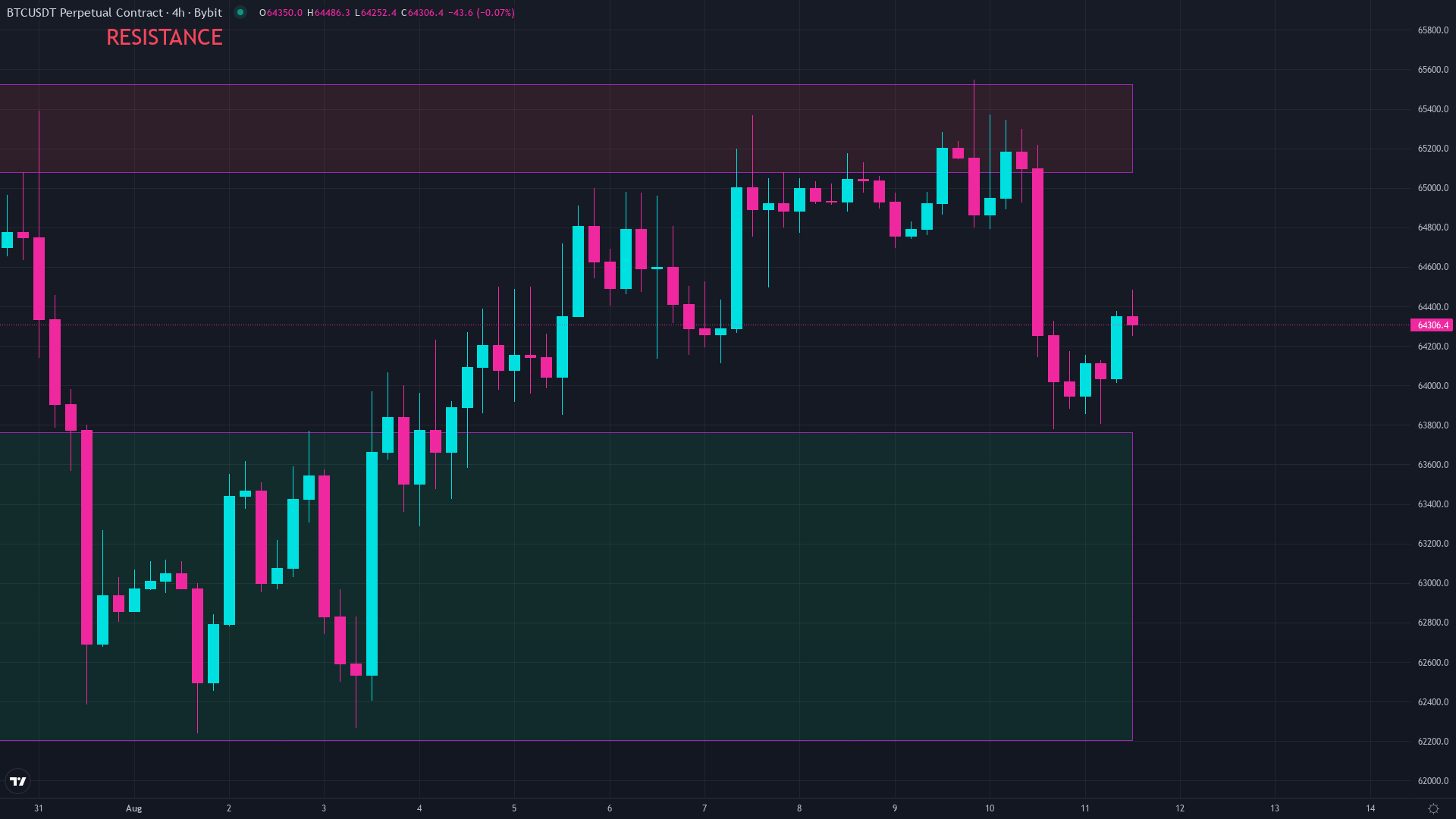
The most popular starting point for new crypto traders is the 1-minute chart. It moves. Every second, a new candle forms. It feels like action. And it is quietly destroying most accounts that try to trade it. If you have ever asked what the best timeframe for bitcoin trading actually is, the honest answer is: probably not the one you started on.
What your timeframe actually does to your results
Your timeframe is not just a setting on a chart. It is the lens that determines how much of what you see is real signal versus random movement. Every market produces random price jumps minute to minute. The shorter your timeframe, the more of that randomness you are trading instead of the actual trend.
If you make a trade based on random movement, even a good trade can look wrong when the next candle reverses it for no reason. And if your losses come from that kind of noise, no amount of technical skill fixes it. You were never trading anything real in the first place.
Why the 1-minute chart is a losing game for most traders
One minute is 60 seconds of price movement. In a market that runs 24 hours a day, a single large order, a bot reacting to another bot, or a chain of forced liquidations can push the 1-minute chart hard in one direction and then snap back just as fast. None of that is meaningful trend information.
The 5-minute chart is only slightly better. The 15-minute starts to show something real, but you are still swimming in noise. Traders who use these short timeframes are not getting a faster signal. They are getting more decisions with less reliability per decision. More trades. Higher stress. Worse results overall.
The 4-hour chart: where real patterns live
The 4-hour chart is where most serious crypto traders find consistent signal. Each candle covers four hours of trading. That is enough time for real buyers and sellers to act, for price levels to be tested and respected, and for a genuine trend to develop.
On the 4-hour timeframe, support and resistance levels mean something. A breakout that holds for a full 4-hour candle has real conviction behind it. False moves happen less often. Trends stay readable for days or weeks at a time. You can plan a trade instead of reacting to every spike.
Trading this timeframe also means you are not glued to a screen all day. A 4-hour setup might take 12 to 16 hours to fully develop. You check the chart. You see a setup starting. You set an alert. You go live your life. The alert fires when the setup is ready, and you execute in a few minutes.
The top-down approach: daily for direction, 4-hour for entry
The cleanest system uses two charts together. Start on the daily chart to read the bigger picture. Is bitcoin above or below key levels? Is the trend moving up, down, or sideways? The daily chart tells you which direction your trades should be going.
Then drop to the 4-hour chart to find your entry. You are looking for a specific setup inside that daily trend. If the daily picture is bearish, you only look at short setups on the 4-hour. If the direction is unclear, you wait. You do not trade against the bigger picture just because a lower timeframe looks tempting.
This approach filters out most bad trades before they happen. The daily gives you the map. The 4-hour gives you the timing. If you want to understand why the entry itself is often not the real edge, this piece covers it: Bitcoin Exit Strategy: Why Entries Are the Wrong Obsession.
When you trade matters as much as which timeframe
Bitcoin trades around the clock, every day of the year. But not all hours produce the same quality of price movement. The highest-volume window in crypto is the overlap between European and US market hours, roughly 9am to 1pm Eastern Time. That is when institutional money is most active, spreads are tightest, and setups follow through most reliably.
The overnight Asian session tends to be quieter and more range-bound. Weekend trading runs at roughly a third of the typical weekday volume, with wider spreads and less reliable movement.
Focusing on the right session window is how it becomes possible to trade bitcoin in under two hours a day. Not because nothing happens outside that window, but because the setups that form during the US open are the ones that move with real conviction. Trading the wrong session on any timeframe is like fishing in a dry riverbed.
What this looks like in practice
The numbers from 109 live trades: 70% win rate, 1% risk per trade, roughly 18 trades a month out of around 200 setups that showed up and got passed on. Every one of those 200 skipped setups was a candidate that did not hold up on the daily and 4-hour together.
The traders who struggled were not using worse analysis. They were using shorter timeframes where analysis cannot overcome the noise. Moving to the 4-hour did not make every setup perfect. It made the ones that appeared actually worth taking.
One thing that does not change regardless of timeframe: your position size on every trade. That is covered here: Position Sizing in Crypto: The 1% Rule That Protects Your Account.
The timeframe you trade is not a personal preference. It is a foundational choice that shapes every other result that follows. Pick one where signal is actually there.
Common questions
What is the best timeframe for bitcoin trading?
For most traders, the 4-hour chart is the sweet spot. It filters out short-term noise while still showing enough setups to trade actively. Use the daily chart to confirm the trend direction, then drop to the 4-hour for your entry.
Is the 1-minute chart good for crypto trading?
For most traders, no. The 1-minute chart picks up far more random price movement than real signal, making it very hard to build any kind of consistent edge. Longer timeframes like the 4-hour give you cleaner and more reliable setups.
What time of day is best to trade bitcoin?
The overlap between European and US market hours, roughly 9am to 1pm Eastern Time, is historically the highest-volume window. Setups forming during this session tend to follow through better than those forming overnight or on weekends.
Can you trade bitcoin and still have a normal life?
Yes. A strategy built on the 4-hour chart means you check the chart a few times a day, set alerts, and execute trades in a matter of minutes. You do not need to watch a screen all day.
How many bitcoin trades should I take per month?
Quality over quantity. On the 4-hour timeframe, 15 to 20 well-filtered setups per month is a realistic target. Skipping marginal setups is part of the strategy, not a failure.
Keep reading
- Bitcoin Exit Strategy: Why Entries Are the Wrong Obsession
- Position Sizing in Crypto: The 1% Rule That Protects Your Account
We break down the market like this every day, free on Instagram and YouTube, and in depth inside the community.
Education, not financial advice. Trading involves real risk.