Bitcoin Bear Market Rally: Every Bounce That Fooled Everyone
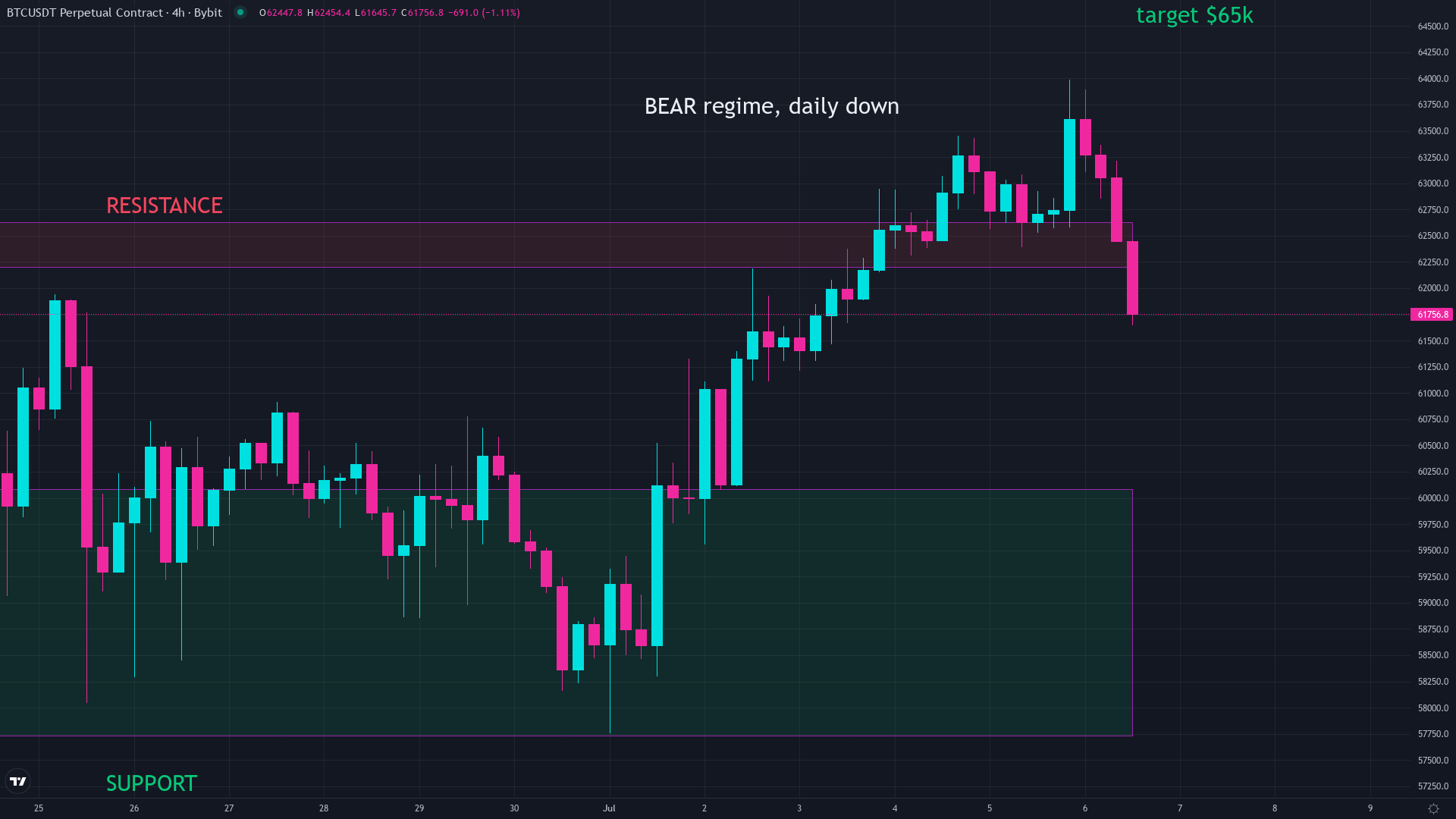
Bitcoin is down about 51% from its peak, fear is at extreme levels, and the price just bounced off its lows. If that sounds like a buying opportunity, you are not alone. But every Bitcoin bear market rally in history felt exactly like this. And every single one of them ended the same way: lower.
That does not mean you should panic. It means you should know the pattern, because the pattern has repeated in every cycle Bitcoin has ever had.
What a bitcoin bear market rally actually looks like
A bear market rally is a sharp bounce inside a larger downtrend. The price shoots up 20%, 30%, sometimes 40% or more. Social media fills with bottom calls. People who sold feel sick. People who bought feel smart. Then the rally fades, and the price makes a new low.
This is not a bug. It is how bear markets work, in crypto, in stocks, in everything. The drops are fast, the bounces are violent, and the real bottom only becomes obvious months after it already happened.
The full record: every major bounce before the real bottom
Here is what happened inside Bitcoin's three completed bear markets:
- 2014-2015 bear. Bitcoin fell from about $1,100 to $170. Along the way, it bounced roughly 50% off its March 2014 low (from around $340 to $500), convincing many the worst was over. It was not. The final low came in January 2015, about 10 months later.
- 2018 bear. Bitcoin peaked near $20,000 in December 2017. By February 2018 it had crashed to about $6,000, then rallied all the way back to $11,700. That is almost a double from the low. Twitter was euphoric. Then it spent the rest of the year grinding down to $3,200 in December 2018.
- 2022 bear. Bitcoin peaked near $69,000 in November 2021. By June 2022 it had crashed to about $17,600. Then it bounced to $25,000 by August, a 40%+ rally. Everyone debated whether the bottom was in. Two months later, FTX collapsed, and Bitcoin hit $15,500.
Three bear markets. Three violent rallies that looked and felt like the real recovery. Three new lows after.
Why bear market rallies are so convincing
There are a few reasons these bounces fool so many people:
- Oversold conditions snap back hard. When selling gets extreme, even a small wave of buying creates a sharp move. The speed of the bounce makes it feel like a reversal, not a relief rally.
- The news narrative flips. A 30% bounce generates headlines. Influencers call the bottom. Fear switches to greed. The story changes from “crypto is dead” to “the recovery is here,” often within days.
- Volume spikes look real. Big bounces come with big volume. But volume spikes happen on bear market rallies too, because short-sellers are covering and sidelined buyers are jumping in at the same time. High volume alone does not confirm a bottom.
Where we are right now
As of today, Bitcoin sits near $61,600. It peaked around $129,000 late last year. That is a 52% crash. The Fear and Greed Index reads 24, which is Extreme Fear. The daily trend is down.
If you have read the examples above, this setup looks familiar. That does not guarantee another leg down. But it means anyone calling this the definitive bottom is ignoring three cycles of evidence that says the same thing: the first big bounce in a bear market has never been the last.
For a closer look at what every prior crash says about how far Bitcoin can fall, check out how low Bitcoin can go based on every crash in its history.
How to tell a real bottom from a bear market rally
No one rings a bell at the bottom. But there are patterns that have shown up at every real cycle low:
- Time, not just price. Every bear market bottom in Bitcoin's history has taken at least 12 months from the peak. The current crash is about 9 months old. Bottoms are boring, slow, sideways grinds where nobody wants to buy anymore.
- Sentiment capitulation. Real bottoms happen when the people calling for a bounce stop calling. When social media goes quiet, when the influencers leave, when your group chat stops talking about crypto entirely.
- Price stays low and does nothing. A real bottom is not a V-shaped snap. It is weeks or months of flat, grinding, low-volume price action where nothing exciting happens. If the rally feels exciting, it probably is not the bottom.
The best thing you can learn from how long bear markets actually last is that patience is not just a nice idea. It is the strategy that has beaten every premature bottom call in Bitcoin's history.
What to do with this information
This is not a reason to be scared. Bitcoin has recovered from every single bear market and gone on to make a new all-time high. That track record is perfect, 4 for 4 over 15 years.
But the path from here to the next all-time high almost certainly runs through at least one more rally that looks like the recovery and is not. Knowing that pattern exists does not make you a pessimist. It makes you the person who does not get shaken out at the worst possible moment, because you expected the trap before it sprung.
Common questions
How big are Bitcoin bear market rallies?
Bear market rallies in Bitcoin have ranged from 20% to over 90%. The 2018 bear saw a bounce from $6,000 to $11,700, nearly doubling. The 2022 bear saw a 40%+ bounce from $17,600 to $25,000. Both made new lows after.
How long do Bitcoin bear market rallies last?
Most bear market rallies last a few weeks to a few months. The 2018 rally from February to May lasted about three months before rolling over. The 2022 summer bounce lasted roughly two months.
Is the current Bitcoin bounce a bear market rally?
No one knows in real time. But at 9 months since the peak and 51% down, this crash matches the profile of every prior bear market that produced at least one convincing rally before the real bottom.
Has Bitcoin ever recovered from a bear market?
Yes, every single time. Bitcoin has gone through four bear markets since 2011 and made a new all-time high after each one. The recovery has taken 12 to 25 months from the bottom.
How do you know when a Bitcoin bear market is over?
Historically, real bottoms come after 12+ months of decline, when sentiment is at its worst and price grinds sideways for weeks with low volume. The bottom is only obvious in hindsight.
Keep reading
We break down the market like this every day, free on Instagram and YouTube, and in depth inside the community.
Education, not financial advice. Trading involves real risk.
See it live on the charts