Bitcoin Open Interest, Explained (Why It Moves the Price)
Every time Bitcoin drops 10% in an hour and your timeline fills with screenshots of billions in liquidations, one number predicted the violence before it happened. That number is Bitcoin open interest. It is the simplest, most overlooked gauge of how much leveraged money is sitting in the market, unresolved, waiting for a spark.
Right now, aggregate Bitcoin futures open interest sits near $56 billion across all major exchanges. That is up roughly 14% over the last 30 days. Whether that matters, and what to do about it, depends on understanding what open interest actually is.
What is Bitcoin open interest?
Open interest counts the total number of futures and perpetual contracts that are still open. Not traded today, not volume. Just the positions that someone entered and has not yet closed.
Think of it like a room full of poker players. Volume tells you how many hands were dealt today. Open interest tells you how many players are still sitting at the table with chips on the line. The more chips on the table, the bigger the potential mess when someone tips it over.
When a new buyer and a new seller open a fresh contract against each other, open interest goes up by one. When one of them closes, it goes down by one. If an existing long just hands the contract to a new buyer, open interest stays flat, the position changed hands but the total count did not move.
Why rising open interest matters for Bitcoin
Rising open interest means new leveraged money is entering the market. People are making bets and leaving them open. By itself, that is neither bullish nor bearish. Every contract has a long side and a short side, so you cannot tell from open interest alone which direction the crowd is leaning.
What you can tell is how much fuel is sitting in the tank.
When open interest climbs high, the market is loaded with positions that will need to be closed eventually. If price moves sharply in one direction, the losing side gets liquidated, their forced closures push price further, which liquidates more people, which pushes price further. That chain reaction is why Bitcoin can drop 15% in a single candle on a random Tuesday. The crash is not news. The crash is a crowded room stampeding for the exit at the same time.
In our own data, periods where leverage fuel sits in the top 15% of the year see violent flushes roughly twice as often as periods where leverage is low. The tank fills quietly over weeks, then empties in hours.
What falling open interest tells you
Falling open interest means positions are closing. Traders are taking profits, cutting losses, or simply stepping away. If price is falling while open interest drops, that is usually the tail end of a selloff. The forced sellers are running out of positions to liquidate. The flush is finishing, not starting.
If price is rising while open interest drops, be cautious. That rally is fueled by short closures, not fresh buying. Once the shorts finish covering, the bid can dry up fast.
The healthiest rallies tend to show rising price and rising open interest together. That combination means new money is entering on the long side and absorbing selling. It is conviction, not just a squeeze.
How to read open interest alongside the funding rate
Open interest tells you how much fuel is in the tank. The funding rate tells you which side is paying a premium to hold their position. Together, they paint a clearer picture than either one alone.
- High open interest + positive funding rate: The market is loaded with longs who are paying to stay in. A sharp dip can trigger a long liquidation cascade.
- High open interest + negative funding rate: Shorts are crowded and paying for the privilege. A squeeze upward can force mass short closures.
- Low open interest + any funding rate: The market is light on leverage. Moves tend to be smaller and steadier. This is often the calm before the next buildup.
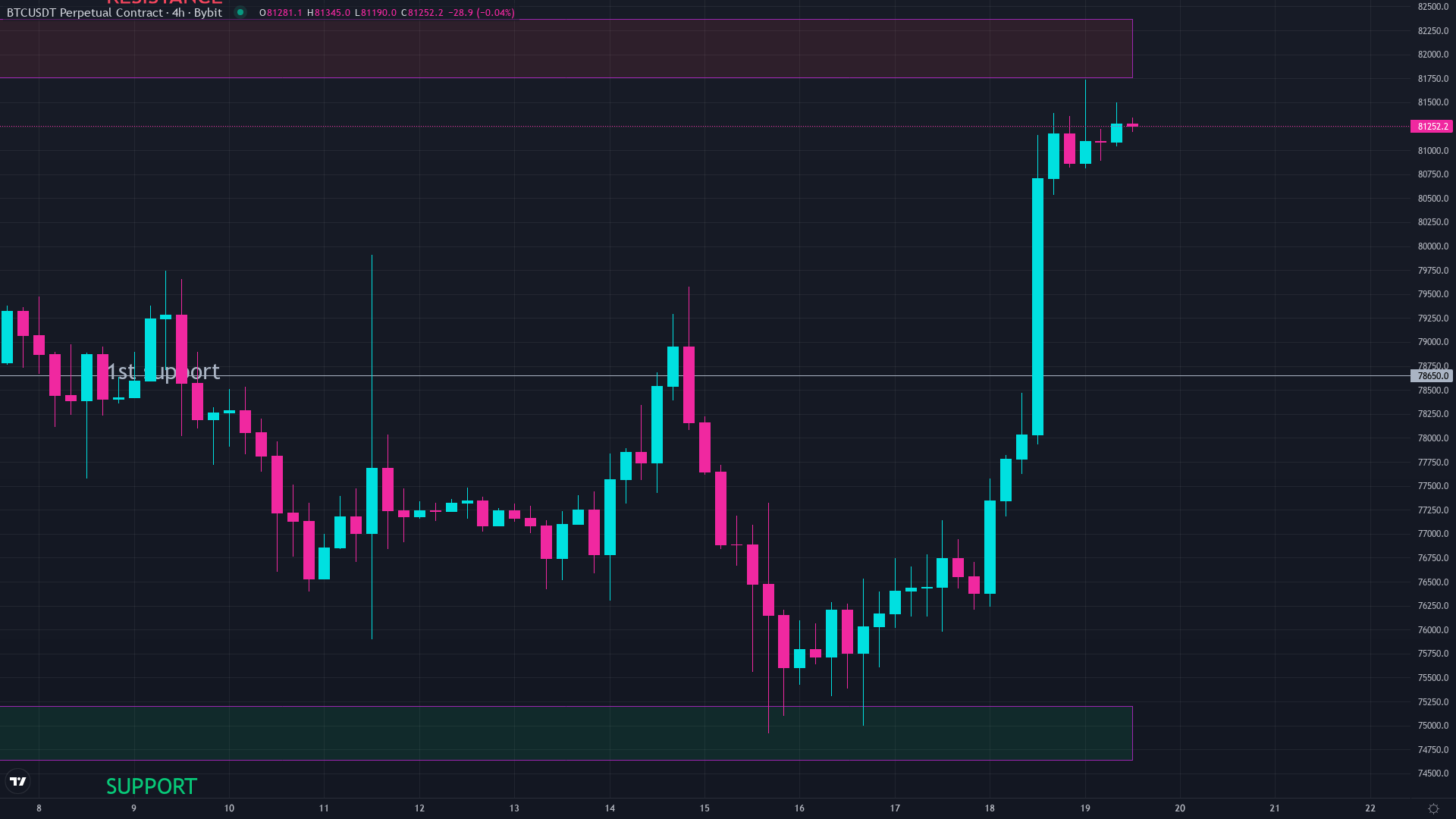
As of September 19, 2026, Bitcoin funding rates sit around the 54th percentile for the year, meaning longs are paying a small premium. Not extreme in either direction. But open interest has been climbing for weeks, which means the fuel tank is filling even while the price chops sideways near $81,000.
The open interest trap most people fall into
The mistake is treating open interest as a direction call. It is not. High open interest does not mean Bitcoin will crash, and low open interest does not mean it will rally. Open interest measures the size of the eventual move, not which way it goes.
Think of it as a coiled spring. A tightly wound spring will snap hard when it releases. Open interest tells you how tightly the spring is wound. The catalyst, the thing that actually triggers the release, comes from somewhere else: a surprise headline, a failed support level, a sudden spike in spot selling.
The traders who use open interest well are not predicting direction. They are managing risk. When open interest is high, they size smaller, set tighter stops, and expect the unexpected. When open interest is low, they know the next big move is still loading.
Where to watch it
CoinGlass and Coinalyze both offer free, real-time aggregate open interest charts across all major exchanges. The aggregate number matters more than any single exchange, because liquidations cascade across platforms.
Look at the trend over weeks, not the daily number. A steady climb from $40 billion to $56 billion over two months tells you more than a single-day spike. And always pair it with funding rates and liquidation data for the full picture.
Common questions
What does high Bitcoin open interest mean?
High open interest means a large number of leveraged positions are still open. It signals that the next sharp price move, in either direction, is likely to be violent because liquidations can cascade.
Is rising open interest bullish or bearish?
Neither on its own. Rising open interest means new leveraged money is entering. You need to check the funding rate and price direction to know which side is crowded.
What is the difference between open interest and volume?
Volume counts how many contracts traded in a period. Open interest counts how many contracts are still open and unsettled. Volume resets daily, open interest does not.
Where can I check Bitcoin open interest for free?
CoinGlass and Coinalyze both offer free, real-time aggregate open interest across all major exchanges.
Keep reading
We break down the market like this every day, free on Instagram and YouTube, and in depth inside the community.
Education, not financial advice. Trading involves real risk.