Bitcoin vs Ethereum: The Honest Comparison
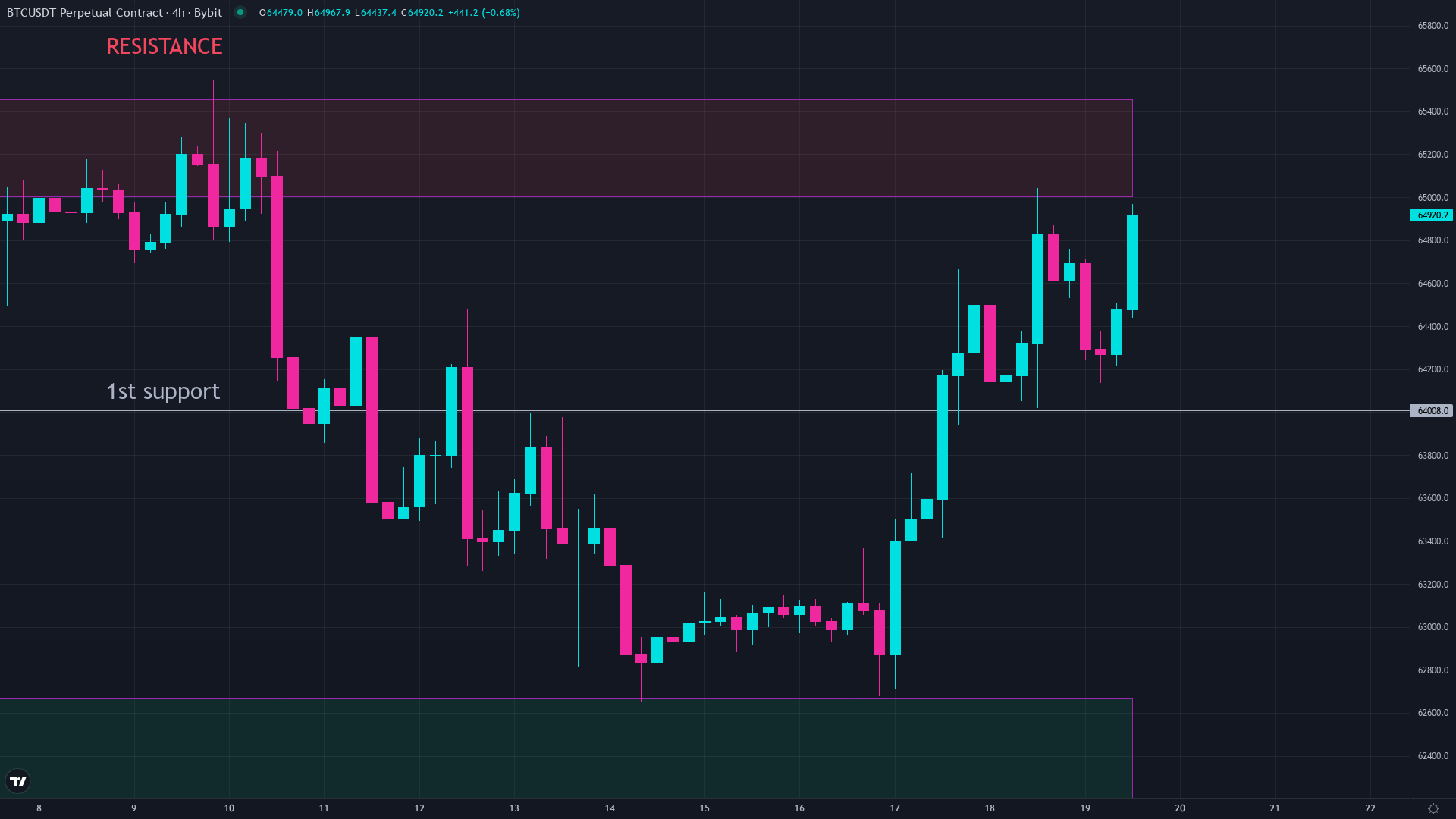
Bitcoin vs Ethereum is the first comparison every new investor runs into. They sit at the top of every crypto list, they account for most of the money in the market, and they look similar if all you check is a price chart. They are not similar. They were built for different reasons, they behave differently in crashes, and understanding the gap is worth more than picking a winner.
What Bitcoin and Ethereum actually do
Bitcoin does one thing: it moves value without a middleman. There is a hard cap of 21 million coins. About 20 million have already been mined. Nobody can print more. The entire pitch is scarcity plus decentralization. That is it.
Ethereum is a platform. It runs programs called smart contracts, which power lending apps, token swaps, digital art marketplaces, and thousands of other tools. Its native coin, ETH, is the fuel those programs burn to operate. There is no supply cap on ETH, but a fee-burning mechanism introduced in 2021 has made the supply grow very slowly, and in some periods it has actually shrunk.
Think of Bitcoin as digital gold. Think of Ethereum as a digital app store that charges its own currency for every transaction. Both are valuable ideas. They compete for your dollars, but they are not competing for the same job.
The scoreboard: Bitcoin vs Ethereum by the numbers
As of August 2026, Bitcoin trades near $65,000 with a market cap above $1.2 trillion. Ethereum trades near $1,900 with a market cap around $228 billion. Bitcoin is roughly five to six times bigger.
Bitcoin peaked near $126,000 in October 2025. From that high, it has fallen about 49%. Ethereum peaked near $4,950 in August 2025. From that high, it has fallen about 62%. This is a pattern, not a one-time event. Ethereum has historically acted like a louder version of Bitcoin: it rises more in good times and falls harder in bad times.
In the 2021 cycle, Bitcoin gained roughly 2,000% from its prior bottom while Ethereum gained roughly 5,600%. In the crash that followed, Bitcoin fell about 77% while Ethereum fell about 82%. The current cycle repeated the same pattern with smaller numbers on both sides.
Supply: the biggest difference
Bitcoin will never have more than 21 million coins. Period. That number is written into the code, enforced by every computer on the network, and cannot be changed without convincing the entire world to agree. It is the hardest supply cap in finance.
Ethereum does not have a cap. It issues new ETH to reward the validators who secure the network, and it burns a portion of every transaction fee. The net result lately has been very close to zero growth, sometimes slightly negative. But the supply is not fixed by rule. It floats based on how busy the network is. When activity drops, more ETH is created than burned, and supply grows.
This matters because scarcity is the core argument for Bitcoin as a store of value. Ethereum’s argument is different. Its value comes from being useful, from demand for block space, not from a hard limit on supply.
Risk: how each one behaves in a crash
Every crash in crypto history has punished Ethereum harder than Bitcoin. In the 2018 bear market, Bitcoin fell about 84% while Ethereum fell about 94%. In the 2022 bear market, Bitcoin fell about 77% while Ethereum fell about 82%. In the current bear market, the same thing is happening again: Bitcoin is down roughly 49% from its peak while Ethereum is down roughly 62%.
If you are the kind of person who checks prices every day, the ride in ETH is significantly rougher. If you are the kind of person who buys a fixed amount every month and does not look, the extra volatility matters less, but it is still there.
Which one should you own?
This is not a question anyone else can answer for you, because it depends on what you believe. If you believe the world needs a scarce, neutral, apolitical money that nobody controls, Bitcoin is the clearest bet on that thesis. If you believe the future of finance runs on programmable apps and Ethereum is the platform that wins, ETH is the bet on that thesis.
Most serious portfolios in crypto hold both, weighted toward Bitcoin, because Bitcoin is the less volatile of the two and the more battle-tested store of value. But there is no law that says you must hold both, and there is no shame in picking the one whose story makes more sense to you.
The worst thing you can do is buy whichever one went up more last week. That is not a strategy. That is chasing. And chasing in crypto, where 50% crashes are normal, is how accounts go to zero.
Common questions
What is the main difference between Bitcoin and Ethereum?
Bitcoin is built to be scarce digital money with a hard cap of 21 million coins. Ethereum is a platform that runs apps and smart contracts, with no fixed supply limit.
Is Ethereum riskier than Bitcoin?
Historically, yes. Ethereum falls harder than Bitcoin in every crash. In the current cycle, Bitcoin is down about 49% from its peak while Ethereum is down about 62%.
Should I buy Bitcoin or Ethereum?
It depends on what you believe in. Bitcoin is the bet on scarce digital money. Ethereum is the bet on a programmable finance platform. Most serious crypto investors hold both, weighted toward Bitcoin.
Does Ethereum have a supply cap like Bitcoin?
No. Bitcoin has a hard cap of 21 million coins. Ethereum has no fixed cap, but a fee-burning mechanism keeps its supply growth very close to zero.
Why does Ethereum crash harder than Bitcoin?
Ethereum trades like a louder version of Bitcoin. It rises more in bull markets and falls more in bear markets because it sits further out on the risk curve.
Keep reading
- Is Ethereum Just Leveraged Bitcoin? Nine Years of Data
- Is Bitcoin a Good Investment? The Honest Answer
We break down the market like this every day, free on Instagram and YouTube, and in depth inside the community.
Education, not financial advice. Trading involves real risk.