Bitcoin Whales Explained: Who Owns the Most BTC?
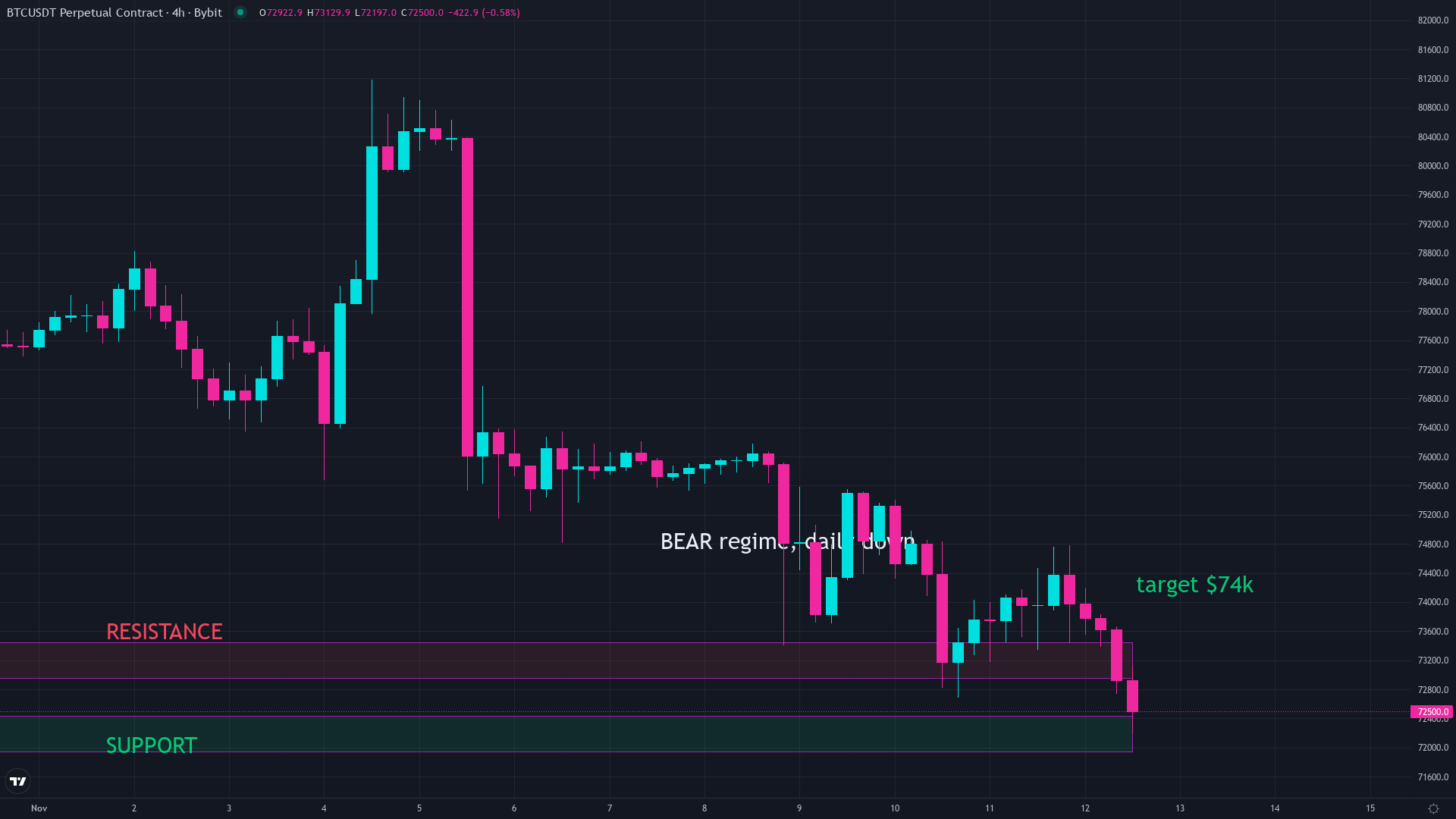
Bitcoin whales are the biggest players in crypto, and if you have spent any time reading about Bitcoin, you have probably seen a headline like “whales are dumping” or “whales are accumulating.” But what does that actually mean? Who are these whales, how much Bitcoin do they really control, and should you care what they do? Let us walk through the real numbers.
What is a Bitcoin whale?
A Bitcoin whale is any wallet (or person, or company) that holds a very large amount of BTC. The most common cutoff is 1,000 BTC, which at today’s price of roughly $72,000 means about $72 million worth of Bitcoin in a single wallet.
That is not a casual investor. Whales are usually one of three things: early adopters who bought Bitcoin for almost nothing years ago, companies like ETF issuers or corporate treasuries, or exchanges holding coins on behalf of millions of users.
How many Bitcoin whales exist right now?
As of 2026, roughly 2,044 wallets hold at least 1,000 BTC. Together they control about 7.17 million BTC, which is approximately 36% of the entire circulating supply. Read that again. About 2,000 addresses own more than a third of all the Bitcoin that will ever be available to trade.
If you widen the definition to wallets holding 100 BTC or more (around $7.2 million at current prices), the count jumps to over 20,000 wallets. That number hit a new multi-year high in 2026, up about 11% from a year ago, even while the price dropped roughly 40% from its peak.
Why whale behavior matters (and when it does not)
When a whale moves thousands of Bitcoin onto an exchange, people panic. The assumption is simple. Big deposit to an exchange means a big sell is coming, which means the price is about to drop.
Sometimes that is exactly what happens. A whale selling $50 million of Bitcoin into a thin order book can move the price by several percent in minutes. That is real. But here is the part most people miss.
Not every exchange deposit is a sale. Whales move coins between wallets constantly for security, for lending, for collateral, or just to reorganize. A single wallet splitting into two does not mean someone sold. It means someone moved coins from one pocket to another.
The more useful signal is the trend, not the individual move. When the total number of whale wallets is growing over weeks and months, that tells you big money is accumulating, not running. When whale wallet counts are shrinking, somebody with deep pockets is heading for the exit.
What whales are doing right now
Here is what makes the current market interesting. Bitcoin is sitting near $72,000, down significantly from its all-time high. The Fear and Greed Index reads 28, firmly in “Fear” territory. Most retail investors are scared or checked out.
Meanwhile, the number of whale wallets holding 100+ BTC has been climbing. Over the past year, roughly 2,000 new wallets crossed that threshold. Big money is not leaving. It is quietly stacking while the crowd looks away.
This pattern has shown up before. In every previous bear market, whale accumulation picked up speed while the price was still falling. Whales do not wait for the bottom to be confirmed. They buy into the fear, and they tend to be right over the following year or two.
Should you copy the whales?
Whale tracking tools are free and widely available. You can watch large transactions in real time on blockchain explorers and alert services. But copying a whale trade is harder than it sounds.
- You see the move after it happens. By the time a whale transfer shows up on your screen, the market may have already reacted.
- You do not know the reason. A 5,000 BTC transfer could be a sale, a wallet shuffle, or collateral for a loan. The blockchain shows the what, never the why.
- Whales have a different time horizon. A whale buying at $72,000 might be perfectly happy to hold for three years. If you need that money in six months, you are playing a different game.
The honest takeaway is this. Whale data is useful context, not a trading signal. If whale wallet counts are growing while the price is falling, that is a data point worth noting. But it does not tell you when the price turns, and it does not replace your own plan.
The bottom line on Bitcoin whales
About 2,000 wallets own more than a third of all Bitcoin. That concentration sounds scary until you realize it has been true for over a decade, and Bitcoin kept working anyway. The network does not care who holds the coins. It processes every transaction the same way whether you hold 0.01 BTC or 10,000.
What whales do tell you is where the conviction sits. Right now, in the middle of a bear market, the biggest holders in the world are adding, not selling. That does not guarantee anything. But it is worth knowing who is on the other side of your fear.
Common questions
What is a Bitcoin whale?
A Bitcoin whale is any wallet or entity holding at least 1,000 BTC. At current prices that is roughly $72 million in a single address.
How many Bitcoin whales are there?
As of 2026, about 2,044 wallets hold 1,000 or more BTC. If you lower the bar to 100 BTC, the count rises above 20,000.
How much Bitcoin do whales control?
Wallets holding 1,000 or more BTC control roughly 7.17 million BTC, which is about 36% of the total circulating supply.
Should you follow whale trades?
Whale data is useful context but not a reliable trading signal. You see moves after they happen, you cannot know the reason behind them, and whales typically operate on a much longer time horizon than most retail investors.
Are Bitcoin whales buying or selling right now?
The number of large wallets has been growing through 2026 even as the price dropped roughly 40% from its peak. The trend suggests big holders are accumulating, not exiting.
Keep reading
We break down the market like this every day, free on Instagram and YouTube, and in depth inside the community.
Education, not financial advice. Trading involves real risk.