Is Bitcoin a Hedge Against Inflation?
Everyone with an opinion on Bitcoin eventually makes the same claim. Bulls say it is digital gold, a perfect shield against rising prices. Critics say it crashed right when inflation hit its worst, which makes the whole idea a joke. The truth about whether Bitcoin is a hedge against inflation sits somewhere in the middle, and it depends almost entirely on one thing most people skip over.
The case for Bitcoin as an inflation hedge
Start with the long view. From 2015 through 2025, Bitcoin delivered roughly 60% a year in returns. Gold returned about 8%. The S&P 500 returned about 12%. U.S. consumer prices rose roughly 3% a year over that same stretch.
In other words, someone who held Bitcoin for a full decade did not just beat inflation. They lapped it. A thousand dollars invested in Bitcoin at the start of 2015 turned into more than $300,000 by early 2025. The same thousand in gold became about $2,100. In a savings account, after adjusting for inflation, it actually lost purchasing power.
Over long periods, Bitcoin has outrun every traditional store of value by a wide margin. That is the strongest version of the bull argument, and the numbers behind it are real.
The case against it
Now zoom into the worst possible test. In June 2022, U.S. inflation printed 9.1%, the highest reading in four decades. If Bitcoin were a reliable inflation shield, you would expect it to hold steady or rise while prices surged. Instead, Bitcoin fell from about $47,000 in January 2022 to under $20,000 by June. That is a 58% crash in six months, right when you needed the hedge the most.
Gold held up much better during that stretch. It barely moved. Treasury bonds designed to track inflation did their job. Bitcoin did the opposite of what a hedge is supposed to do in the moment it was needed.
Critics point to this and say the inflation hedge story is marketing, not math. And for anyone who bought Bitcoin in early 2022 specifically to protect against rising prices, they have a point.
What actually explains the gap
The answer is time horizon, and it matters more than most people realize.
Bitcoin acts like a risk asset in the short term. When markets panic, when interest rates spike, when liquidity dries up, Bitcoin sells off with everything else. Sometimes harder. It is wired into the same global financial plumbing as stocks and speculative tech. In a crisis, traders sell what is liquid and volatile first. That is Bitcoin.
But over years, Bitcoin’s fixed supply cap of 21 million coins does the heavy lifting. No government prints more of it. No central bank adjusts its supply schedule. Every four years, the rate of new Bitcoin entering circulation gets cut in half through the halving. The result is a supply that gets tighter over time while demand, measured by wallets, ETF inflows, and nation-state interest, has only grown.
That slow squeeze shows up in the long-term returns. It just does not protect you on any given Tuesday when the Federal Reserve raises rates and everything sells off.
Where Bitcoin sits right now
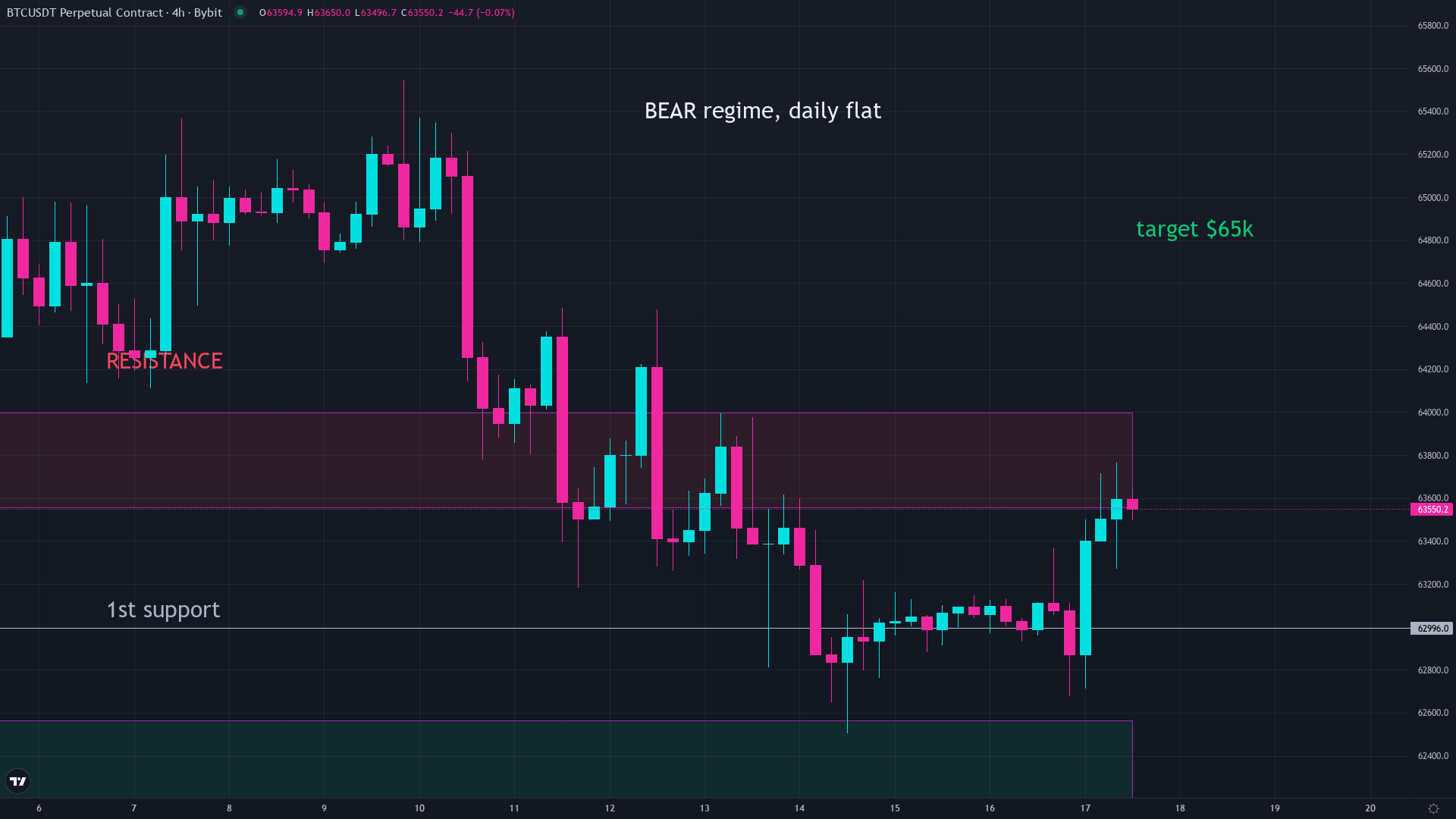
As of August 2026, Bitcoin trades near $63,400. U.S. inflation for July came in at 3.4% year over year, well off the 9.1% peak but still above the Fed’s 2% target. Bitcoin is roughly 50% below its October 2025 all-time high.
If you bought at the top and are sitting on that kind of loss, the inflation hedge pitch feels hollow. And you are not wrong to feel that way. Short-term price action and inflation protection are two different things.
But if you zoom out further, Bitcoin’s track record over any rolling five-year or ten-year window has crushed inflation by a factor that makes every other asset look flat. You can check the monthly returns chart to see how those gains and losses actually distribute across the calendar.
The honest answer
Bitcoin is not a safe haven. It does not protect you during the acute phase of a financial shock. Gold and inflation-linked bonds are better at that, and pretending otherwise is dishonest.
What Bitcoin has been, so far, is the single best long-term store of value ever created in raw return terms. Over a decade it outran inflation, gold, stocks, real estate, and everything else anyone could have bought. The tradeoff is that you had to survive multiple crashes of 50% or more along the way. Not everyone can sit through that, and there is nothing wrong with admitting it.
If your time horizon is months, Bitcoin is not an inflation hedge. If your time horizon is years, nothing else in recorded financial history has beaten inflation by as wide a margin.
Both statements are true. Anyone telling you only one of them is selling something.
Common questions
Is Bitcoin a good hedge against inflation?
Over long periods of five years or more, Bitcoin has outperformed inflation by a wider margin than any other asset. Over short periods, it often crashes alongside stocks and fails as a hedge when you need it most.
Did Bitcoin protect against inflation in 2022?
No. Bitcoin fell roughly 58% in the first half of 2022 while U.S. inflation hit a 40-year high of 9.1%. Gold and inflation-linked bonds held up far better during that stretch.
Is Bitcoin better than gold for inflation?
Bitcoin has delivered far higher returns than gold over any ten-year window, but gold is more stable during sudden crises. Bitcoin beats inflation over years. Gold protects you during the panic.
Why does Bitcoin crash when inflation rises?
Rising inflation usually leads to higher interest rates, which pull money out of risky assets. Bitcoin trades like a risk asset in the short term, so it sells off with stocks and tech when rates spike.
Keep reading
We break down the market like this every day, free on Instagram and YouTube, and in depth inside the community.
Education, not financial advice. Trading involves real risk.