Is Bitcoin Mining Profitable? The Honest Math (2026)
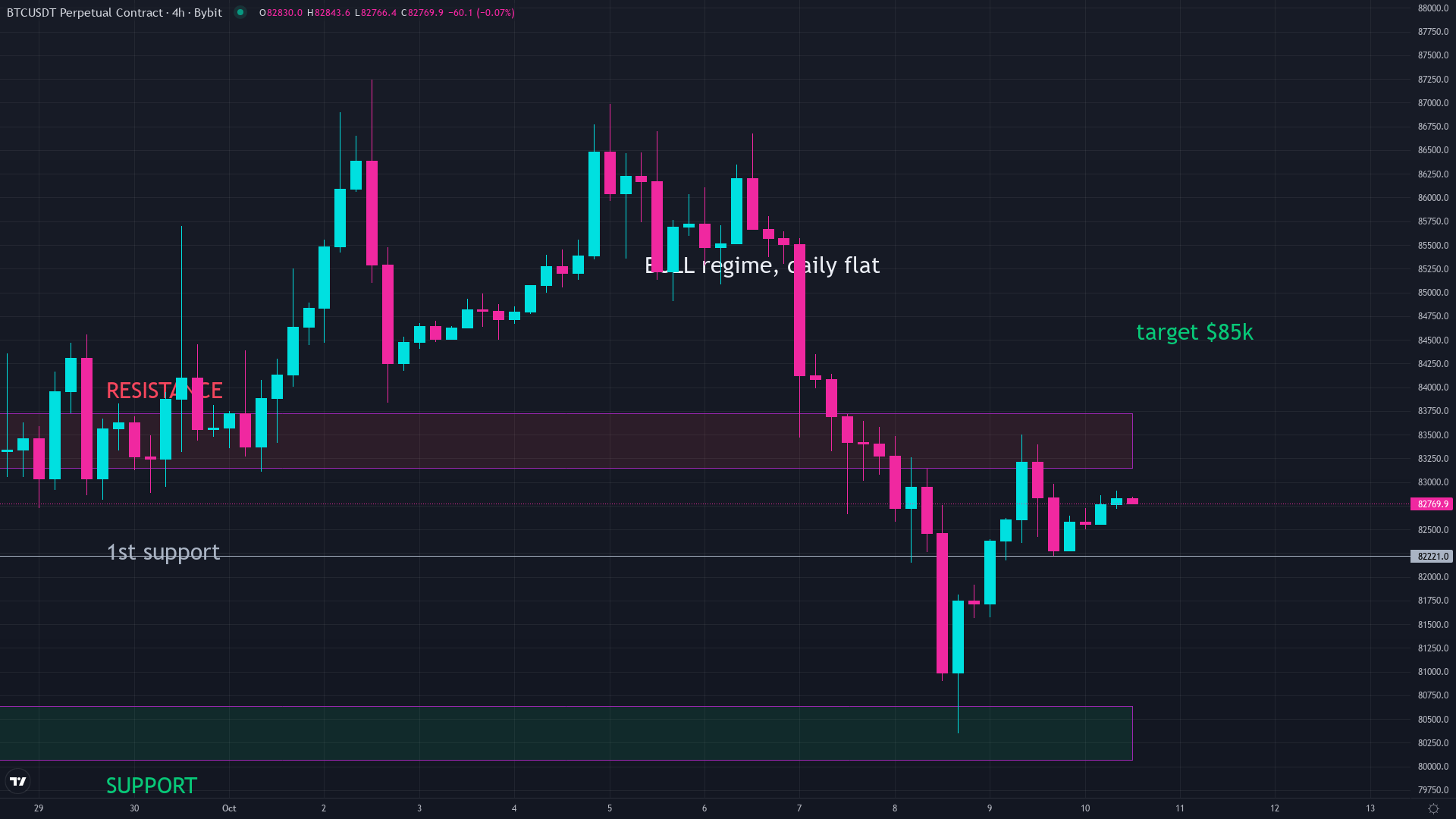
Every ten minutes, a Bitcoin miner somewhere in the world wins 3.125 BTC. That is roughly $258,000 at today’s price. Multiply by 144 blocks a day and the network hands out about 450 BTC every 24 hours, worth roughly $37 million. So is bitcoin mining profitable? For some people, very. For most people who try it at home, no. The difference comes down to one number on your electricity bill.
What bitcoin mining costs right now
Mining is a race to solve a math puzzle. The winner gets the block reward (currently 3.125 BTC after the April 2024 halving cut it from 6.25). The race burns electricity, and the faster your hardware runs, the more power it draws.
The two variables that decide whether you make money or lose money are your electricity rate and your hardware efficiency. Everything else, the pool fee, the internet bill, the cooling, matters less than those two.
On a top-tier machine like the Antminer S23 Hydro at a hosted rate of $0.05 per kilowatt-hour, the all-in electricity cost to mine one Bitcoin sits around $23,000. Bitcoin trades near $82,700 today. That is a fat margin.
Now run the same machine on a typical U.S. household rate of $0.17 per kWh. The electricity cost per coin jumps to roughly $81,000. At that price, you are barely breaking even before you count the hardware, the noise, and the heat turning your spare room into a sauna. A small move down in BTC price and you are paying the electric company to lose money.
The break-even line most people miss
The break-even electricity rate, where revenue exactly equals the power bill, sits around $0.08 to $0.10 per kWh on current-generation hardware. Below that line, mining prints money. Above it, mining burns money. The average American pays roughly $0.17. The average European pays even more.
Industrial miners in Texas, Paraguay, and parts of the Middle East pay $0.03 to $0.05. That is why they exist and why the hobby miner in a suburban garage usually does not survive a full year.
Why the 2024 halving changed everything
Before April 2024, miners earned 6.25 BTC per block. The halving cut that to 3.125. Revenue per block was sliced in half overnight, but electricity costs did not drop at all. Every miner on the planet instantly needed Bitcoin’s price to be roughly twice as high just to earn the same dollar revenue per block as the day before.
The network hash rate, which measures total computing power pointed at Bitcoin, peaked near 1,100 EH/s in late 2025. It has since pulled back to around 983 EH/s as less efficient miners shut down. That is the market working. The machines that cannot pay their power bill get unplugged, the difficulty adjusts, and the survivors earn a slightly larger share of the shrinking reward.
Home mining vs. industrial mining
Industrial operations run 40 to 60% margins because they negotiate bulk power contracts, deploy the latest hardware at scale, and locate in jurisdictions where electricity is cheapest. They treat mining as a manufacturing business. Raw material in (electricity), product out (BTC).
Home miners face the opposite setup. Residential power rates are two to four times higher. A single machine generates heat and noise 24 hours a day. Hardware that costs $3,000 to $10,000 depreciates fast as newer, more efficient models ship every year. And unlike an industrial site, you cannot call your power company and negotiate a $0.04 rate for your garage.
That does not mean home mining is always a losing bet. If you live somewhere with unusually cheap power (parts of the Pacific Northwest, certain rural co-ops, or anywhere with surplus solar), the math can work. But you need to check the current cost to mine one Bitcoin against your actual rate before you plug anything in.
The number that matters more than hash rate
Most mining content focuses on hash rate, difficulty, and block times. Those matter, but they are symptoms. The number that actually decides your fate is dollars of electricity per BTC produced. If that number is below the market price of Bitcoin, you make money. If it is above, you lose money. Everything else is noise.
Right now, Bitcoin trades near $82,700. The most efficient industrial rigs produce a coin for roughly $23,000 to $35,000. That spread is why publicly traded miners like Marathon and Riot still operate. The spread on a home rig at residential rates is razor-thin to negative. That gap is why the hobby miner keeps quitting.
So should you mine Bitcoin?
If you have access to power under $0.08 per kWh, current-generation hardware, and you understand that this is an electricity arbitrage business (not a magic money machine), mining can be genuinely profitable. If your power costs more than $0.10 and you are running last-generation equipment, you are almost certainly better off simply buying Bitcoin and holding it.
The honest answer to whether bitcoin mining is profitable is the same as any other business question. It depends on your cost of production. Know your cost. Compare it to the price. If the margin is not there, the math will not lie to make you feel better.
Common questions
Is bitcoin mining profitable in 2026?
For industrial miners with electricity under $0.08 per kWh and efficient hardware, yes. For home miners on residential power rates above $0.10 per kWh, mining typically loses money after the 2024 halving cut the block reward in half.
How much does it cost to mine one bitcoin?
It depends on your electricity rate. On a top-tier machine at $0.05 per kWh, about $23,000. On a typical U.S. household rate of $0.17 per kWh, roughly $81,000. Bitcoin trades near $82,700 in October 2026.
Can you mine bitcoin at home?
You can, but most home miners lose money because residential electricity rates are two to four times higher than industrial rates. You need cheap power (under $0.08 per kWh) and current-generation hardware to have a realistic shot at profit.
How many bitcoins are mined per day?
About 450 BTC per day. The network produces roughly 144 blocks every 24 hours, each paying 3.125 BTC after the April 2024 halving.
What happens to bitcoin mining after every halving?
The block reward is cut in half, so miners earn half as many new coins per block. Less efficient miners shut down, difficulty adjusts downward, and the survivors earn a larger share of the smaller reward.
Keep reading
We break down the market like this every day, free on Instagram and YouTube, and in depth inside the community.
Education, not financial advice. Trading involves real risk.