Paper Trading Crypto: Does It Actually Work?
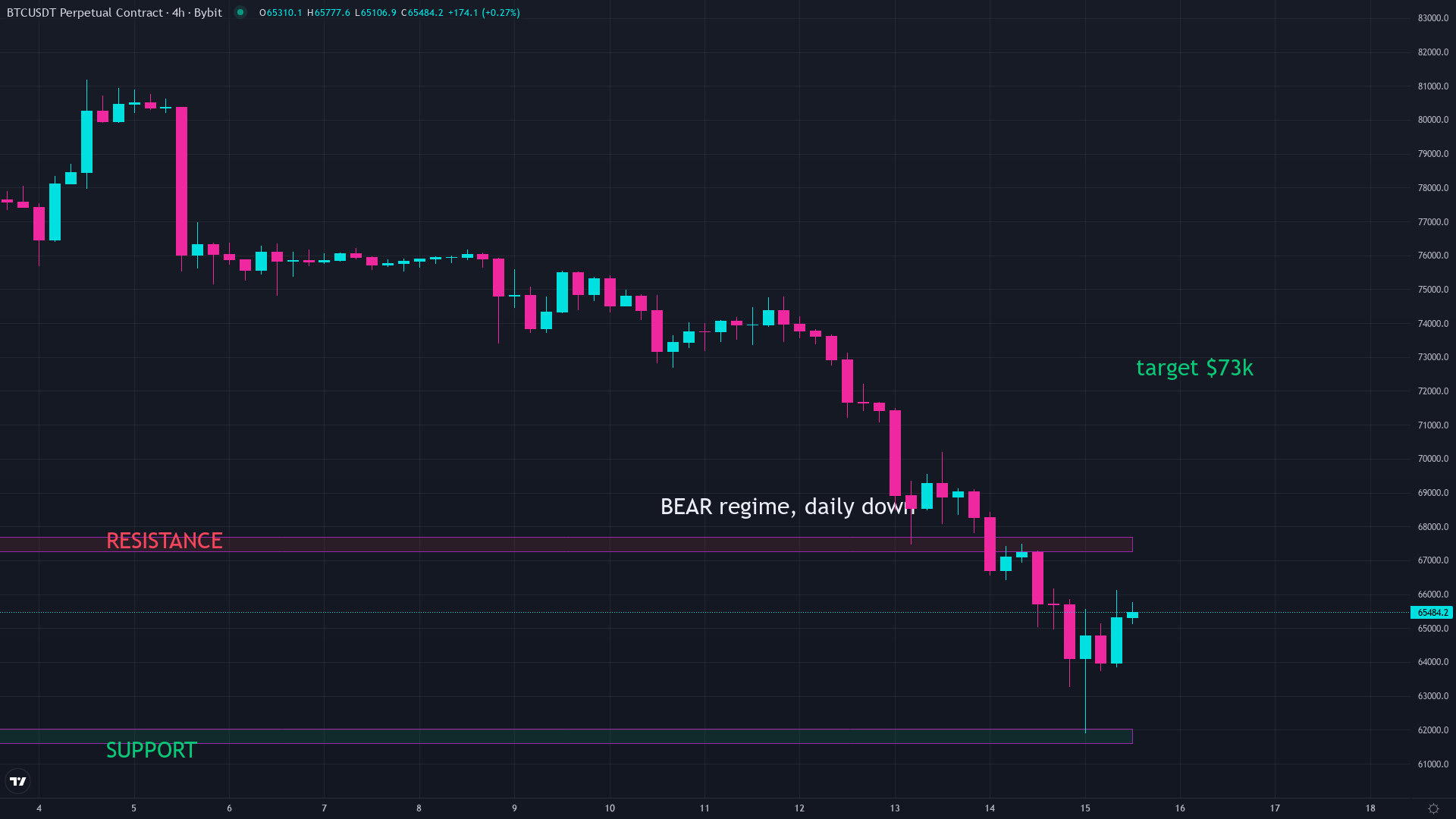
Paper trading crypto has a strange track record. Plenty of people make money doing it. Then they switch to real money, trade the exact same plan, and the results fall apart. Same charts. Same rules. Same person. So what changed?
The answer is not that paper trading is useless. Paper trading tests one thing very well and another thing not at all. Most people never learn which is which.
What paper trading crypto actually is
Paper trading means placing practice trades with pretend money on real, live prices. The name comes from the old days, when people wrote their trades down on paper instead of placing them. Today many exchanges and charting tools have a practice mode, often called a demo account. You get a fake balance, you click buy and sell, and the screen keeps score.
Nothing is at risk. That is the whole point. It is also the whole problem.
What paper trading is good for
Used the right way, a demo account does three jobs well.
- Learning the buttons. How to place an order, where the stop goes, how to size a trade. A wrong click with pretend money costs nothing. The same wrong click with real money can cost a week of profit.
- Checking that your rules are clear. If you cannot tell whether a trade fits your plan while it is happening live, the plan is too fuzzy. Practice mode exposes that fast.
- Building the routine. Showing up at the same time, checking the same things, writing down every trade. Habits are free to practice.
It also pairs well with testing a plan on old price data. Backtesting a crypto strategy tells you whether the idea worked in the past. Paper trading tells you whether you can follow it in real time, when you cannot see the right side of the chart.
Why paper trading results do not match real trading
Here is where the pretend scoreboard starts lying to you. There are three gaps between practice and real, and they all push in the same direction. Your practice results look better than your real ones will.
Gap one is the fill. In practice mode, you usually get the exact price you clicked. In a real market, there has to be someone on the other side of your trade. When price is moving fast, your order can fill a little worse than you wanted, and a stop can trigger lower than where you set it. Each miss is small. Over a hundred trades, small adds up.
Gap two is the cost. Real exchanges charge a fee when you get in and again when you get out. Many practice modes leave fees out or simplify them. A plan that makes a thin profit on paper can be a losing plan once every trade pays the toll twice.
Gap three is you. This is the big one. With pretend money, a losing trade is a number on a screen. You hold it calmly and let the plan play out. With real money, that same losing trade feels like your rent. You close early. You move the stop. You skip the next setup because the last one stung, and that is the one that works.
The plan did not change. The person running it did. Paper trading can prove your system works. It cannot prove that you do.
The mistake that makes practice worthless
A lot of people paper trade with a pretend $100,000 when their real account will be $1,000. Then they take trades they would never take with real money, because why not? That is not practice. That is a video game with a chart on it.
If you are going to practice, practice the real thing. Set the demo balance to what you will really deposit. Risk the same small slice on every trade that you would risk live. I risk 1% of my account per trade with real money, so 1% is what I would use in practice. Log every trade in a trading journal, including the ones you skipped. Count the fees yourself if the platform does not.
Boring practice is useful practice.
How to move from paper trading to real money
The jump from pretend to real is where most of the damage happens. So do not jump. Walk.
- Paper trade until the rules are automatic. Not until you are up a lot. Until you can follow the plan without arguing with it, trade after trade.
- Go live at the smallest size the exchange allows. The goal here is not profit. The goal is to feel real money move and still follow the rules.
- Compare the two logs. Put your practice trades next to your tiny real trades. Did you take the same setups? Did you hold to the same exits? The difference between those two logs is the exact thing you need to fix.
- Raise size slowly. Only after the real log looks like the practice log. Good position sizing is what keeps this step from hurting.
Notice what this does. It turns a scary question, whether you are ready for real money, into a simple check you can measure.
So does paper trading work?
Yes, for what it is. Paper trading crypto is a flight simulator. It teaches you the controls and the checklist, and pilots train in one before they fly the real thing. But simulator hours alone are not the same as flying, because the simulator cannot make your hands shake.
Use practice mode to learn the plan. Use small real money to learn yourself. The traders who get hurt are the ones who think the first lesson covers the second.
Common questions
What is paper trading in crypto?
Paper trading is placing practice trades with pretend money on real, live prices, usually in a demo account. Nothing is at risk, so it is a safe way to learn how orders, stops and trade sizes work.
Does paper trading crypto actually work?
It works for learning the buttons, testing whether your rules are clear, and building a routine. It does not test how you behave when real money is on the line, which is where most plans break.
Why are paper trading results better than real trading results?
Practice accounts usually give you the exact price you clicked and often leave out fees, and pretend losses do not hurt. Real trades fill a little worse, pay a fee both ways, and come with emotions that push you to break your own rules.
How long should you paper trade before using real money?
Until following your rules feels automatic, not until the pretend balance is up a lot. Then go live at the smallest size the exchange allows and compare your real trade log with your practice log.
Is paper trading the same as backtesting?
No. Backtesting checks whether an idea worked on old price data, while paper trading checks whether you can follow the idea in real time without seeing what comes next.
Keep reading
- How to Backtest a Crypto Trading Strategy (Without Fooling Yourself)
- How to Start Trading Crypto (Without Blowing Up Your First Month)
We break down the market like this every day, free on Instagram and YouTube, and in depth inside the community.
Education, not financial advice. Trading involves real risk.