Part-Time Crypto Trading: Can 2 Hours a Day Actually Work?
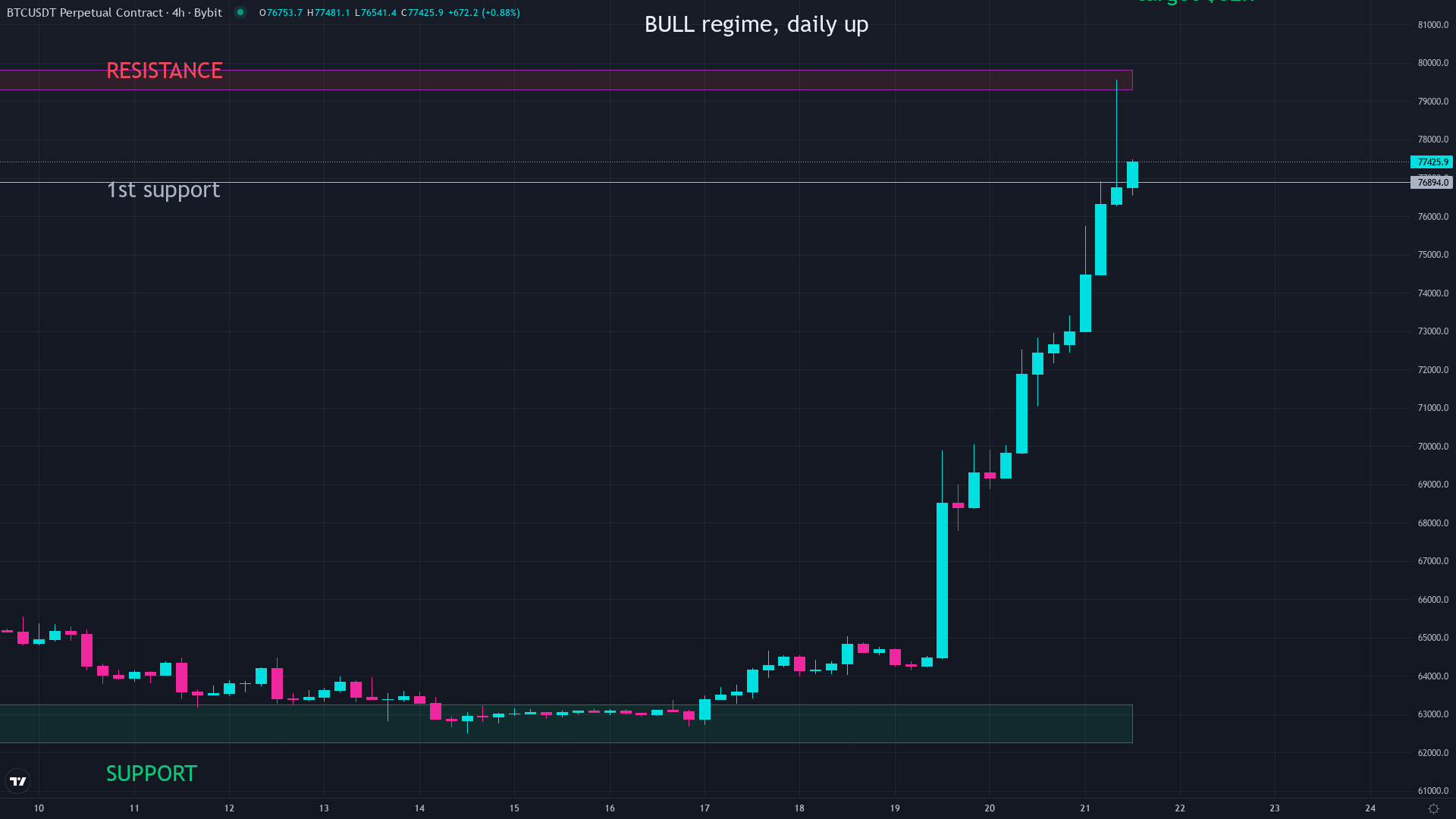
Everyone told me that part-time crypto trading was not serious. The real version was supposed to need six screens and twelve hours a day. I tried that. It was not better. It was just longer. Today I trade about two hours a day. My win rate is 70%. I am up 34% across 109 logged trades. Here is what actually changed.
What Part-Time Crypto Trading Actually Means
Part-time crypto trading is not just cutting your hours in half. The strategy has to match the time you have. A trader who jumps in and out of positions every few minutes needs to watch every price move. A trader who holds a position for a few days does not. The gap between those two styles is not skill. It is schedule.
If you are fitting trading around a job, a family, or another business, you need to pick a style that does not punish you for stepping away from the screen. Holding trades for a few days instead of a few minutes is the only way to make part-time trading work without the math turning against you. Short-term, rapid-fire trading without constant attention means missing the good signals and catching only the noise.
What 2 Hours a Day Looks Like in Practice
My routine fits on an index card. About 30 minutes before the New York market opens, I review my watchlist, mark the price levels I care about, and decide in advance exactly what I will trade and what I will skip. Then I watch the first hour of the New York open, where the biggest moves in Bitcoin almost always happen. If a clean setup appears, I take it. If it does not, I close the charts and go about my day.
In the evening I spend about 20 more minutes updating my journal and setting up for the next day. That is the full routine. It rarely goes over two hours. On most days it is closer to 90 minutes.
Bitcoin trades around the clock, but the biggest moves almost always cluster into the same windows: the overlap between the London and New York sessions, and the first hour of the New York open. Part-time traders who focus only on those windows are not missing out. They are filtering out most of the random noise that traps full-time traders into overtrading.
The Real Numbers Behind a 2-Hour Trading Day
I track every trade in a public journal. After 109 trades, here is what the data shows.
- Win rate: 70% (not counting trades that ended right at zero)
- Risk per trade: 1% of the account, every single trade, no exceptions
- Average trades per month: about 18
- Total return: +34%
- Biggest single loss: capped at 1% of the account
None of those numbers required me to sit at a screen all day. Most of those 18 trades per month came from one or two focused sessions per week. The other days I skipped roughly 200 setups that looked interesting but did not meet my rules.
That skipping is not patience as a virtue. It is the actual strategy. When you only have two hours, you cannot afford to take a B-minus setup hoping it turns into an A. You wait for the one that fits, then you act. Part-time trading forces the discipline that most full-time traders spend years trying to develop.
Keeping your trade size fixed at 1% every single time is what turns a decent win rate into real, consistent returns. If you are still changing how much you risk based on how confident you feel about a setup, read the breakdown of position sizing in crypto first. That one fix matters more than any entry signal.
The Mistake That Wrecks Part-Time Traders
The most common mistake is picking a system built for full-time traders and then trying to run it in two hours. It does not work. A rapid-fire short-term system needs someone watching every tick. Running it part-time means you miss the entries when they matter and catch the bad moves when they do not.
The fix: match your timeframe to your schedule before you start a single trade. If you have two hours a day, you should be watching 4-hour or daily price bars, not 5-minute ones. Longer timeframes filter out more random noise, require far less monitoring, and let you set your plan before stepping away from the screen.
The second mistake is skipping the journal. Part-time traders have fewer trades to learn from. If you take 18 trades a month instead of 180, each one carries more weight. You need to know exactly why every trade won or lost. Without records, the same mistake can repeat for months before you notice it. The guide on how to keep a crypto trading journal covers the exact system worth building before you take another trade.
Part-time crypto trading works. Not because you can squeeze a full-time strategy into fewer hours, but because trading fewer, better setups with a written system is its own edge. One that happens to take about two hours a day.
Common questions
Can you make money trading crypto part time?
Yes, but the strategy has to match the schedule. Short-term systems that need constant screen time do not translate to part-time hours. Holding trades for a few days at a time, targeting the main session windows, is the approach that makes the numbers work.
How many hours a day do you need to trade crypto?
One to two focused hours is enough if you trade longer-timeframe charts and plan your session in advance. The key is picking the right session windows rather than being available all day.
What is the best strategy for part-time crypto trading?
Session-based trading and holding positions for a few days work best because they do not require constant monitoring. Pick the London-New York crossover or the first hour of the New York open and ignore the rest of the clock.
Can I trade crypto while working a full-time job?
Yes. Use 4-hour or daily charts, plan your trades during lunch or evenings, and set your targets and stop losses before you step away from the screen. A clear pre-session routine matters more than total hours spent watching charts.
Keep reading
- Position Sizing in Crypto: The 1% Rule That Protects Your Account
- Crypto Trading Journal: Why Most Traders Skip It and Pay the Price
We break down the market like this every day, free on Instagram and YouTube, and in depth inside the community.
Education, not financial advice. Trading involves real risk.