What Happens After a Bitcoin Halving? (Every Cycle Compared)
Every Bitcoin halving has been followed by a rally. Four out of four times. That is a perfect record, and it is the reason the halving is the most talked-about event in crypto. But if you zoom in on the actual numbers, the story gets more interesting than “number go up.”
The gains after each halving keep shrinking. The timelines keep stretching. And the people who expect a repeat of 2012 are setting themselves up for the wrong kind of surprise. Here is what happens after a Bitcoin halving, cycle by cycle, with real numbers and zero wishful thinking.
What happens after a Bitcoin halving (the record so far)
Bitcoin has gone through four halvings. Each one cut the number of new coins created per block in half. Each one was followed by a new all-time high. But look at the returns side by side.
- 2012 halving. Price at the halving was around $12. Twelve months later it crossed $1,075. That is roughly an 8,800% gain in one year.
- 2016 halving. Price around $650. Twelve months later, about $2,560. A 294% gain.
- 2020 halving. Price around $8,700. Twelve months later, roughly $55,800. A 540% gain.
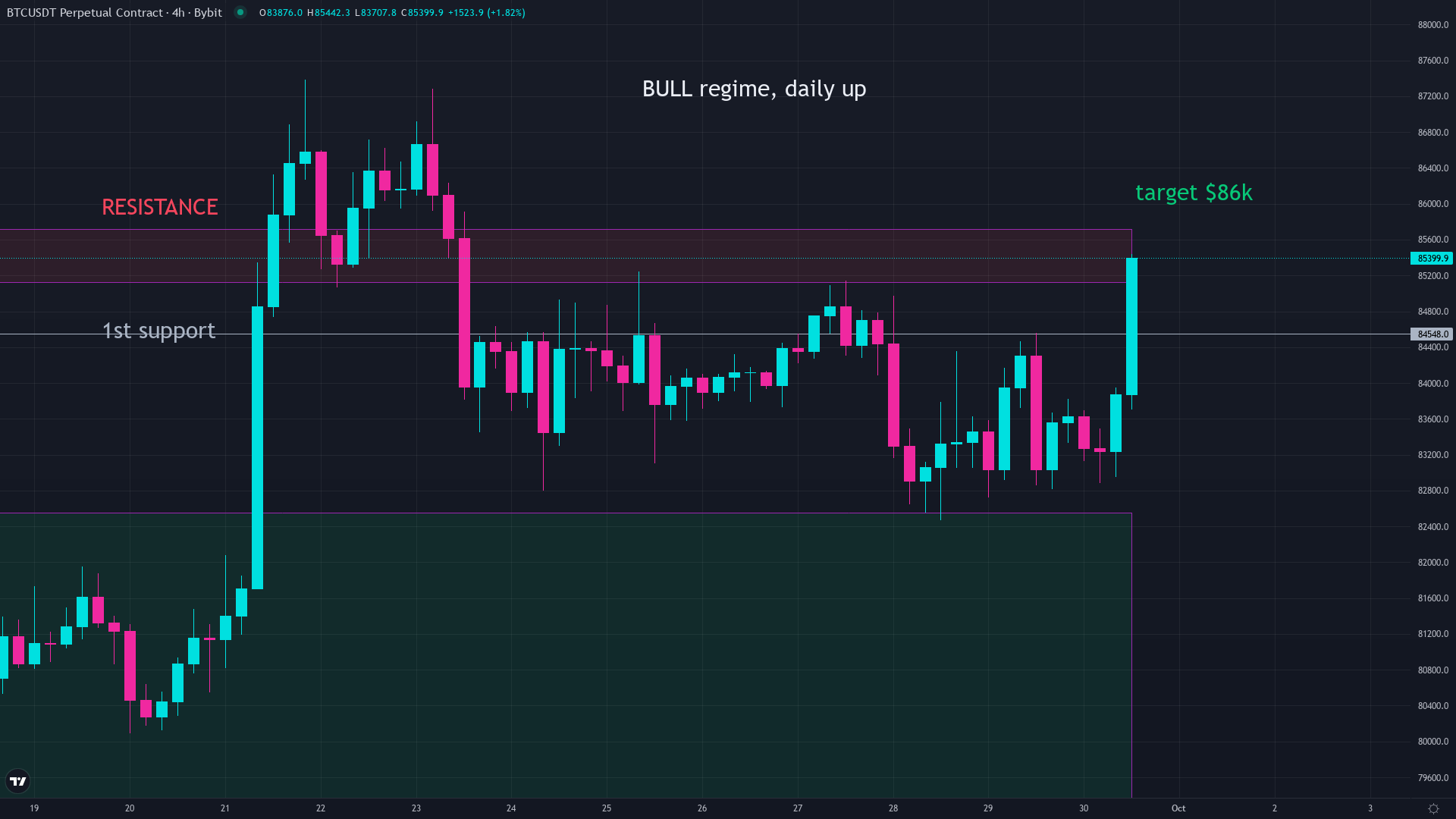
- 2024 halving. Price around $64,000. The all-time high hit above $126,000 about eight months later. But as of late September 2026, roughly 29 months after the halving, Bitcoin sits near $85,000, about 33% above where it was on halving day.
The direction has been consistent. The size of the move has not. Each cycle delivers less than the one before it, and this cycle is no exception.
Why the gains keep getting smaller after each halving
This is the part most halving hype skips over. The supply cut is real every time, but it gets smaller in absolute terms. In 2012, the halving removed 3,600 new BTC per day from the market. In 2024, it removed about 450. The shock to supply is shrinking because there is less new supply to cut.
At the same time, Bitcoin is a bigger market. Moving a $12 coin 8,800% takes a tiny amount of money. Moving a $64,000 coin by the same percentage would require trillions in new capital. The math does not work the same way twice.
None of this means Bitcoin cannot go higher. It means the halving alone is not enough to deliver the kind of returns early adopters saw. Each cycle, the halving matters a little less and demand matters a little more.
The post-halving timeline most people get wrong
Here is where the trap sits. After every halving, people expect the rally to start immediately. It never does.
In 2012, the real move did not begin until about five months after the halving. In 2016, Bitcoin actually dropped 10% in the weeks after the halving before the rally kicked in. In 2020, it took about six months for the price to break above its pre-halving high with conviction.
The 2024 cycle looked different early on because Bitcoin had already set a new all-time high before the halving, driven by ETF demand. But the post-halving period still followed the familiar script. The rally peaked, a steep correction followed, and the market spent months grinding sideways.
If you understand this timeline, you stop panicking when the price is flat or falling three months after a halving. That is normal. The halving plants a seed. It does not flip a switch.
What the 2024 halving tells us about this cycle
The April 2024 halving dropped the block reward from 6.25 BTC to 3.125 BTC. Bitcoin hit a cycle high above $126,000 roughly eight months later. Since then, the price has pulled back to the mid-$80,000s.
That pullback is roughly 33% from the top. For context, the crash after the 2017 peak was about 84%. After the 2021 peak, about 77%. A 33% pullback, if it holds here, would be the shallowest cycle correction in Bitcoin’s history. You can see every past crash compared side by side in our Bitcoin crash depth breakdown.
Whether the current correction deepens or the bottom is already in is something nobody can answer honestly in real time. What the data does show is that each cycle’s worst crash has been smaller than the one before. The highs keep getting less explosive, and the lows keep getting less painful. Bitcoin is maturing.
The honest takeaway
The halving is real. The supply cut is real. And four out of four times, a major rally followed. But the gains shrank every cycle, the timing was never instant, and the correction that followed the peak was brutal every single time.
If you are sitting here expecting the halving to do what it did in 2012, the math is not on your side. If you understand that the halving is one force among several, that it plays out over 12 to 18 months, and that a painful crash is part of the deal, you are thinking about it correctly.
The next halving is estimated for April 2028. Between now and then, the pattern says there is still a full cycle to play out. The people who survive it will be the ones who looked at all four cycles, not just the one that made the best story.
Common questions
What happens to Bitcoin's price after a halving?
Every halving so far has been followed by a new all-time high within 12 to 18 months. But the percentage gains have shrunk every cycle, from roughly 8,800% after 2012 to about 33% so far after 2024.
How long after a halving does Bitcoin go up?
The rally has never started on halving day. It typically takes 5 to 6 months for the real move to begin, and the new all-time high has arrived 8 to 18 months after the halving.
Does Bitcoin always go up after a halving?
So far, yes. Four halvings, four rallies. But the gains have gotten smaller each time, and a steep correction has followed every post-halving peak.
When is the next Bitcoin halving?
The next Bitcoin halving is estimated for April 2028, when the block reward will drop from 3.125 BTC to 1.5625 BTC.
Why are Bitcoin halving returns getting smaller?
Each halving removes fewer new coins from the market than the last one did, and Bitcoin is a much larger market now. Moving a trillion-dollar asset requires far more capital than moving a billion-dollar one.
Keep reading
- Bitcoin Crash History: Every Major Crash and What Came Next
- When Is the Next Bitcoin Halving? (Live Countdown)
We break down the market like this every day, free on Instagram and YouTube, and in depth inside the community.
Education, not financial advice. Trading involves real risk.