Bitcoin Exit Strategy: Why Entries Are the Wrong Obsession
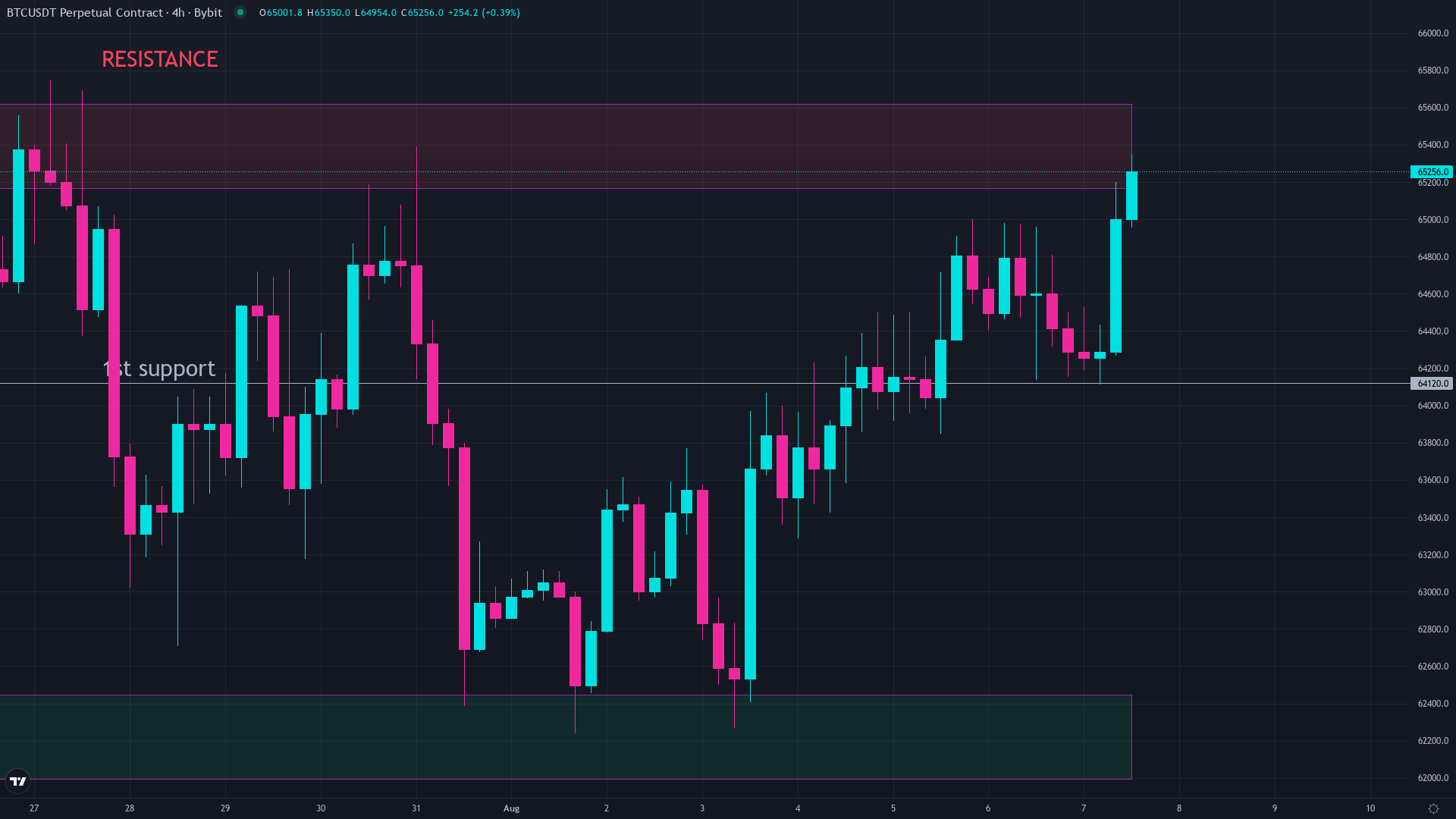
I took 100 trades and let a random signal pick the direction. No chart, no analysis, no gut feeling. Just: enter here, go this way. Then I applied my exact exit rules to every single one.
The results were uncomfortably close to my real trading results.
That experiment said something I did not want to hear at first: most of the work in trading is in the exits, not the entries. A solid bitcoin exit strategy matters more than a perfect entry system. And almost nobody talks about it that way.
What a bitcoin exit strategy actually means
An exit strategy is the set of rules you follow after a trade is open. Every trade ends one of two ways:
- You close it at a loss because the market moved against you.
- You close it at a profit because the market moved your way.
Most traders obsess over how to get in. Very few have an honest plan for the first exit, the losing one. This is backwards. The loss exit is the rule that keeps your account alive. The profit exit is the rule that locks in the gain. Both have to be decided before you enter, not while the price is moving against you and your brain is saying give it one more candle.
The rule that made 109 trades add up
My whole system runs on one fixed rule: every trade risks the same amount. I cap every loss at 1% of my account. Not 1% of the position. 1% of the total account balance.
If a trade goes wrong and hits my stop, I lose 1%. That is the ceiling. Across 109 live trades, my biggest single loss was that 1%. My worst run was three losses in a row. Three percent down, then I started climbing again.
That sounds boring. That is the whole point.
A 1% loss cap means no single trade can put you in a hole you cannot climb out of. Most people who blow up in crypto did not blow up on bad analysis. They blew up because they risked 20% of their account on something that felt obvious, and it was not.
Why the stop loss is not optional
Your loss exit is your stop loss. It is a rule, not a guideline.
Every time I hear “I don’t use stops, I just hold through the move,” I know what story comes next. It works a few times. Then one time it does not, and the trader is down 60% waiting on a recovery that takes two years or never arrives at all.
My stop goes in before the trade fires. I know the price level where the trade is wrong before I know whether it will be right. If price hits that level, the trade is closed. No second-guessing, no “maybe just a little longer.”
If you want the practical mechanics, how to place a stop loss in crypto walks through exactly where to put it and why.
Where most traders leave money on the table
Taking profits is supposed to be the easy part. It is not.
The two most common mistakes are opposite problems. Some traders close winners too early, scared the price will reverse and erase the gain. Others hold too long, waiting for just a little more, and watch a winning trade turn flat or negative.
My rule: I take profits at a fixed target that is set when the trade opens. When price arrives at that target, the trade closes. I do not watch it go higher and feel regret. I do not wait for another leg while the profit shrinks.
Fixed targets remove the emotion from the decision. The moment of truth arrives before any money is at risk, when you are thinking clearly, not while your gains are on the screen and your brain is inventing reasons to hold just a little longer.
Over 109 live trades, this approach produced a 70% win rate. The winners were not massive. The losers were small and capped. That is the whole design. Small losses, consistent wins, nothing dramatic.
How position size connects to your exit rules
Exit rules only work if your position size makes the math real. If you risk 1% of your account per trade, your stop placement tells you exactly how much to buy or sell.
The formula: take the dollar amount you are willing to lose, divide it by the distance in price between your entry and your stop, and that gives you your position size. It sounds like a lot of steps. In practice it takes about ten seconds once you have done it a few times.
For the full breakdown with real numbers, position sizing in crypto covers the exact calculation and why it changes with every trade.
One thing about trading in a bear market
In a bear market, most people do one thing: hold Bitcoin and hope. A real exit strategy lets you trade in either direction.
When a setup breaks lower, you can short it. When it bounces, you go long. You risk the same 1% either way. You use the same fixed stop and the same fixed target either way. The bear market is not a wall. It is a different kind of weather. Same exit rules, same discipline, the same result over time.
My real results this year are public. The market has been tradeable. Not because I predicted where Bitcoin was going, but because the exit strategy held up regardless of direction.
Common questions
What is a bitcoin exit strategy?
It is the set of rules that decide when you close a trade, both at a loss and at a profit. A good exit strategy is defined before the trade opens, not while price is moving and emotions are running high.
When should I take profits on bitcoin?
Set your profit target before the trade opens based on your risk amount and the natural levels on the chart. A fixed target removes the emotional decision and prevents you from holding too long or cutting too early.
How much should I risk per bitcoin trade?
Most professional traders keep risk between 0.5% and 2% of their account per trade. Starting at 1% means no single loss can seriously damage your account, and you can survive a losing streak without blowing up.
Do entries matter less than exits in bitcoin trading?
The data says yes. A test using random entries with real exit rules produced results close to analysis-based entries. The exit rules, the stop and the profit target, do most of the work.
Can you trade bitcoin profitably in a bear market?
Yes, because a real exit strategy works in both directions. You can go long on bounces or short on breakdowns, risking the same fixed amount either way. The bear market changes the environment, not the rules.
Keep reading
- Position Sizing in Crypto: The 1% Rule That Protects Your Account
- The Perfect Risk-Reward Ratio? I Ran 480,000 Simulations
We break down the market like this every day, free on Instagram and YouTube, and in depth inside the community.
Education, not financial advice. Trading involves real risk.