Bitcoin Trading Mistakes: 5 That Blew Up My First Year
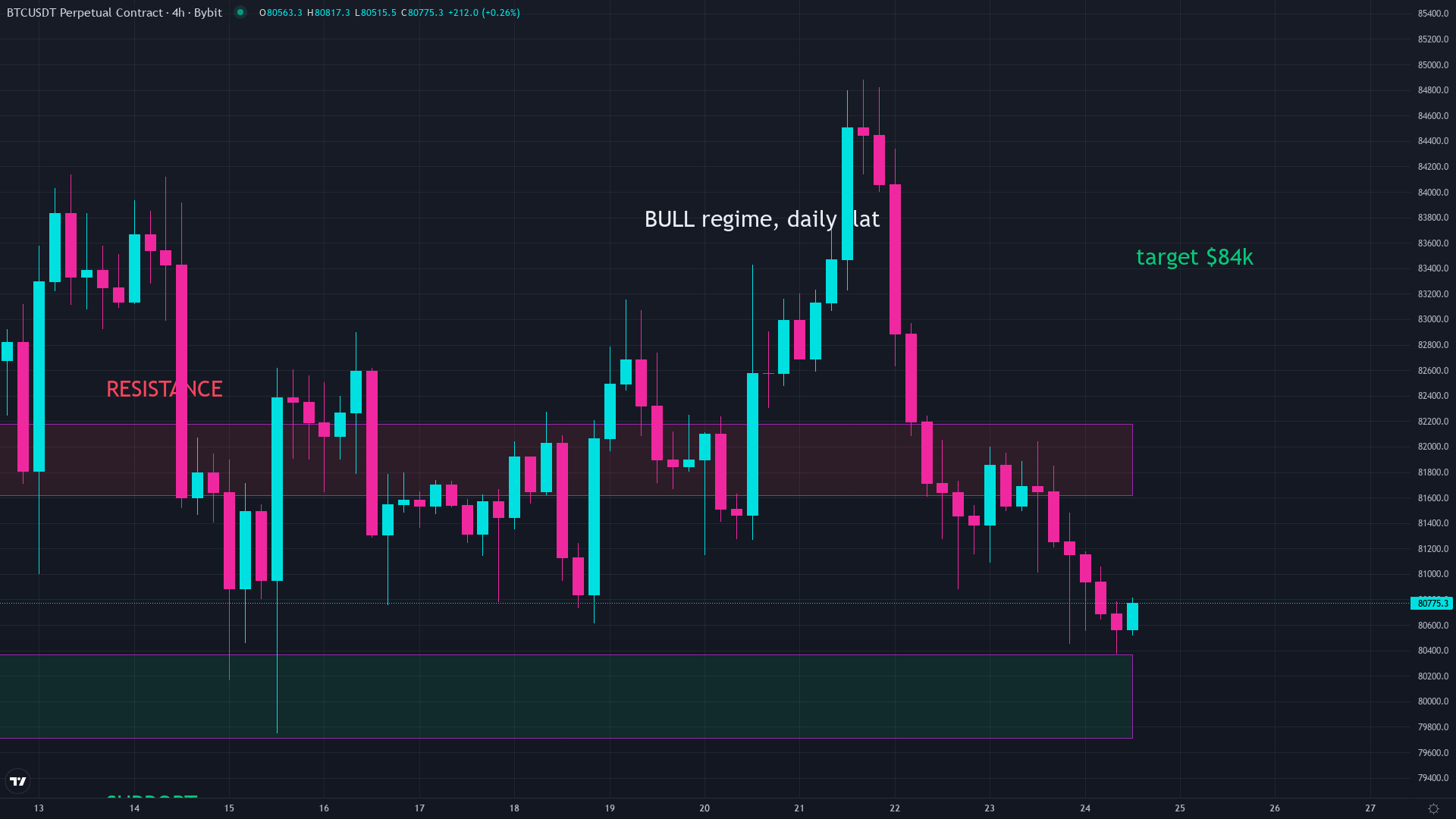
My first year trading Bitcoin, I made every mistake on this list. Some of them twice. I am not writing this to say I figured it out fast. I am writing it because these five bitcoin trading mistakes cost me real money, and I still catch myself reaching for most of them on bad days.
Seven years and 109 documented trades later, my win rate sits at 70% and my account is up 34% from where I started that first year. Not because I found a better setup. Because I stopped letting these five things be my default.
Bitcoin trading mistake 1: moving your stop loss after you enter
This one cost me more than the other four combined. You enter a trade. Price moves against you. Your stop is 3% away. You tell yourself it will come back, and you push the stop lower to give it more room. Sometimes it does come back. More often you just turned a 3% loss into a 6% one.
A stop loss answers one question. What price proves you were wrong about this trade? If you move it after entering, you are changing your answer because you want to be right, not because the market gave you new information. That is a feeling, not a rule, and feelings inside a losing trade are expensive.
The fix I use: I write my stop before I enter the trade. If price hits it, the trade is closed. I do not come back to it.
Bitcoin trading mistake 2: sizing up after a winning streak
After my best week of trading ever, I put three times my normal amount into the next trade. I felt like I was reading the market perfectly. The trade went wrong in the first 20 minutes and I lost in two candles what had taken me a full week to build.
Win streaks feel like skill. Sometimes they are. Mostly they are skill mixed with luck in a ratio you cannot see while you are inside one. Sizing up before you can tell which it is turns a good run into a bill.
I now risk exactly 1% of my account on every single trade. My best week and my worst week both get 1%. That one rule, hardcoded and never broken, is what keeps a rough month from turning into a disaster. If you want to see how position sizing in crypto actually works across hundreds of trades, I ran the full breakdown there.
Bitcoin trading mistake 3: revenge trading after a loss
You take a loss. You close the trade. Then you open another one immediately because you want to make it back. Your reason for entering is that you want to break even.
This is how a 1% loss becomes a 5% session. The second trade and the third are not setups. They are emotions with a chart in front of them.
I have one rule for this. If I hit my daily loss limit, no more trades that day. No exceptions. That rule was not fun to write down. It has saved me from my own worst instincts more times than I can count.
Bitcoin trading mistake 4: jumping between setups all session
I used to have 12 charts open at once. Every time one looked weak I switched to another. By the end of a session I had entered and exited three different trades, caught no full moves, and paid fees on all of them.
That habit has its own name. It is called overtrading, and it quietly destroys accounts that otherwise have a real edge. You are not making more money by trading more. You are making more decisions under pressure, and more decisions under pressure means more of the bad ones.
I trade roughly 18 times a month now. To get there, I skip around 200 potential setups. The ones I skip are not bad setups. They just do not match my written rules. Saying no to most of what the market offers is where consistency actually comes from.
Bitcoin trading mistake 5: writing your rules after you enter
If you do not have your entry reason, your exit, and your stop written before you click buy, you will write them inside the trade when your money is at risk. Rules written while you are already in a trade are not rules. They are rationalizations built to keep you in longer.
Every trade I take now starts with three written answers before I touch anything. What makes this a valid setup. Where I am wrong. Where I take profit. If I cannot write those three things before I enter, I do not enter. A strong risk/reward ratio only protects you if both numbers are defined before the trade starts, not during it.
What actually fixed these
I did not fix these by reading more books on trading or finding a better indicator. I fixed them by writing rules that took decisions away from me in the heat of the moment. The urge to move a stop is still there. The desire to size up on a hot streak is still there. The system just outranks the feeling now.
These are not beginner habits that disappear once you get good enough. They are human defaults that experienced traders manage, not eliminate. The traders who last are not the ones who stopped feeling the pull. They are the ones who built a short list of things they no longer let themselves do, and kept it short enough to actually follow.
Common questions
What is the most common bitcoin trading mistake?
Moving your stop loss after you enter a trade. Once you move a stop, you no longer have a risk rule. You have a hope, and hope does not cap your losses.
How much should I risk per trade in crypto?
Most consistent traders risk between 1% and 2% of their account per trade. Risking more than that means one bad streak can wipe out months of gains before you even notice the pattern.
How do I stop revenge trading in crypto?
Write a daily loss limit before the market opens, and make the rule that hitting it means no more trades that day. The rule only works if you write it before you lose, not after.
How many trades should I take per month in crypto?
Far fewer than you think. Trading around 18 times a month while skipping 200 potential setups is how you stay selective and avoid paying fees and losses on low-quality entries.
Why do bitcoin traders lose money even with a good strategy?
Usually not because their entries are wrong. Most lose because they break their own rules under pressure: moving stops, sizing up emotionally, or jumping into trades to recover a loss.
Keep reading
- Position Sizing in Crypto: The 1% Rule That Protects Your Account
- Overtrading Crypto: The Hidden Cost That Kills Winning Traders
We break down the market like this every day, free on Instagram and YouTube, and in depth inside the community.
Education, not financial advice. Trading involves real risk.