How to Set a Stop Loss in Crypto (And Why Most Traders Get It Wrong)
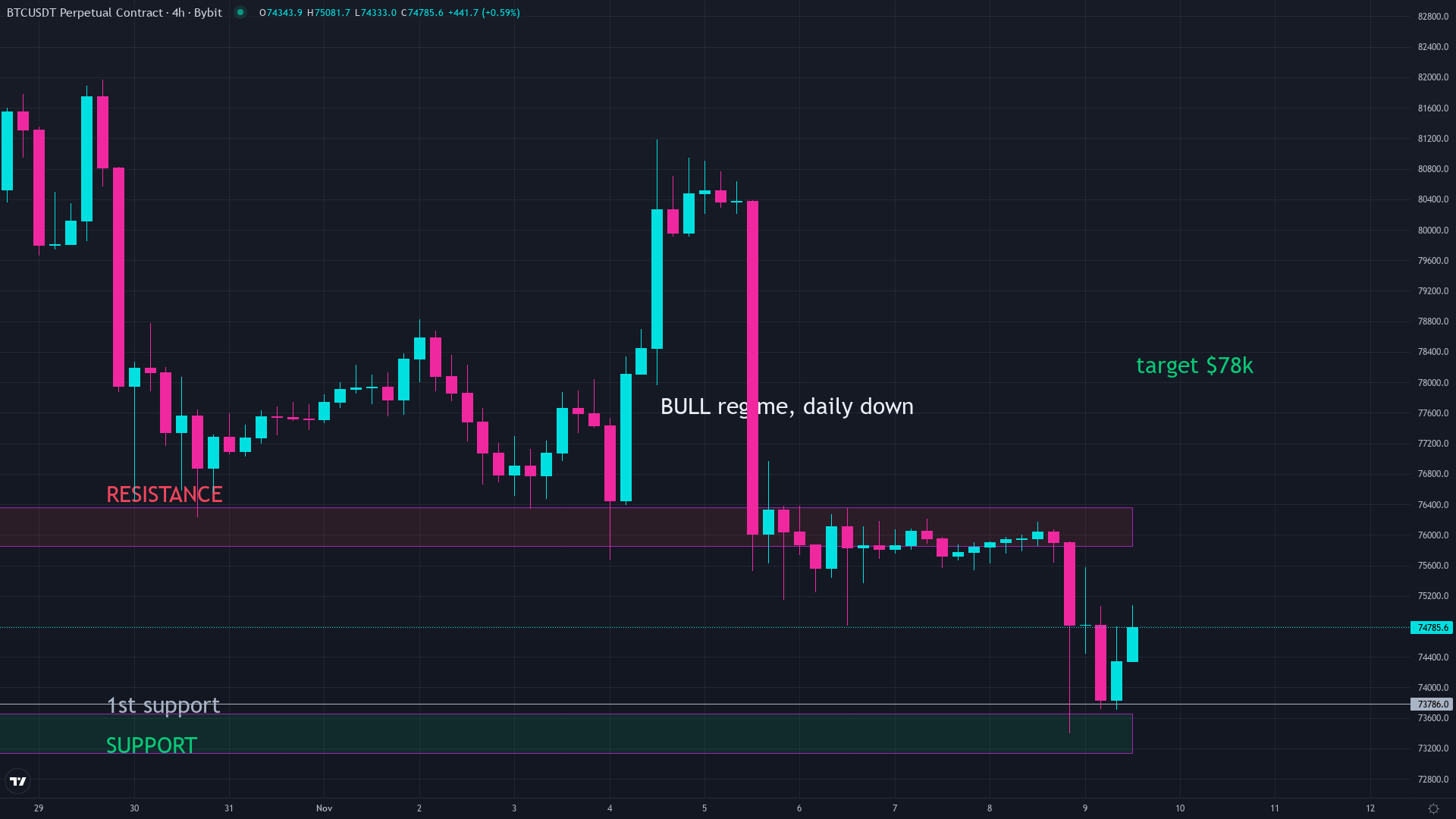
Most traders add a stop loss as an afterthought. They find a trade they like, they enter, and then they think: I should probably put a stop somewhere. That backwards approach is one of the main reasons accounts blow up. Here is how to set a stop loss in crypto, what the most common mistakes look like, and why the stop matters more than the entry.
What a stop loss actually does in crypto trading
A stop loss is a price level you decide before you enter a trade. If the market hits that level, your trade closes automatically. You take a small, pre-decided loss and move on.
Crypto is volatile. Bitcoin can move 5% in an hour. Without a stop loss, a trade that is slightly underwater at night can become a wrecked account by morning. A stop loss is not an admission that you were wrong. It is a promise you made to yourself before the trade started, while you were thinking clearly, that you will honor when your emotions are running hot.
The two main ways to set a stop loss in crypto
There is no single right answer, but two methods are worth knowing.
Structure-based stops. You place your stop below a level the market has already respected, such as a recent swing low, a support zone, or the bottom of a price range. If the market breaks that level, the trade idea is wrong. You are not guessing at a percentage; you are using the market’s own structure as the boundary. Most experienced traders use this approach because it is based on something real, not an arbitrary number.
Percentage-based stops. You set your stop a fixed distance from your entry, say 2% or 3%. Easy to calculate, but blind to context. A 2% stop might sit right in the middle of a strong support zone, meaning you get stopped out on normal price noise, then watch the trade run your direction without you. This is the most common form of “being right about the direction but still losing money.”
For most traders learning how to set a stop loss in crypto, the structure-based approach is the more reliable starting point. It forces you to look at the chart before you pick the number.
The stop loss mistake that drains accounts slowly
The deadliest mistake is not one single blowup trade. It is the stop that is too close.
A tight stop gets hit on normal price noise. The trade reverses and goes your direction, while you are out of the position with a small loss. This happens five times in a row. Each individual loss is small, but together they add up, and the mental cost of being stopped out of trades that then worked is worse than losing a little money.
The fix is counterintuitive. If a trade needs a stop that is too far away for your position size to make sense, the right answer is not to move the stop closer. It is to reduce the size, or skip the trade entirely. You do not reshape the risk to fit the trade. You reshape the trade to fit the risk.
How position sizing connects to your stop
A stop loss without proper position sizing is an incomplete system.
Here is the basic math. Decide how much of your account you are willing to lose on a single trade. For many traders, that is 1%. On a $5,000 account, that is $50. Then measure the distance from your entry to your stop in dollar terms. Divide your maximum loss by that distance and you get the number of units to buy.
Your stop does not come after the size decision. The stop sets the size. Once you understand that order of operations, entries become far less stressful, because you already know the worst case before you click buy.
For more on how this connects to long-term results, the data on risk-reward ratios shows how much the size of your wins relative to your losses matters over time.
Why your stop loss matters more than your entry
Your entry does not determine whether you survive as a trader. Your stop loss does.
A mediocre entry with a disciplined stop produces a manageable trade. A clean entry with no defined exit produces an account that slowly bleeds, or one that blows up on a single bad night. The traders who last long enough to get genuinely good at this are almost always the ones who took the stop loss seriously before they ever worried about finding the perfect entry. The exit is the strategy. Everything else is decoration.
Common questions
How do I set a stop loss in crypto trading?
Place your stop below a price level the market has already respected, such as a recent swing low or support zone. If that level breaks, the trade is wrong. This structure-based method is more reliable than picking an arbitrary percentage.
Where should I put my stop loss in crypto?
Below a meaningful support level or swing low on your chart. The stop should sit at a point where, if reached, the market has told you the trade idea is wrong, not just that the price moved against you briefly.
What percentage should my stop loss be in crypto?
There is no universal percentage. The stop distance should come from the chart structure, and then your position size should be adjusted so that if the stop is hit, you lose no more than 1% of your account.
What happens if I trade crypto without a stop loss?
Without a stop loss, one bad trade can wipe out weeks of gains or more. Crypto can move sharply overnight, and a position with no defined exit can turn a small loss into a catastrophic one.
Does a stop loss guarantee I won’t lose more than my target amount?
In most conditions yes, but in extreme fast moves a market can skip past your stop level, filling you at a worse price. This is called slippage and is more common during major news events or very low-liquidity hours.
Keep reading
- Position Sizing in Crypto: The 1% Rule That Protects Your Account
- Why Do Most Crypto Traders Lose Money?
We break down the market like this every day, free on Instagram and YouTube, and in depth inside the community.
Education, not financial advice. Trading involves real risk.