How to Short Bitcoin (and Why Most Traders Do It Wrong)
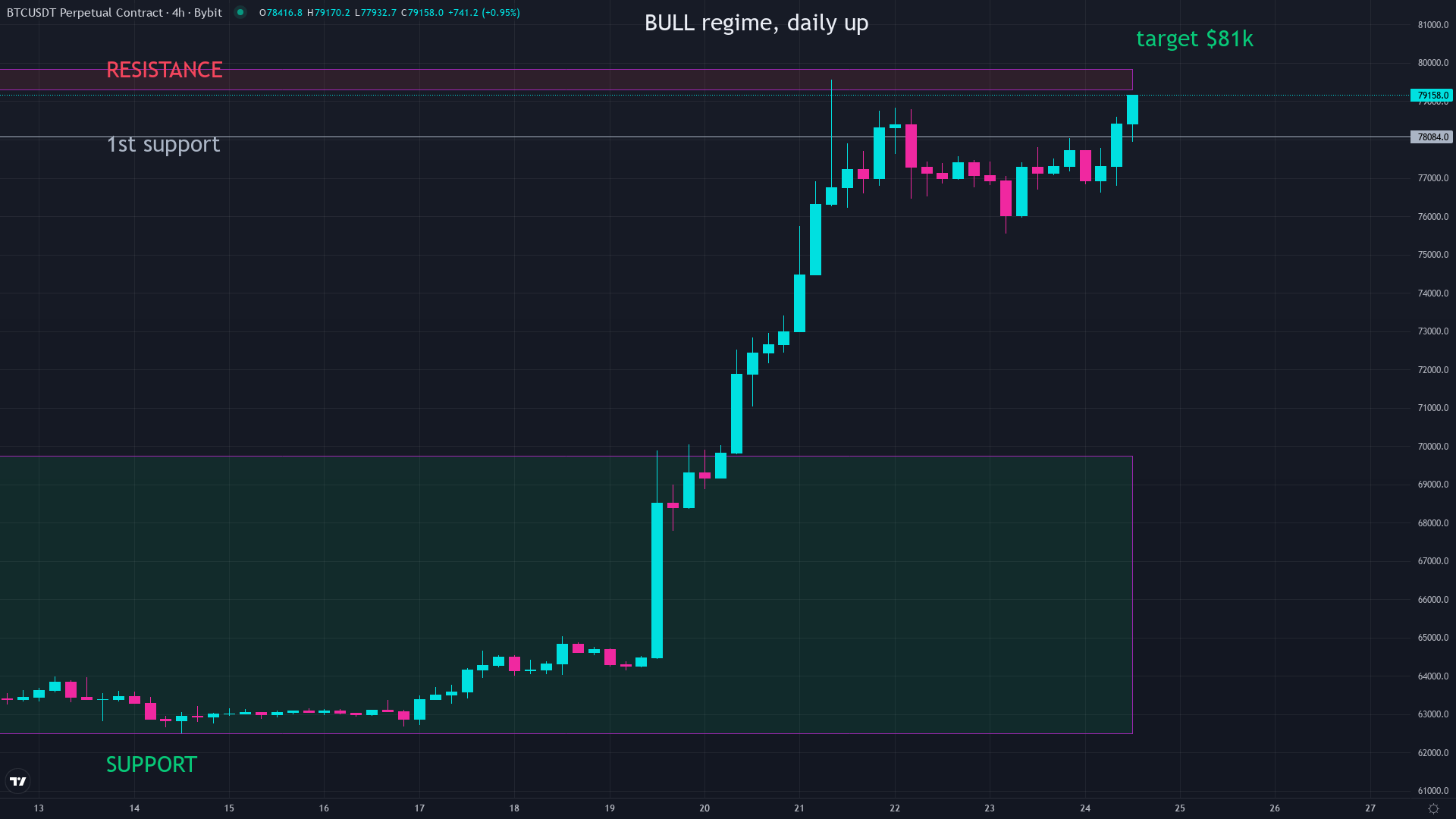
Every time Bitcoin drops hard, thousands of traders say the same thing: “I should have shorted that.” Then the next move up starts and they try it. A lot of them blow up. How to short Bitcoin is one of the most-searched questions in crypto. It is also one of the most misunderstood trades you can put on.
What shorting Bitcoin actually means
Going long means you buy, hoping the price goes up. Going short means you bet the price goes down. If Bitcoin drops from $80,000 to $60,000 after you open a short, you profit from that $20,000 move. If it goes up instead, you lose.
You do not own the Bitcoin when you short it. You borrow it (or use a contract), sell it at the current price, then aim to buy it back cheaper. The difference is your profit. Simple in theory. The execution is where most traders get destroyed.
How to short Bitcoin: the two main methods
There are two methods most active traders use:
- Perpetual futures (perps). Available on platforms like Bybit and Binance. You open a short contract that tracks Bitcoin’s price and can use leverage. This is the most common way active traders short BTC. No expiration date means you can hold the position as long as your account can handle it.
- Margin trading. You borrow actual Bitcoin from the exchange, sell it at the current price, and buy it back later at (hopefully) a lower price. Less common now that perps exist, but available on some platforms.
Both carry the same core risk: if the price moves against you, your losses stack up fast. With leverage, they stack up even faster.
The risk most people do not see coming
Here is the asymmetry that ends short traders. When you buy Bitcoin, the worst case is it goes to zero. You lose 100% of what you put in. That is bad. When you short Bitcoin with leverage, there is no ceiling on what can go wrong. If you short at $80,000 with 10x leverage and price runs to $88,000, you can be fully wiped out before you even have time to react.
This is not a reason to never short. It is a reason to never short without a defined exit. Every short position needs a price level that tells you: “I was wrong, get out now.” Without that, you are not trading. You are gambling. If you need a refresher on how to set that exit level correctly, read how to set a stop loss in crypto before you open your first short.
When shorting Bitcoin actually makes sense
The traders who blow up on shorts usually do it because of a feeling. Price looks too high. A headline scared them. Someone on social media called a top. That is not a trade setup. That is a coin flip with leverage attached to it.
Shorting makes sense when your trading system gives you a structured reason. A clear pattern. A level. A defined entry with a defined stop. In my own system, I trade both directions. Long and short. The direction comes from a set of conditions that have held up across hundreds of trades, not from a gut call about where price is “supposed to be.”
Across 109 logged trades, my win rate sits at 70% (not counting breakevens). That includes short trades. But that number means nothing without the rules around how much I risk on each one. Understanding position sizing in crypto is not optional if you want to short safely. It is the whole game.
The one rule that separates surviving short traders from the rest
I risk 1% of my account per trade. No exceptions. Long or short, the rule does not change. That means the worst single trade I can have costs me 1% of what I started with. I can be wrong 10 times in a row and still have 90% of my account. I can keep trading. Most traders who blow up on shorts are sizing way too big. They see a big move coming, bet too much hoping for a fast payday, then hold when it goes against them because they are sure they are right.
The market does not care how sure you are. It moves, and if your position is too large, you are done before the trade even has time to play out.
The traders who last long-term shorting Bitcoin all share the same habit. They treat every short the same way they treat every long. Fixed risk, defined exit, no exceptions. The direction does not change the discipline. The discipline is what makes the direction matter.
Where to start if you want to short Bitcoin
Start small. Use no more than 2x leverage while you are learning how fast these positions can move against you. Set your stop before you enter, not after you are already in the red. If the trade does not work, keep the loss small. If it does, you just made money going in a direction most people are too scared to trade.
Most traders treat shorting as a special, advanced move. It is not. It is just a trade. The rules are the same. The risk is the same. The only thing that is different is the direction. Get the basics right and the direction is just a detail.
Common questions
Can you short Bitcoin on Coinbase?
Coinbase offers Bitcoin futures trading for eligible US users, which allows shorting. For straightforward short positions, most active traders use platforms like Bybit or Binance which offer perpetual futures contracts with more flexibility.
What happens if I short Bitcoin and the price goes up?
Your position loses money as price rises. With leverage, losses can grow quickly and your account can be liquidated if price moves far enough against you. This is why a defined stop loss is essential on every short trade.
How much leverage should I use when shorting Bitcoin?
Beginners should start with 2x or less. High leverage amplifies both gains and losses, and unexpected price spikes can wipe out a leveraged short position very quickly. Keep leverage low until you fully understand how fast losses can move.
Is shorting Bitcoin profitable?
It can be, when done with a systematic approach and strict risk rules. Without a clear entry signal, a defined stop loss, and controlled position size, most short traders lose money over time.
What is a short position in crypto?
A short position is a trade that profits when the price goes down. You effectively borrow an asset, sell it at today’s price, and aim to buy it back cheaper later. The difference between where you sold and where you bought back is your profit or loss.
Keep reading
We break down the market like this every day, free on Instagram and YouTube, and in depth inside the community.
Education, not financial advice. Trading involves real risk.