Position Sizing in Crypto: The 1% Rule That Protects Your Account
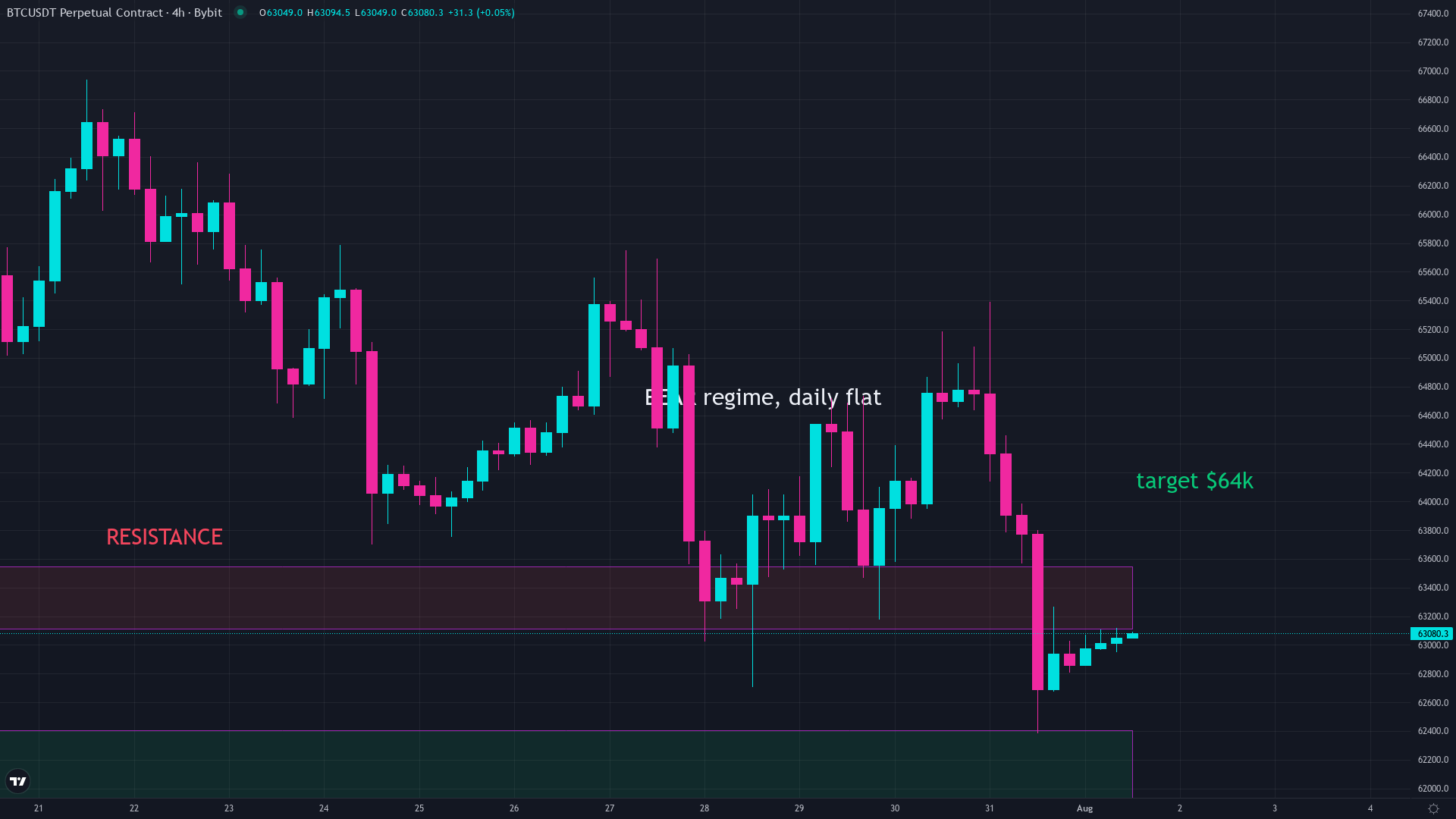
I’ve been wrong on more than 30 trades in a row before. My account barely moved. Not because I got lucky. Because of one rule I apply before every single trade.
Most traders who blow their accounts are not bad at picking entries. They are bad at controlling how much they risk each time. Position sizing in crypto is the part nobody teaches, and the part that decides whether you survive long enough to actually make money.
What position sizing in crypto actually means
Position sizing is how much of your account you are willing to lose on a single trade. Not how much you invest. Not how much you hope to make. How much you can afford to lose if the trade goes wrong.
Most beginners do it backwards. They decide how many coins to buy based on how much they want to make, then slap a stop loss wherever it looks clean on the chart. That is how accounts blow up.
The size of your trade should be driven by your risk budget, not by excitement or conviction. No matter how sure you are about a setup, the market does not care about your confidence.
The math that saves accounts or ends them
Take a $1,000 account. Risk $200 per trade. That is 20% at stake every time you click buy.
Three losses in a row. That happens to everyone, including traders with a 70% win rate. After those three losers: $800, then $600, then $400. You are down 60% before your edge has had a chance to play out.
Now run the same numbers with 1% risk per trade. That is $10 at stake. Three losers in a row costs you $30. You are down 3%. You are still in the game, still able to trade, still able to recover.
The difference between those two outcomes is not skill. It is sizing.
How to calculate position sizing in crypto
Three steps, done before every trade:
- Set your max loss. 1% of your total account is the rule. 2% is the ceiling. Never more.
- Find your stop loss level. Place it where the chart says it belongs, not based on how much you feel like losing.
- Divide. Your max loss divided by the distance to your stop equals how much you buy.
Here is what that looks like with real numbers. You have a $1,000 account. Your 1% rule means your max loss per trade is $10. Your stop is 5% below your entry price. Divide $10 by 0.05 and you get $200. That is the size of your position.
Notice what adjusts and what does not. The stop loss stays where the chart says it should be. Your max loss stays at 1%. The position size is what gives to make those two things fit together. That order never reverses.
Why the 1% rule works over time
Over 109 trades, my biggest loss on any single trade has been capped at one unit of risk. One bad trade costs me $10 on a $1,000 account, or $50 on a $5,000 account. A rough week might cost me five of those units. Painful? A little. Account-ending? Not even close.
The 70% win rate in my journal did not come from picking perfect trades. It came from letting the losers stay small enough that the winners could do their job. You can have the best entry signal in the world and still destroy your account if you size too large. You can be wrong half the time and still grow your account if your losses stay controlled.
Position sizing in crypto is what gives a trading system room to breathe. Without it, even a profitable strategy fails.
The mistake that wipes most crypto accounts
Sizing by dollar amount instead of risk amount.
“I only put $50 into this” sounds responsible. But if your stop is 80% below your entry on some small coin, you are risking $40 of that $50. You have no idea what your actual risk is unless you know where your stop goes and how far away it is.
The question is not “how much am I putting in?” It is “how much am I willing to lose?” Until you flip those two questions, your position sizing will work against you every time you trade.
Once you have the size right, the stop placement is what locks it in. Read how to set a stop loss in crypto for the practical breakdown on where to actually put it. And once you understand risk, the next piece is understanding reward. The risk-reward ratio guide covers how those two numbers work together to decide whether a trade is worth taking at all.
Get the sizing right first. Every other part of your system is built on top of that one number.
Common questions
What is position sizing in crypto trading?
Position sizing is how much of your account you risk on a single trade. It determines the size of your position based on how much you can afford to lose if the trade goes wrong, not how much you hope to make.
How much should I risk per trade in crypto?
1% of your account per trade is the rule most professional traders use. 2% is the ceiling. Risking more than that makes a normal losing streak large enough to end your account before your edge can play out.
What is the 1% rule in trading?
The 1% rule means you risk no more than 1% of your total account on any single trade. On a $1,000 account that is $10 max loss per trade, which means even 30 losses in a row only costs you 30%.
How do you calculate position size in crypto?
Take your max loss (1% of account), divide it by the distance from your entry to your stop loss as a percentage, and the result is how much of the coin to buy. The stop stays fixed; the position size adjusts.
Can you make money in crypto with a 50% win rate?
Yes, if your losses stay smaller than your wins. A 50% win rate with 2R average wins and 1R losses is profitable. Position sizing is what keeps the losses at 1R even on a streak of bad trades.
Keep reading
We break down the market like this every day, free on Instagram and YouTube, and in depth inside the community.
Education, not financial advice. Trading involves real risk.