What Happens After a Bitcoin Bear Market?
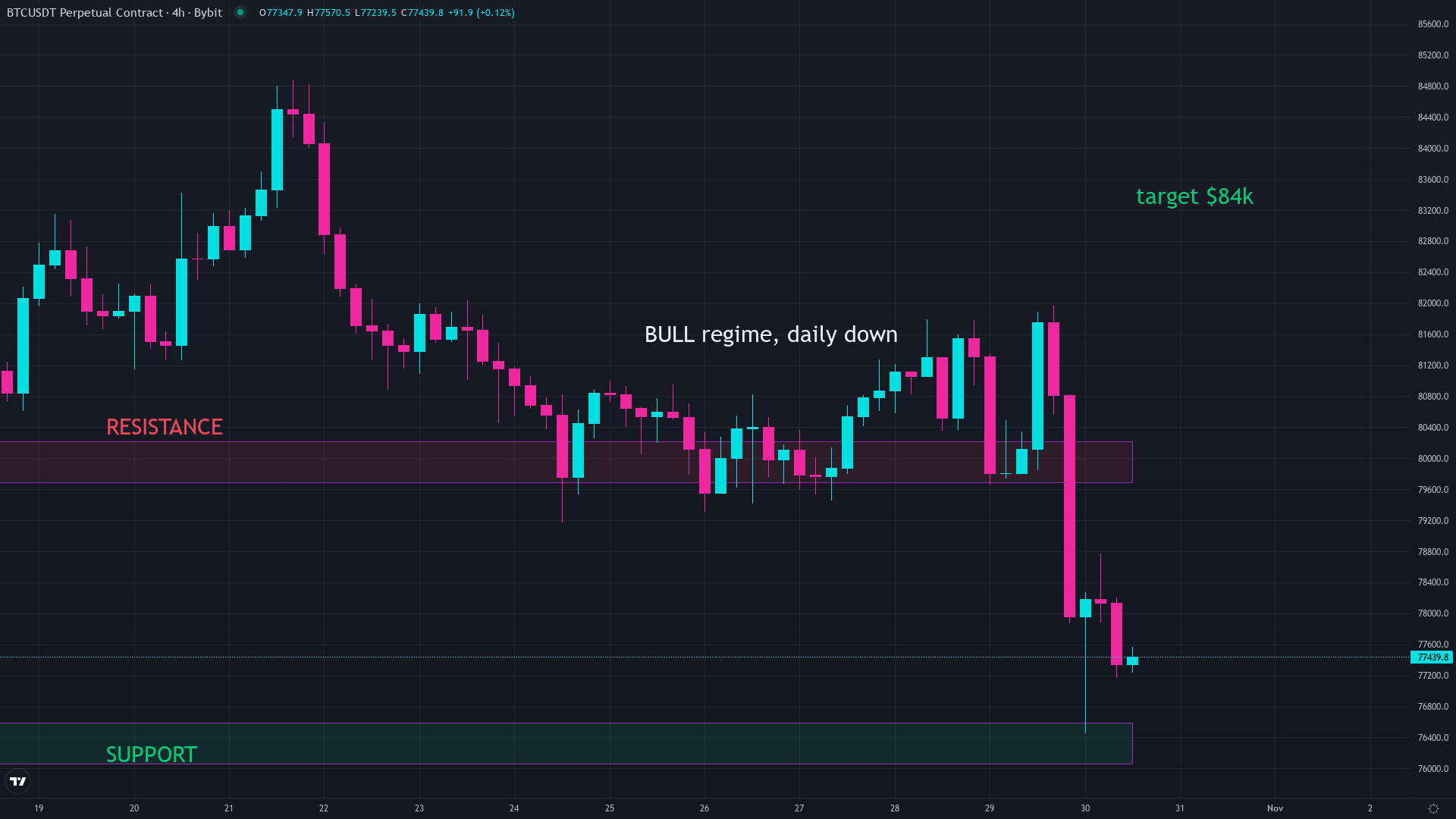
Bitcoin is sitting around $77,000 right now, down roughly 30% from its October 2025 high. The Fear and Greed Index reads 30. Headlines are grim. And the most common question people send me is some version of this: what happens after a Bitcoin bear market ends?
The honest answer is surprisingly boring. And that is exactly why it works.
What happens after a Bitcoin bear market (every single time)
Bitcoin has had four major bear markets. Each one felt like the end. None of them were.
- 2011: Bitcoin fell about 93%, from around $32 to $2. It eventually hit $1,100.
- 2015: Bitcoin fell about 85%, from around $1,100 to $178. It eventually hit $20,000.
- 2018: Bitcoin fell about 84%, from around $20,000 to $3,200. It eventually hit $69,000.
- 2022: Bitcoin fell about 77%, from around $69,000 to $15,500. It eventually hit $109,000.
There is a pattern hiding in those numbers. The crashes are getting shallower each cycle. 93%, then 85%, then 84%, then 77%. The market is maturing. The floor keeps rising. And every single bear market, without exception, was followed by a new all-time high that made the old one look small.
The people who panicked sold to the people who kept their heads. That is not a motivational poster. It is literally what happens on the blockchain, every cycle.
How long does the recovery take?
Bear markets do not end with a fireworks show. They end with months of nothing. Boring sideways price action that makes everyone lose interest. Google searches for “Bitcoin” drop to multi-year lows. Social media goes quiet. That silence is historically one of the most reliable signs that the worst is already behind you.
Here is the rough timeline from past cycles. The time between the all-time high and the next all-time high has ranged from about two to three years. The bottom itself usually comes roughly 12 to 14 months after the peak. After the bottom, the first year of recovery tends to be slow, grinding, and full of people calling it a dead cat bounce. The second year is when things start to move.
If you are looking at this bear market and wondering how deep it goes, we track the full historical crash comparison on our live Bitcoin crash chart. Every past cycle overlaid, day by day.
The mistake most people make
The biggest mistake is not buying at the wrong price. It is leaving at the worst possible time and then re-entering after the recovery is already priced in.
Look at the 2022 bear market. Bitcoin bottomed at $15,500 in November 2022. By the time most people felt confident enough to buy back in, the price was already above $40,000. They gave up 150% of upside because they needed the chart to feel safe before they acted.
Bear markets reward the people who are still here when nobody else wants to be. That does not mean you should bet your rent money. It means that historically, the worst time to sell Bitcoin has been when it felt the most obvious to sell.
What is different about this bear market?
Two things stand out. First, Bitcoin ETFs exist now. Institutional money has a seat at the table in a way it never did in 2018 or 2022. That does not guarantee a faster recovery, but it does change who is buying and how sticky that money tends to be.
Second, the crash has been shallower so far than any previous cycle. A 30% drop sounds painful. Compared to 77% or 84%, it is a pullback. Whether this cycle follows the same playbook or writes a new one is still an open question, but the structural trend of shallower crashes has held across four cycles now.
The boring part nobody wants to hear
What happens after a Bitcoin bear market is not exciting. The recovery is slow. The first months feel like nothing is happening. The people who make life-changing money in Bitcoin do not do it by timing the exact bottom. They do it by being present and patient through the stretch that everyone else finds too boring to sit through.
Every Bitcoin crash has looked like the end. Every one so far has ended the same way. That is not a guarantee about the future. It is a pattern, backed by four separate cycles over 15 years, and it has not broken yet.
If you want to watch where the current cycle sits relative to every past bear, our free live charts hub tracks the data in real time.
Common questions
What happens after a Bitcoin bear market?
Every past Bitcoin bear market has been followed by a new all-time high. The recovery typically takes one to two years after the bottom, starting slow and accelerating in the second year.
How long do Bitcoin bear markets last?
Historically, Bitcoin bear markets last about 12 to 14 months from the all-time high to the bottom. The full recovery to a new all-time high takes roughly two to three years total.
Has Bitcoin always recovered from a crash?
Yes. Bitcoin has crashed four separate times by 77% or more and set a new all-time high after every single one. Past performance is not a guarantee, but the pattern has held across 15 years.
Is it too late to buy Bitcoin in a bear market?
Historically, buying during a bear market and holding through the next cycle has been far more profitable than waiting for the recovery to feel safe. The best entries felt the scariest at the time.
Are Bitcoin bear markets getting less severe?
The data suggests yes. Each crash has been shallower than the last. 93% in 2011, 85% in 2015, 84% in 2018, 77% in 2022. The market appears to be maturing with each cycle.
Keep reading
We break down the market like this every day, free on Instagram and YouTube, and in depth inside the community.
Education, not financial advice. Trading involves real risk.