What Is a Good Win Rate in Crypto Trading?
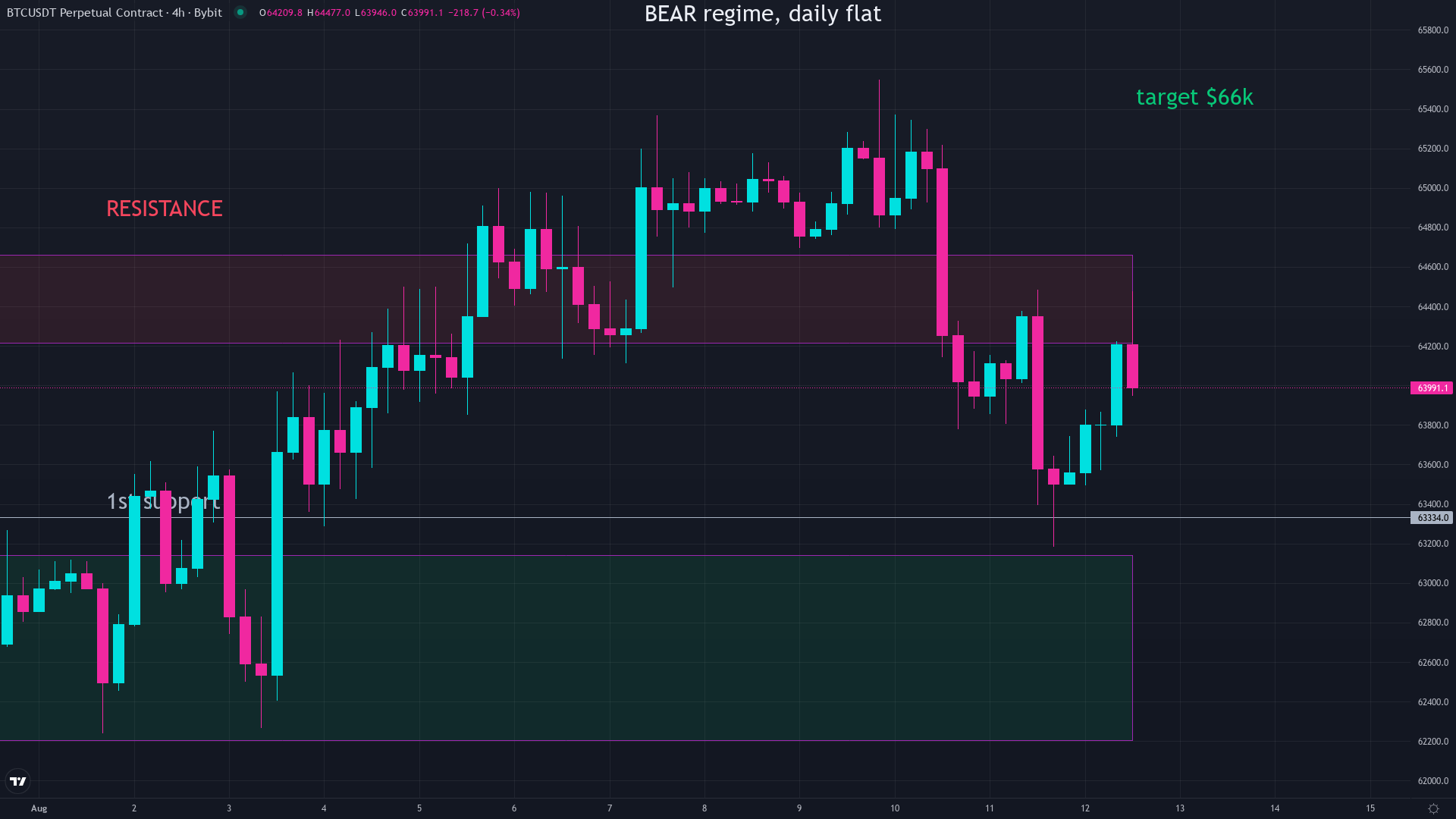
My win rate is 70%. In my first year of trading, it was higher than that. I lost money that year. Those two facts are not a contradiction. One number explains them both, and it is not the win rate.
What win rate in crypto trading actually measures
Win rate is simple. Out of every 10 trades you take, how many close positive. Six out of 10 is a 60% win rate. That is the full calculation. It feels like the most important number in trading. It is not.
The number that matters more than win rate
Every trade you take has two sides. How much you make when you are right, and how much you lose when you are wrong. Those two numbers work together with your win rate to decide whether your account grows or shrinks.
If you risk $100 on every trade and make $50 when you win, but lose $100 when you are wrong, you need to be right 7 out of 10 times just to break even. A 70% win rate with those numbers barely covers fees.
Flip it. If you risk $100 and make $300 when you win, you only need to be right 3 out of 10 times to come out ahead. A 30% win rate with that setup makes money.
The ratio of your average win to your average loss is called the risk-reward ratio. Win rate and risk-reward are two sides of the same equation. Neither one tells the full story without the other.
The math nobody shows you
Here is a simple example. Trader A wins 80% of the time. Every winning trade earns $50. Every losing trade costs $200. Over 10 trades: 8 wins at $50 each equals $400. Two losses at $200 each equals $400. Net result: zero. The 80% win rate did nothing.
Trader B wins 45% of the time. Every winning trade earns $200. Every losing trade costs $100. Over 10 trades: roughly 4 or 5 wins at $200 comes out to around $900. Five or 6 losses at $100 comes to around $550. Net result: roughly $350 ahead. The 45% win rate built a positive account.
Win rate is a stat you can brag about. What you actually want is the combination.
What real numbers look like in practice
My trading journal covers 109 trades with every fill logged, no filters. The numbers: 70% win rate, 1% of my account risked per trade, and a +34% return in a year where Bitcoin fell by more than half. My biggest single loss was 1% of my account. That last number is the one doing the real work.
The 70% feels good. But the account grew because losses stayed small and did not cancel out the wins. A 45% win rate with the same risk control would have still printed a positive year. A 90% win rate with loose stops and oversized trades could have wiped it out.
If you want to understand how a stop loss fits into this equation, the math above is exactly why it matters. Your maximum loss per trade is not an accident. It is the input that makes the whole equation work.
So what is a good win rate in crypto trading?
For most discretionary traders, anything between 50% and 70% is realistic and profitable as long as the risk-reward holds up. Below 50% is possible to profit from but requires meaningfully bigger winners. Above 70% consistently over a large sample is genuinely rare, not impossible, but rare.
The number to treat with suspicion: anything above 80% in a signal service or trading course. Those numbers almost always come from cherry-picked trades, paper trading with no real entries, or a small cluster of lucky trades that happened to cluster together. The only win rate worth trusting is one you can audit trade by trade, in real time, with real fills.
The trap that keeps traders flat
New traders chase a high win rate because losing feels bad. So they cut trades early to lock in a small win. That keeps the win rate high but makes the winners tiny. Then one properly sized loss erases ten small wins. This is how traders stay flat or losing while technically winning more than half their trades.
The fix is not to let the win rate drop. It is to let winners run long enough that they are meaningfully bigger than the losses. That requires a clear exit target, the patience to hold to it, and a position size that keeps losses in check from the start.
Win rate is the score. Risk-reward is the game. Most people spend years optimizing the score and never learn the game.
Common questions
What is a good win rate in crypto trading?
A win rate between 50% and 70% is realistic for most skilled discretionary traders, as long as the average winner is meaningfully larger than the average loser. Win rate alone does not determine whether you make money.
Can you be profitable with a 40% win rate in trading?
Yes. If your winning trades earn twice or three times what your losing trades cost, a 40% win rate produces a positive account over time. The math works out in your favor without needing to win most of your trades.
Is a 70% win rate good in trading?
A 70% win rate is strong, but it only tells half the story. If losses are much larger than wins, even a 70% win rate can lose money. What matters is win rate combined with how large your wins are relative to your losses.
Why do high win rate signal services lose money?
Signal services with 80% or 90% win rates usually show cherry-picked or paper trades. A legitimate win rate comes from a public, auditable log of real fills over a large number of trades, not a curated highlight reel.
What win rate do professional traders use?
Most professional discretionary traders operate between 50% and 70%, with careful attention to keeping losses small. The real focus is on the ratio of average win to average loss, not on maximizing how often they are right.
Keep reading
- The Perfect Risk-Reward Ratio in Crypto Trading
- How to Set a Stop Loss in Crypto (and Actually Keep It)
We break down the market like this every day, free on Instagram and YouTube, and in depth inside the community.
Education, not financial advice. Trading involves real risk.