Who Is Buying Bitcoin Right Now?
Everyone says nobody is buying. The data says otherwise.
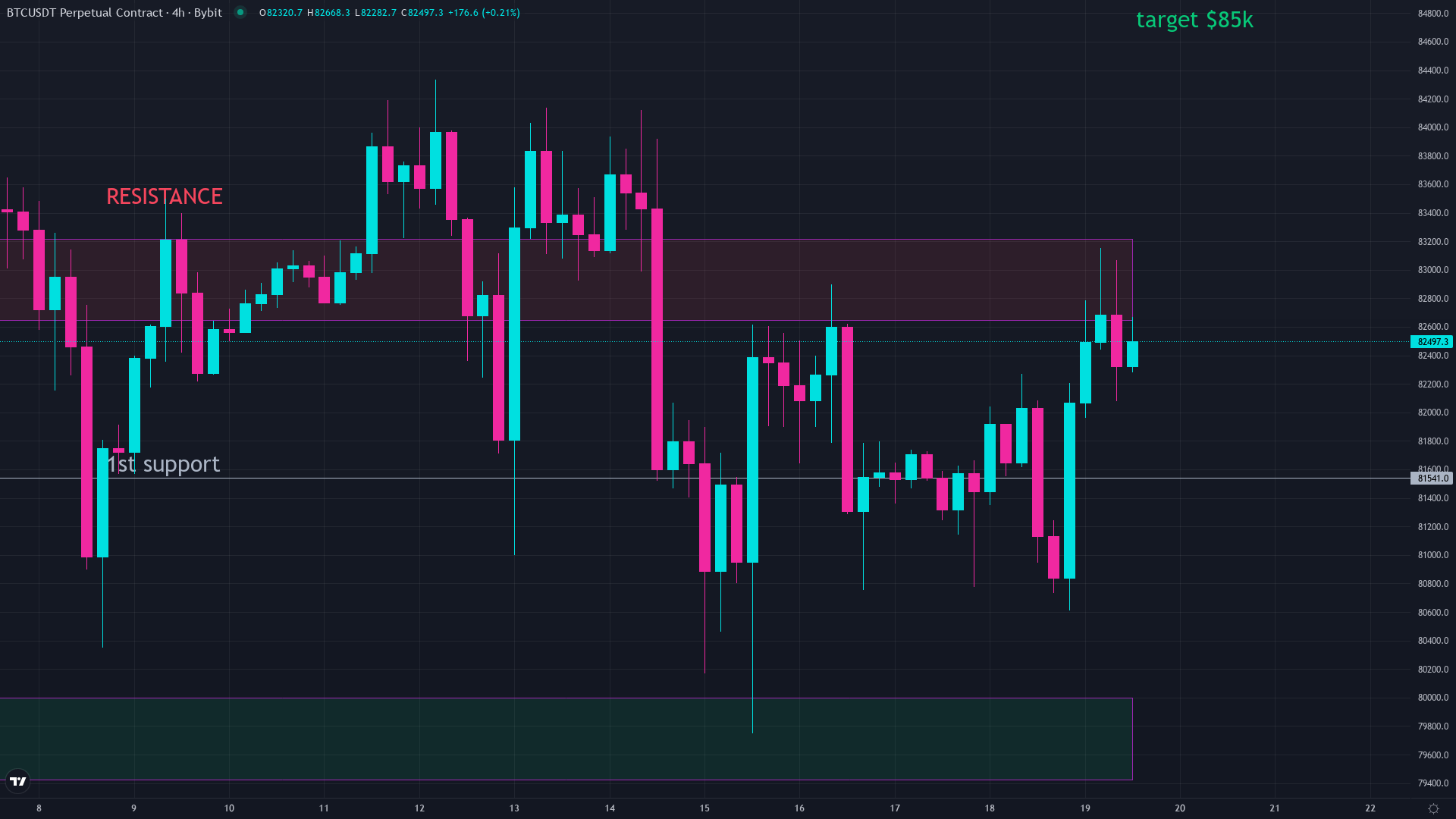
Bitcoin is sitting near $82,000, down about 35% from last year’s high. Sentiment feels stuck. The headlines scream “outflows.” And if you only read the news, you would think everyone has left the building.
But here is the thing about who is buying bitcoin right now: the answer is hiding in plain sight, and it does not match the mood.
Three very different groups are accumulating. Two of them are doing it quietly. One of them is doing it loudly enough to file with the SEC every Monday. Let’s walk through the receipts.
Whales are loading the heaviest bags since 2025
Wallets holding between 10 and 10,000 BTC accumulated over 85,000 bitcoin in just three weeks during October 2026. That is roughly $7 billion at current prices. The total number of these large wallets just hit a record high of 20,338.
At the same time, 24,073 BTC left exchanges in a single day earlier this month. That is the largest single-day withdrawal since March 1, and it usually means one thing: coins are moving to cold storage. Whoever is buying does not plan to sell anytime soon.
This is the part most people miss. Whale accumulation does not make the price go up immediately. In fact, Bitcoin dropped about 3.5% that same week. The big wallets were buying into weakness, not chasing strength. That pattern has shown up before every major move in Bitcoin’s history, but it is invisible if you only watch the price.
Strategy (MicroStrategy) just crossed 848,000 BTC
Michael Saylor’s company, now called Strategy, keeps buying. As of October 18, the firm holds 848,250 BTC, purchased at an average price of roughly $75,444 per coin. The total stash is worth about $69.5 billion.
They added 250 BTC on October 12 alone, and Saylor hinted at more purchases over the weekend. The company now controls about 4% of all bitcoin that will ever exist.
You can agree or disagree with the strategy. But the data point is simple: the single biggest corporate buyer on Earth has not stopped. Not during the crash. Not during the bear market rallies. Not now.
ETFs are the ones bleeding, and that tells you something too
U.S. spot Bitcoin ETFs lost about $228 million in the week ending October 16. BlackRock’s IBIT alone shed $165 million that week. On a single day, October 12, IBIT accounted for all $65.4 million in outflows across every Bitcoin ETF.
So the retail-friendly product is leaking money while the whale wallets hit record highs. That divergence matters. ETF buyers tend to be newer, more reactive, and more sensitive to headlines. Whale wallets tend to be older, calmer, and accumulating when everyone else panics.
This is not the first time these two groups have disagreed. In July 2026, whales bought 270,000 BTC during the same stretch when ETFs bled a record $4 billion. Bitcoin was near $66,000 then. It is $82,000 now.
Long-term holders are sitting on a 72% profit cushion
The average cost basis for long-term Bitcoin holders (people who have held for at least six months) is around $48,600. At today’s price, that is roughly a 72% unrealized profit. Recent buyers, by contrast, are sitting on about 9%.
That gap is important. Long-term holders are not stressed. They are not selling. The coins that could flood the market at any moment are held by people who are comfortably in the green and choosing to wait.
You can track where Bitcoin sits relative to its historical value ranges on our live charts hub, which updates daily.
So who is buying bitcoin? The people who bought every other bottom.
The pattern is always the same. Retail sells during fear. Headlines confirm the fear. And behind the noise, the biggest wallets on the network quietly add to their positions.
None of this means the price goes up tomorrow. Accumulation is not a timing signal. It is a positioning signal. The people with the most capital and the longest track records are adding, not exiting.
Every Bitcoin crash has looked like the end. Every one so far has ended the same way: the people who bought when it felt worst came out ahead. The only question is whether you are paying attention to the data or the headlines.
The wallets do not lie. The filings do not lie. And right now, both say the same thing: accumulation is underway.
Common questions
Who is buying bitcoin in 2026?
The three biggest buyer groups are whale wallets (holding 10 to 10,000 BTC, now at a record 20,338 addresses), Strategy (formerly MicroStrategy, holding 848,250 BTC), and long-term holders whose average cost basis sits near $48,600.
Are bitcoin ETFs still getting inflows?
Not consistently. U.S. spot Bitcoin ETFs saw about $228 million in net outflows in the week ending October 16, 2026. BlackRock IBIT accounted for most of the selling. However, cumulative historical inflows into IBIT remain above $65 billion.
Why are bitcoin whales buying while the price drops?
Large holders typically accumulate during periods of fear and weakness, not strength. In July 2026, whales bought 270,000 BTC while ETFs bled $4 billion. Bitcoin was near $66,000 then and trades above $82,000 now.
How much bitcoin does MicroStrategy hold?
As of October 18, 2026, Strategy (MicroStrategy) holds 848,250 BTC at an average purchase price of about $75,444 per coin. That is roughly 4% of the total supply that will ever exist.
Keep reading
We break down the market like this every day, free on Instagram and YouTube, and in depth inside the community.
Education, not financial advice. Trading involves real risk.