What Is a Bitcoin Accumulation Zone?
What is a Bitcoin accumulation zone?
A Bitcoin accumulation zone is a stretch of time where the price stays low, fear runs high, and long-term buyers quietly add to their positions. It is not a single price. It is a phase. And it has shown up before every major rally in Bitcoin’s history.
The idea is simple. After a big crash, most people either panic-sell or freeze. The sellers are exhausted. Volume dries up. Price chops sideways in a range that feels like it could break down any day. Meanwhile, a quieter group of buyers is steadily absorbing supply at prices the crowd considers too scary to touch.
That phase is the accumulation zone. It does not feel bullish while you are in it. It feels boring, painful, and uncertain. That is the point.
How to spot a Bitcoin accumulation zone
You will never get a flashing green light that says accumulation starts now. But history gives us patterns to watch.
- Price trades below the market’s average cost. When Bitcoin drops below what the average holder paid for it, most of the market is sitting on a loss. Historically, that is when the strongest hands start buying. The realized price tracks that average cost, and every past cycle bottom has printed below it.
- Fear dominates sentiment. The Fear and Greed Index sits in the lower ranges. Headlines are grim. Social media is full of people calling for lower prices. This is the emotional signature of accumulation.
- On-chain value gauges flash cheap. The MVRV ratio compares the market’s current value to its cost basis. When MVRV drops below 1, the entire market is underwater on average. Every past accumulation zone has printed MVRV readings below or near 1.
- Crashes keep getting smaller. Bitcoin crashed 86% from its 2013 peak, 84% from its 2017 peak, and 77% from its 2021 peak. This cycle’s crash from the October 2025 high near $126,000 is around 38% so far. The trend is clear, and it matters because the floor keeps rising.
What history says happens after accumulation
Every accumulation zone in Bitcoin’s past has eventually ended the same way. Price breaks out of the range, volume returns, and the people who bought during the boring phase are suddenly sitting on the best entries of the cycle.
That does not mean it happens fast. The 2015 accumulation zone lasted roughly ten months. The 2018 to 2019 zone lasted about five months. The 2022 zone stretched for close to six months. Patience is not optional. It is the actual strategy.
And none of this means the current crash is finished. Accumulation zones can grind lower before they resolve. Buying too early is better than buying too late if your timeframe is years, but it still feels terrible in the moment.
Where Bitcoin sits right now
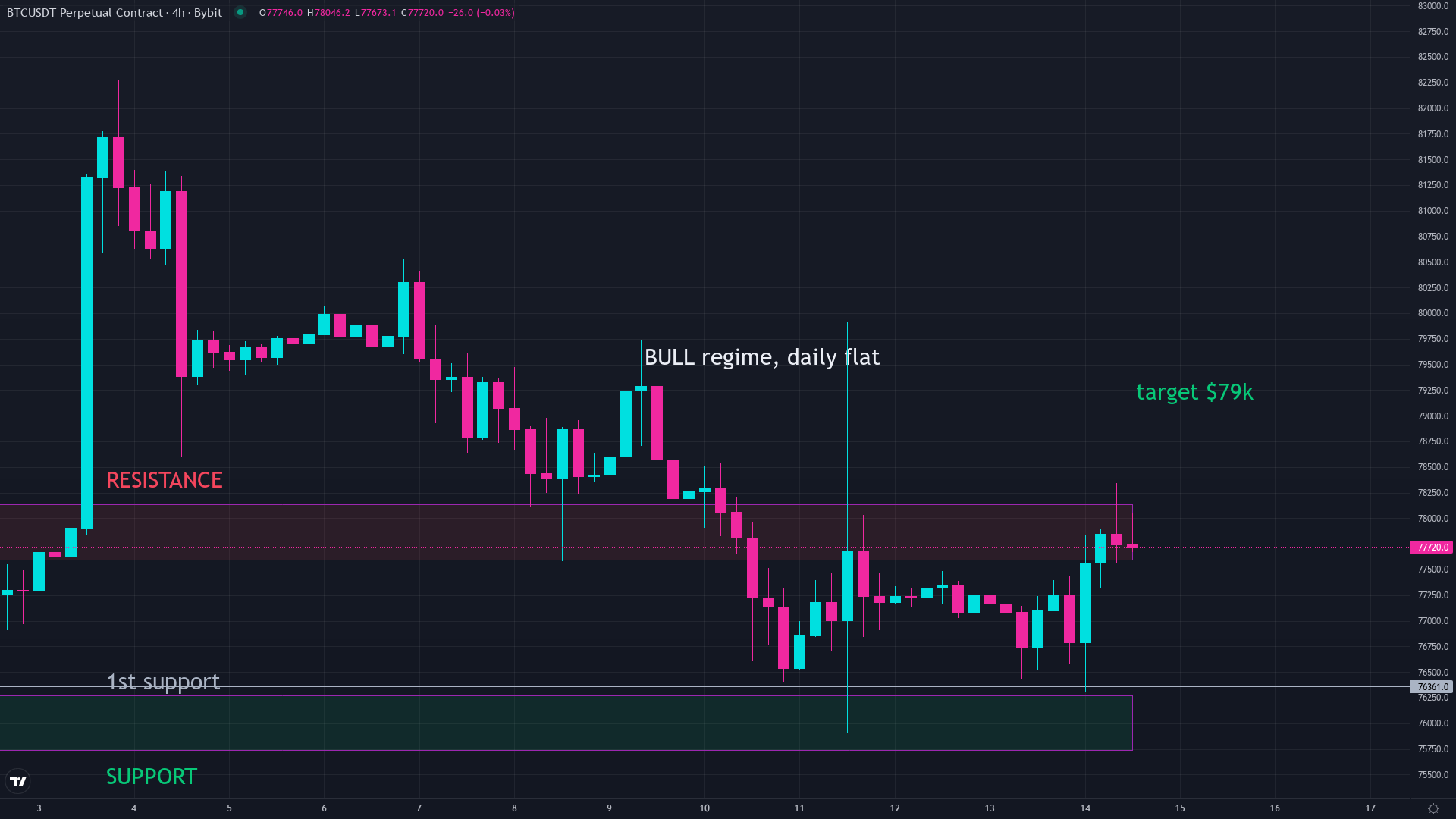
Bitcoin is trading around $77,700 as of mid-September 2026. That is roughly 38% below its all-time high. The Fear and Greed Index reads 57, which is mild greed, not the extreme fear that has marked past accumulation zones. The MVRV ratio is still above 1, meaning the average holder is not yet underwater.
So are we in an accumulation zone right now? By the strictest historical definition, not yet. The conditions that marked past accumulation zones, extreme fear, MVRV below 1, price below the average cost basis, have not all arrived at the same time. That does not rule it out. It means the data has not confirmed it.
This is the honest answer most people do not want to hear. Accumulation zones are only obvious in hindsight. While you are living through one, it just feels like the market might never recover. That is exactly the emotion that creates the opportunity.
The mistake most people make
The biggest trap is treating the accumulation zone as a single buy signal. It is not. It is a phase that can last months. People who dump their entire position into one buy often watch it drop another 20% and panic out at the worst possible moment.
The smarter approach, historically, has been to spread entries across the zone. Buy a little when conditions look cheap. Buy a little more if they get cheaper. Accept that you will never catch the exact bottom, because nobody does. Not once in Bitcoin’s history has a single indicator or a single day marked the perfect low.
If you want a deeper dive into how to tell when Bitcoin has actually bottomed, we built a full checklist of the signals that have clustered at past lows.
Common questions
What is a Bitcoin accumulation zone?
It is a phase where Bitcoin trades at low prices with high fear and long-term buyers quietly add to their positions. Every past cycle bottom has formed inside one of these zones.
How long do Bitcoin accumulation zones last?
Historically they have lasted anywhere from five to ten months. The 2015 zone was the longest at roughly ten months. Patience is not optional.
Is Bitcoin in an accumulation zone right now?
As of September 2026, not by the strictest historical standards. The MVRV ratio is still above 1 and sentiment has not reached extreme fear. Conditions could shift, but the data has not confirmed a full accumulation zone yet.
How do you know when a Bitcoin accumulation zone is over?
You usually only know in hindsight. The clearest sign has been price breaking out of a multi-month range on rising volume while fear gauges reset from extreme readings.
Should you buy Bitcoin during an accumulation zone?
History suggests spreading purchases across the zone rather than trying to catch the exact bottom. No single indicator has ever pinpointed the perfect low.
Keep reading
We break down the market like this every day, free on Instagram and YouTube, and in depth inside the community.
Education, not financial advice. Trading involves real risk.