Why Is Bitcoin Going Down? What the Data Says
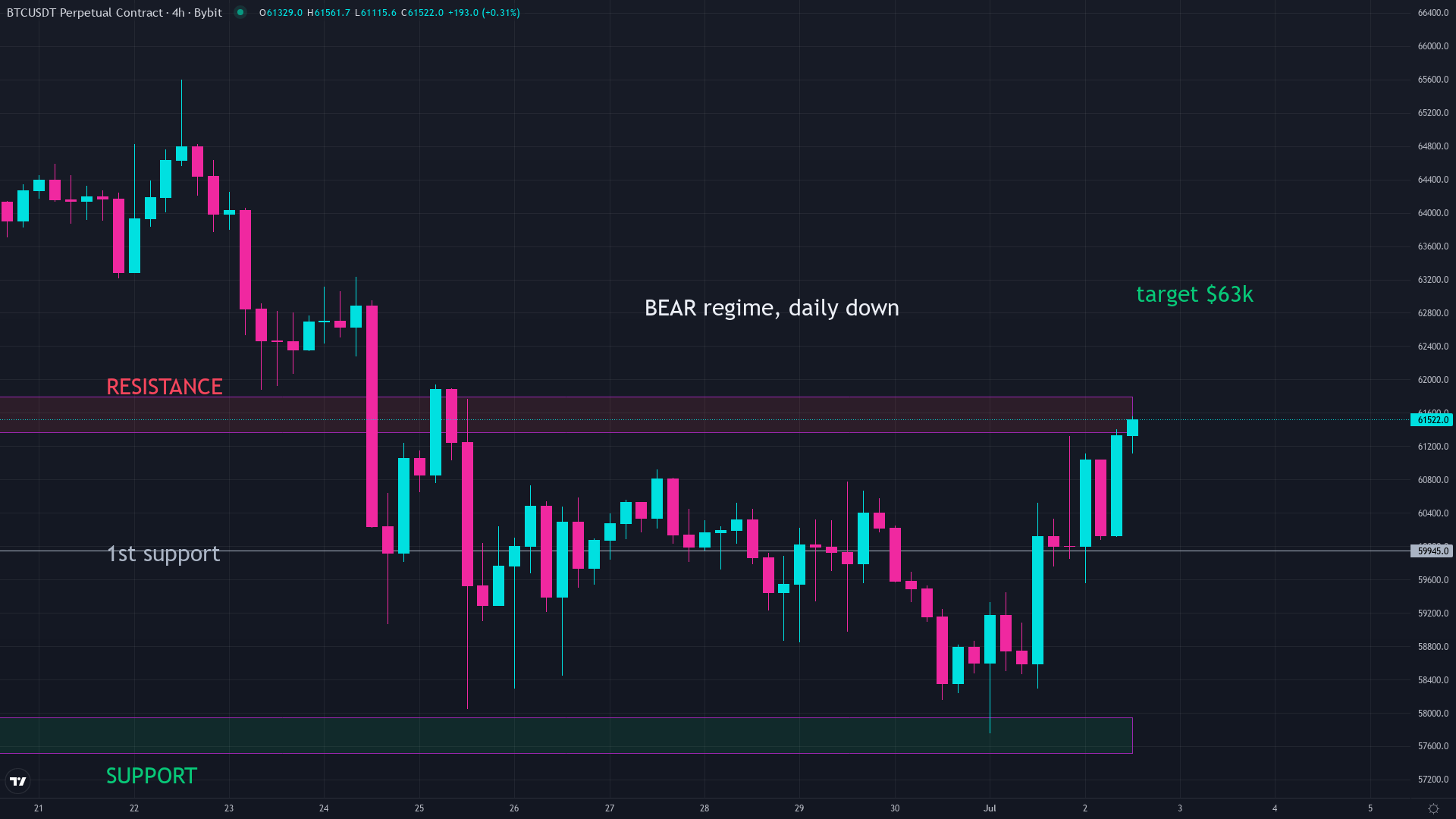
Bitcoin is down about 51% from its October 2025 peak of roughly $126,000. The Fear and Greed Index sits at 19, deep in Extreme Fear. If you typed why is Bitcoin going down into Google this week, you are not alone. It is the most searched Bitcoin question of 2026 so far.
The honest answer is not one headline. It is three forces hitting at the same time. Let’s walk through each one, then zoom out and see what the history actually says.
Why is Bitcoin going down right now?
1. ETF money is leaving
When U.S. spot Bitcoin ETFs launched in January 2024, billions of dollars poured in. That buying pressure helped push Bitcoin to new highs. Now the flow has reversed.
In 2026 alone, more than 100,000 BTC have left ETF vaults. The worst stretch came in May and June: 13 straight days of outflows totaling over $4 billion, then a single week in June where $3.4 billion walked out the door. That is the largest weekly withdrawal since ETFs launched.
Think of it like a crowded restaurant. When everyone rushes for the exit at the same time, the door gets jammed. ETF outflows do not just reflect falling prices. They cause more selling, because the ETF provider has to sell real Bitcoin to cover the redemptions. It feeds on itself.
2. The four-year cycle is doing what it always does
Bitcoin has topped, crashed, and bottomed on roughly the same schedule since 2011. The four-year cycle is tied to the halving, which cuts new supply in half every four years. After every halving, price runs up for about 12 to 18 months, tops out, then spends roughly a year grinding lower.
We are about 269 days past the cycle top. In previous cycles, the crash from peak to bottom looked like this:
- 2014: down 82% from top to bottom
- 2018: down 84% from top to bottom
- 2022: down 77% from top to bottom
- 2026 so far: down about 51%
Every single one of those crashes felt like the end. Every single one recovered and made new highs. That does not mean this one must follow the script. But pretending the pattern does not exist is just as dishonest as pretending it guarantees a recovery.
3. Money is chasing something else
Capital goes where the story is. Right now the story is artificial intelligence. Semiconductor and AI stocks are up roughly 170% over the past year while Bitcoin is getting cut in half. Big funds have a limited appetite for risk, and when one sector is on fire, money rotates away from everything else.
This is not permanent. The AI trade will cool eventually, the same way the crypto trade cooled after 2021. But while the rotation is happening, it starves Bitcoin of the new money it needs to hold a bid.
Why Bitcoin crashes feel worse than they are
A 51% crash feels like the world is ending. But Bitcoin has now crashed more than 50% five separate times in its 15-year history. Five times. Each crash set a higher floor than the last.
That does not make the pain fake. If you bought near the top, you are looking at real losses on real money, and nobody should tell you to just relax. But context matters. Bitcoin at $61,000 in July 2026 is still higher than it has ever traded before 2024. The asset is down from its peak. It is not broken.
The part most people skip
When Bitcoin is falling, the question everyone asks is why. The question that actually matters is how long.
Previous bear markets lasted roughly 12 to 14 months from the top to the final bottom. We are about 9 months in. If this cycle rhymes with the last three, the worst of the pain is in the second half. Not here. Not yet.
That is uncomfortable to hear. But the data is clear: people who bought during the fear, not the hype, ended up with the best prices in history. Every time. The 2018 bottom happened when the Fear and Greed Index was pinned below 15. The 2022 bottom happened when nobody wanted to touch crypto at all. The crowd is loudest about why Bitcoin is going down at the exact point when the opportunity starts to form.
None of that means you should rush to buy today. Catching a falling knife is a real risk, and bottoms only look obvious in hindsight. But if your plan is to panic-sell because the price is lower than it was, the data has a clear opinion on how that trade ends.
Common questions
Why is Bitcoin crashing in 2026?
Three forces are hitting at once: over 100,000 BTC have left ETF vaults this year, the four-year halving cycle is in its typical post-peak decline phase, and capital is rotating into AI and tech stocks instead of crypto.
How far can Bitcoin fall in a bear market?
In the three previous bear markets, Bitcoin fell 77% to 84% from peak to bottom. The current decline of about 51% is painful but historically still in the middle of the range, not the end.
Will Bitcoin recover after this crash?
Bitcoin has crashed more than 50% five separate times and recovered to new all-time highs every time. Past performance does not guarantee it happens again, but the historical record is unbroken.
How long do Bitcoin bear markets last?
Previous bear markets lasted roughly 12 to 14 months from peak to final bottom. As of July 2026, we are about 9 months past the cycle top.
Should I sell Bitcoin when it is going down?
The data shows that panic-selling during extreme fear has historically been the worst time to exit. That does not mean you should buy more today, but selling at the bottom of a crash has a poor track record.
Keep reading
We break down the market like this every day, free on Instagram and YouTube, and in depth inside the community.
Education, not financial advice. Trading involves real risk.