Why Is Bitcoin Going Sideways Right Now?
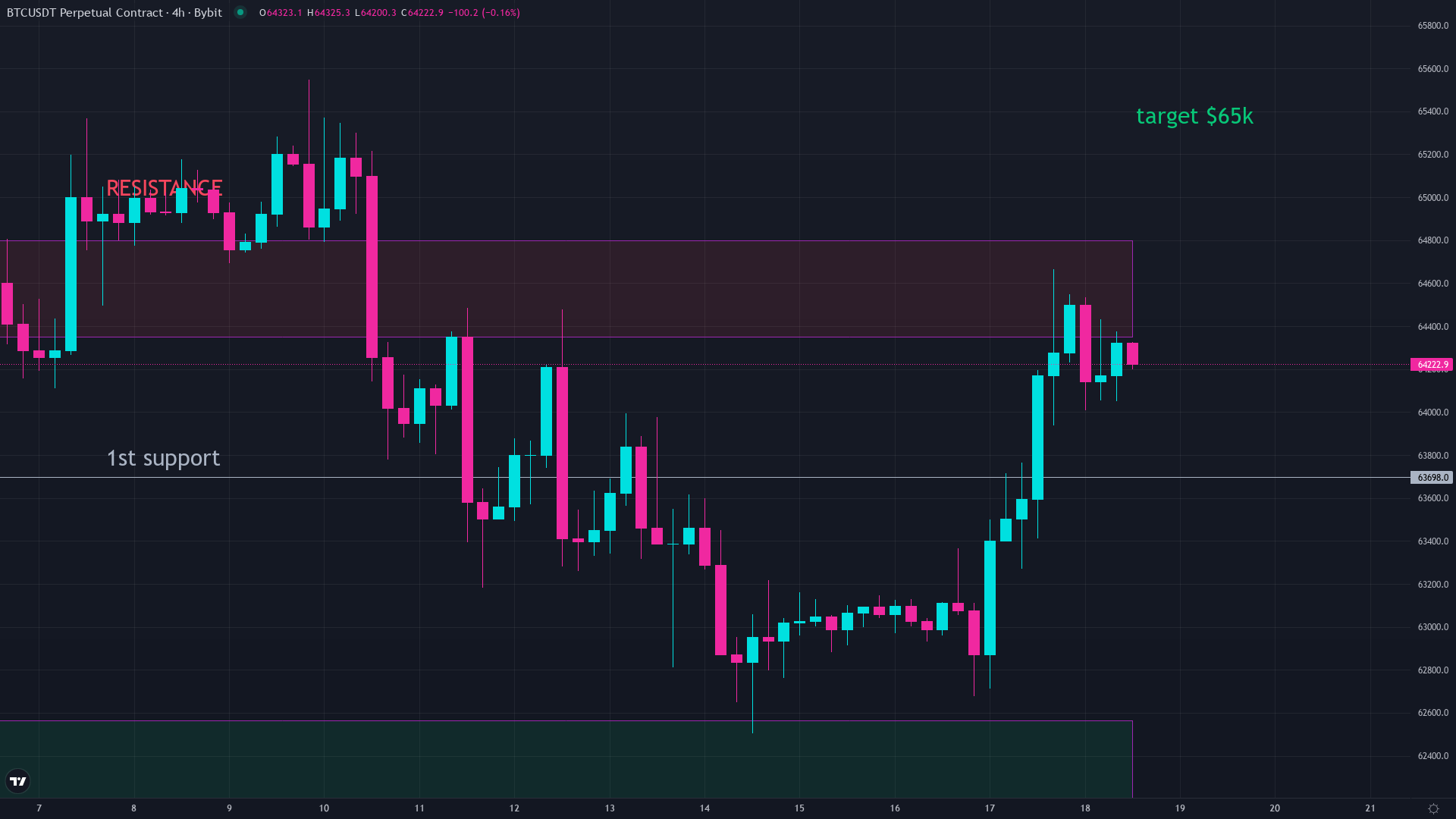
Bitcoin is boring right now, and that is the point
If you have been watching Bitcoin lately and wondering why it refuses to do anything interesting, you are not alone. The price has been grinding sideways around $64,000 for weeks, the Fear and Greed Index is sitting at 41, and the general mood is somewhere between bored and scared. Search traffic for why is Bitcoin going sideways is spiking, and the honest answer is both simple and uncomfortable.
Bitcoin is doing what it always does after a big crash. It chops. It grinds. It makes you feel like nothing will ever happen again. And then, eventually, it moves.
Every crash comes with a boring middle chapter
Bitcoin peaked near $126,000 in October 2025. As of today it is trading around $64,000, roughly 50% below that high. That sounds dramatic, but it is almost exactly what happened after the 2021 top and the 2017 top and the 2013 top. Every cycle has had a stretch where price just sat there, doing nothing, while everyone on social media slowly lost interest.
The 2022 bear market had a sideways grind between roughly $18,000 and $25,000 that lasted over five months. The 2018 crash had its own flat period near $3,500 that felt endless. In both cases the boring stretch came after the heaviest selling was finished but before the next major rally began.
You can see how past crashes compare on our live crash comparison chart, where every major sell-off is lined up by days since the top. The pattern is hard to miss. Sharp drop, sideways grind, then a slow turn that almost nobody notices at first.
Why the market gets stuck
There is no single reason Bitcoin goes flat, but there are a few that keep repeating.
- Sellers are exhausted. The people who were going to panic sell already did. The ones still holding are either long-term believers or too underwater to sell at this point. That dries up the selling pressure.
- Buyers are scared. New money looks at a 50% crash and hesitates. The Fear and Greed Index at 41 tells you the crowd is cautious, not panicking but definitely not confident.
- Institutions are quiet. Spot Bitcoin ETFs had $389 million in outflows during the week of August 10 to 14. When the big players step back, you lose the volume that creates clean trends.
- Volatility compresses. Realized volatility over the last 30 days is at 24%, well below Bitcoin’s historical average. Low volatility tends to breed more low volatility, until it doesn’t.
Put those together and you get a market stuck in a tug-of-war where neither side has enough energy to win. That is what sideways looks like.
Sideways is not the same as broken
Here is the part most people miss. A flat market after a 50% crash is not a sign that something is wrong. It is a sign that the worst selling is probably finished. The price is building a base instead of falling off a cliff, and historically that base-building has been the quiet part of the story right before the next chapter begins.
This is roughly 316 days since the October 2025 high. In the 2022 bear market, the bottom came about 370 days after the top. In 2018 it was about 360 days. Those are not predictions. Every cycle is different. But the rhythm is strikingly similar, and right now we are sitting in the window where past cycles shifted from pain to patience to recovery.
If you want to gauge the current mood against history, the Fear and Greed Index chart shows where sentiment sits relative to every other major bottom.
What to actually do during the chop
The sideways grind is where most people make their biggest mistakes. They get bored and start revenge-trading, chasing every tiny move. Or they give up entirely, close their apps, and miss the turn when it finally comes.
Neither is ideal. The flat period is a chance to do the boring work. Review your plan. Know what price you would start buying at and how much. Know what signal would change your mind. Having an exit strategy before the move starts is worth more than any prediction about when the move begins.
The traders and investors who come out of bear markets well are almost never the ones who called the exact bottom. They are the ones who had a plan, stuck to it, and did not let boredom push them into a bad decision.
The boring part is the opportunity
Bitcoin going sideways feels like nothing is happening. But underneath the flat price, the conditions are quietly shifting. Sellers are thinning out. Long-term holders are accumulating. Volatility is compressing into a coiled spring of potential energy that, in every past cycle, eventually released in a major move.
Nobody rings a bell at the bottom. The market just stops going down, sits there long enough for everyone to lose interest, and then starts moving when the fewest people are paying attention. That is exactly what sideways looks like. And if history is any guide, the boring part is where the real opportunity hides.
We track the full set of cycle and sentiment tools on our Bitcoin indicators guide, so you can watch all of this unfold in real time.
Common questions
Why is Bitcoin going sideways in 2026?
Bitcoin is stuck between exhausted sellers and cautious buyers after a roughly 50% crash from its October 2025 high. Institutional flows have slowed, volatility has compressed, and neither side has enough momentum to break the range.
Is Bitcoin sideways trading bullish or bearish?
Historically, a flat range after a major crash has been the quiet setup before a recovery, not a sign of further collapse. It means the worst selling is likely finished and a base is being built.
How long does Bitcoin usually trade sideways?
Past cycles have seen sideways grinds lasting three to six months after the steepest sell-off. The 2022 bear market had a five-month chop before the trend reversed.
What should I do when Bitcoin is going sideways?
Avoid revenge-trading or giving up entirely. Use the quiet period to build a plan, set your buy levels, define your exit strategy, and wait for the range to break with clear direction.
Keep reading
We break down the market like this every day, free on Instagram and YouTube, and in depth inside the community.
Education, not financial advice. Trading involves real risk.