Bitcoin Realized Price Explained: The Market's True Cost Basis
What is Bitcoin realized price?
Think of it this way. If you added up every Bitcoin in existence and recorded the price it last changed hands at, then averaged the whole thing, you would get the Bitcoin realized price. It is the average cost that every holder in the market actually paid.
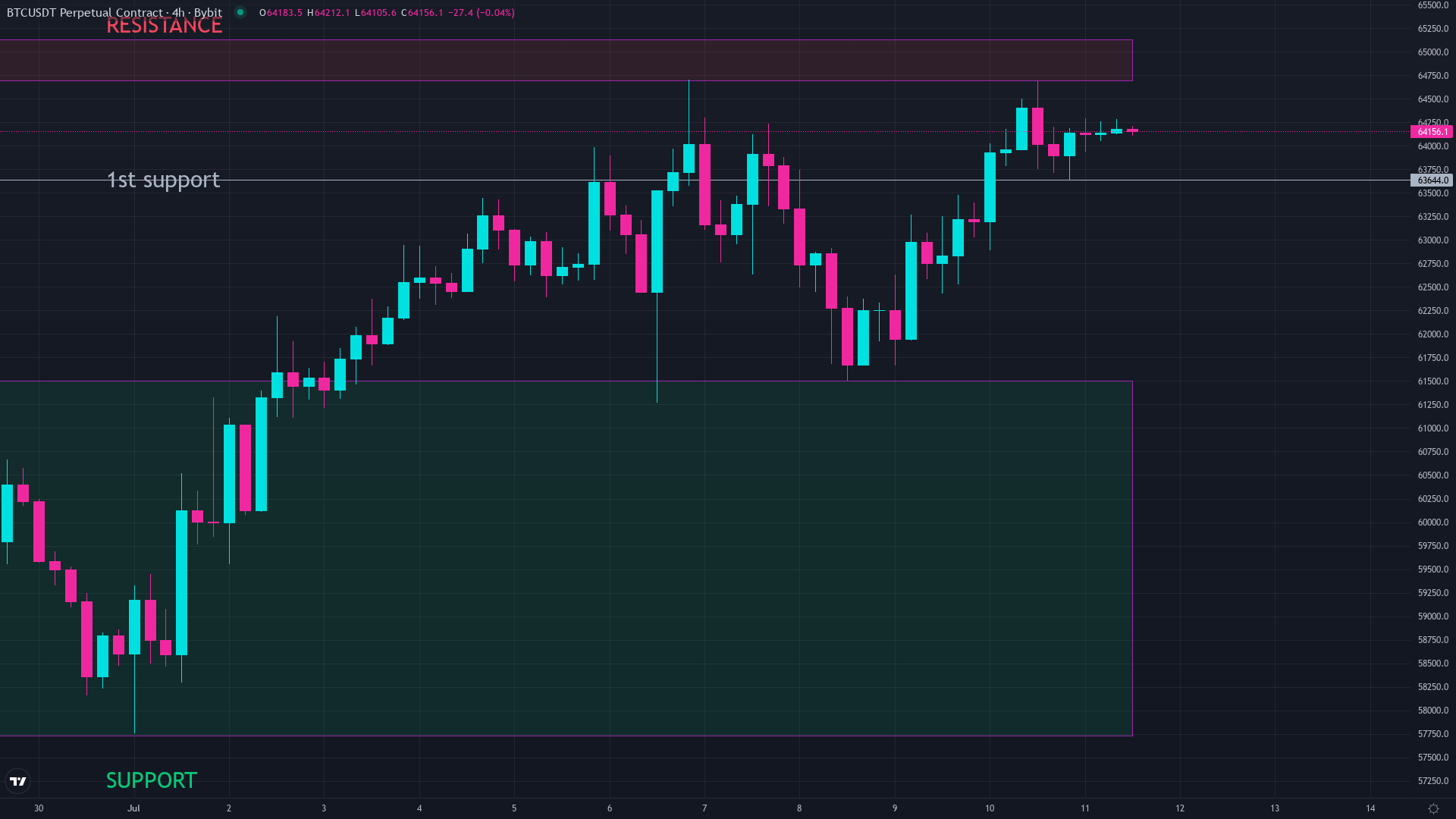
Right now, that number sits around $53,300. Bitcoin trades near $64,100. That gap matters, and the rest of this article explains why.
Why it matters more than the spot price
The live price tells you what one buyer paid in the last second. The realized price tells you what everyone paid, on average, across the entire history of the coin. When the market price is above the realized price, the average holder is sitting on a profit. When it drops below, the average holder is underwater.
That single comparison, price versus what people actually paid, captures crowd psychology better than any fear-and-greed poll. Holders in profit feel confident and tend to hold. Holders in loss panic, and some of them sell to whoever is brave enough to buy.
Every bear market bottom has touched it
This is the part that makes the realized price worth tracking. In every major Bitcoin crash, the price eventually fell to or below the realized price before the cycle turned around.
- January 2015: Bitcoin dropped below $200. The realized price at the time was higher. Holders were underwater. That was the bottom.
- December 2018: Bitcoin fell to about $3,200 and slipped below its realized price. The bear market ended weeks later.
- March 2020: The COVID crash hammered Bitcoin below the realized price for a few days. It doubled within two months.
- November 2022: Bitcoin bottomed near $15,500 after the FTX collapse, again below the realized price at the time.
Four cycles, four crashes, and in every case the bottom formed around that line. Not because the line causes anything. It is not magic. It works because when the average holder is losing money, selling pressure dries up. People hate selling at a loss. The ones who do sell are handing their coins to patient buyers at bargain prices. That dynamic, reluctant sellers and aggressive buyers, is what builds a floor.
Where are we now?
As of July 2026, the realized price sits near $53,300 and Bitcoin trades around $64,100. That means the market is roughly 20% above its aggregate cost basis. The average holder is still in profit, though the cushion has shrunk considerably from the highs above $100,000 late last year.
The short-term holder cost basis, which tracks only the coins that moved recently, is higher, near $69,000. That group is already underwater, and that is where most of the selling pressure comes from in a bear market.
Does that mean we have to touch $53,300 before the cycle bottoms? Not necessarily. History rhymes, it does not copy. But every previous cycle did touch or break that line, and being aware of it is better than being surprised by it.
You can track the live realized price on our free realized price chart, updated daily.
Realized price is a value zone, not a buy button
One mistake people make is treating the realized price like a limit order. They set an alert, wait for the touch, and plan to go all in. The problem is that price can stay below the realized price for weeks or months. In 2022, Bitcoin spent roughly five months under it. In 2018 it was several months as well.
The realized price tells you when the market is in a value zone. It does not tell you the exact day the pain stops. Think of it as a flashing sign that reads “historically cheap,” not a green light that reads “buy right now.”
For a broader view of bottom signals and how they cluster, see our breakdown of how to spot a real Bitcoin bottom.
The simple version
- Realized price = the average price every Bitcoin holder paid.
- Price above it = most people are in profit. Price below it = most people are in pain.
- Every bear market bottom in Bitcoin history has formed at or below the realized price.
- It is a value zone, not a timing tool. Respect the signal, but do not treat it like a guaranteed entry.
Common questions about Bitcoin realized price
What is Bitcoin realized price?
It is the average on-chain cost basis of every Bitcoin in circulation. You calculate it by taking the price each coin last moved at, adding them all up, and dividing by the total supply.
Where is the realized price right now?
As of July 2026, the realized price is approximately $53,300. Bitcoin trades about 20% above it near $64,100.
Has Bitcoin ever bottomed above its realized price?
Not in a major bear market. Every cycle bottom since 2011 has reached the realized price or fallen below it before the recovery began.
Is realized price a good time to buy Bitcoin?
Historically, buying anywhere near or below the realized price has been one of the best long-term entry zones. But it is not a precise timer. Price can stay below that level for weeks or months, so treat it as a zone, not a single price.
Common questions
What is Bitcoin realized price?
It is the average on-chain cost basis of every Bitcoin in circulation. You calculate it by taking the price each coin last moved at, adding them all up, and dividing by the total supply.
Where is the realized price right now?
As of July 2026, the realized price is approximately $53,300. Bitcoin trades about 20% above it near $64,100.
Has Bitcoin ever bottomed above its realized price?
Not in a major bear market. Every cycle bottom since 2011 has reached the realized price or fallen below it before the recovery began.
Is realized price a good time to buy Bitcoin?
Historically, buying anywhere near or below the realized price has been one of the best long-term entry zones. But it is not a precise timer. Price can stay below that level for weeks or months, so treat it as a zone, not a single price.
Keep reading
- How To Spot A Real Bitcoin Bottom (The One Line That Has Never Been Wrong)
- Bitcoin MVRV Ratio, Explained (And What It Tells You Now)
We break down the market like this every day, free on Instagram and YouTube, and in depth inside the community.
Education, not financial advice. Trading involves real risk.